
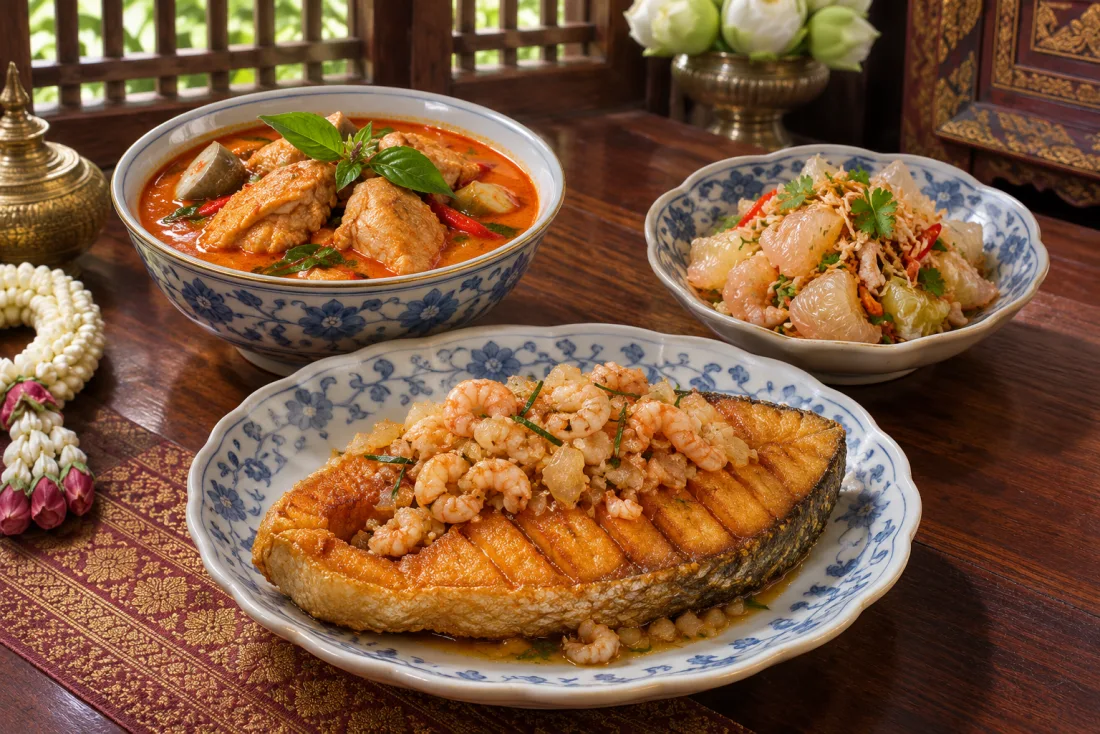

 historical red chicken curry
What a samrap is
The archived cookbook uses สำรับ for a group of dishes. The National Library exhibition also records shared trays and dining customs in historical Siam. A historical samrap does not have a standard modern portion or one recipe.
An everyday example and a dip grouping
The ordinary example lists red chicken curry, fried salted threadfin with a savory topping, and either pomelo salad or a sweet-sour stir-fry. A dip grouping includes relish, coconut-cooked vegetables or fresh produce, and grilled fish or mackerel. These are alternatives and roles within groups.
Different flavors around the table
Coconut curry brings spice and body. The fish adds salty savor and a crisp edge, while pomelo can introduce bright fruit acidity. A dip and fresh vegetables give a diner another way to vary a bite. Individual recipes set the exact balance.
The two finished examples in the gallery
One table shows three separate dishes: red chicken curry, fried threadfin with shrimp and shallot topping, and pomelo salad. The other shows a relish arrangement with fish and vegetables. The illustrations are examples drawn from the texts, not a single serving or a full ceremonial reconstruction.
Describing a shared menu today
Name each dish, portion and available side. Explain whether choices such as pomelo salad and a sweet-sour stir-fry are alternatives. Shared tables and single-plate meals can have the same food name within the order, so clear quantities matter.
Allergens across the dishes
A shared meal needs allergen information dish by dish. Fish, shrimp, peanut and coconut can occur in the illustrated dishes. Soy, wheat or molluscs can enter through sauces and relishes. Ask about ingredients and shared serving tools when an allergy matters.
If you have a food allergy, tell the restaurant before ordering and ask about ingredients, sauces and shared cooking equipment.