
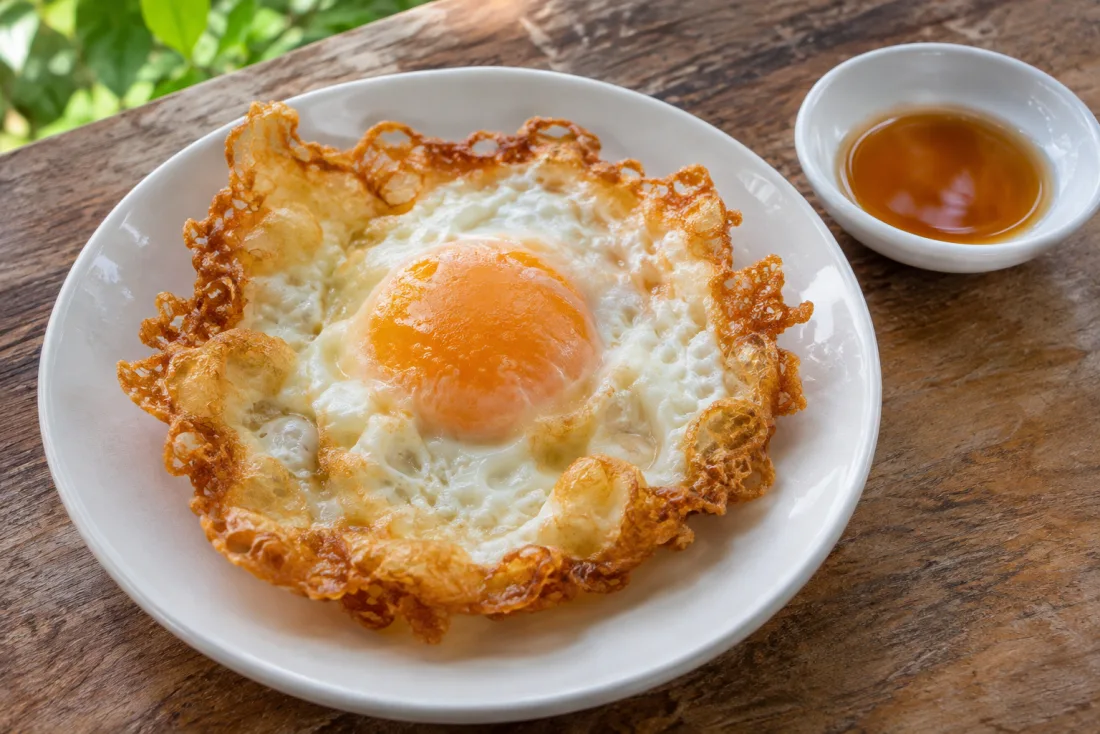

The yolk stays intact in khai dao
Khai dao is a fried egg with its yolk still visible. Hot oil can create lacy bubbles in the thin edges while a thicker white surrounds the yolk. The egg can be served on a small plate or put on rice or a stir-fry. A beaten Thai omelette has a different structure. A fried egg salad adds vegetables and dressing and is marked as a yum dish. A plain egg does not come with any particular main or sauce by definition.
A one-egg option at Thai restaurants
Thai homes and shops serve khai dao beside basil stir-fries, fried rice or plain rice. Some restaurants list an egg by the piece so it can be requested on its own. A kitchen can offer different edge textures and doneness. Chilli fish sauce or soy sauce can come separately, depending on the shop. The preparation is well documented in everyday Thai food without establishing a single province of origin.
A whole egg, frying oil and optional seasoning
An egg and cooking oil are the basic ingredients. Size changes how far the white spreads, while the oil and pan determine how much edge comes into contact with heat. Many kitchens use a vegetable oil. Salt, pepper, soy sauce and chilli fish sauce can be served separately. Cucumber or rice sometimes served alongside are not ingredients of the plain fried egg.
Hot oil crisps the edges while the centre cooks
Thin edges brown more quickly than the thick white. A Thai cook may spoon hot oil over the top to help it set. Food-safety guidance recommends a firm white and yolk. Edge colour does not establish doneness at the centre. Ask about doneness and pasteurised eggs if a shop offers a soft yolk. Lift with a clean utensil and serve promptly to preserve crispness.
A crisp edge around a softly set centre
The thinnest edge can be crisp and toasty, while the thicker white feels soft. A firm yolk has a mellow egg flavour. A light dip can add salty, spicy or tangy notes. Sauce poured over the lacy edge will gradually soften it. The frying oil and heat affect the overall colour, while the flavour of any rice or stir-fry remains separate.
Allergens in the egg, sauces and shared tools
Egg is present in both the yolk and the white. Fish sauce contains fish, and soy sauce contains soy and may contain wheat. Mixed sauces can contain oyster, shrimp or sesame depending on the recipe. Ask about oil, utensils and any seasoning already used. If added to another dish, both components need their own allergen information. Cooking does not remove the egg allergen.
If you have a food allergy, tell the restaurant before ordering and ask about ingredients, sauces and shared cooking equipment.