

 fish sauce
The Thai dish name
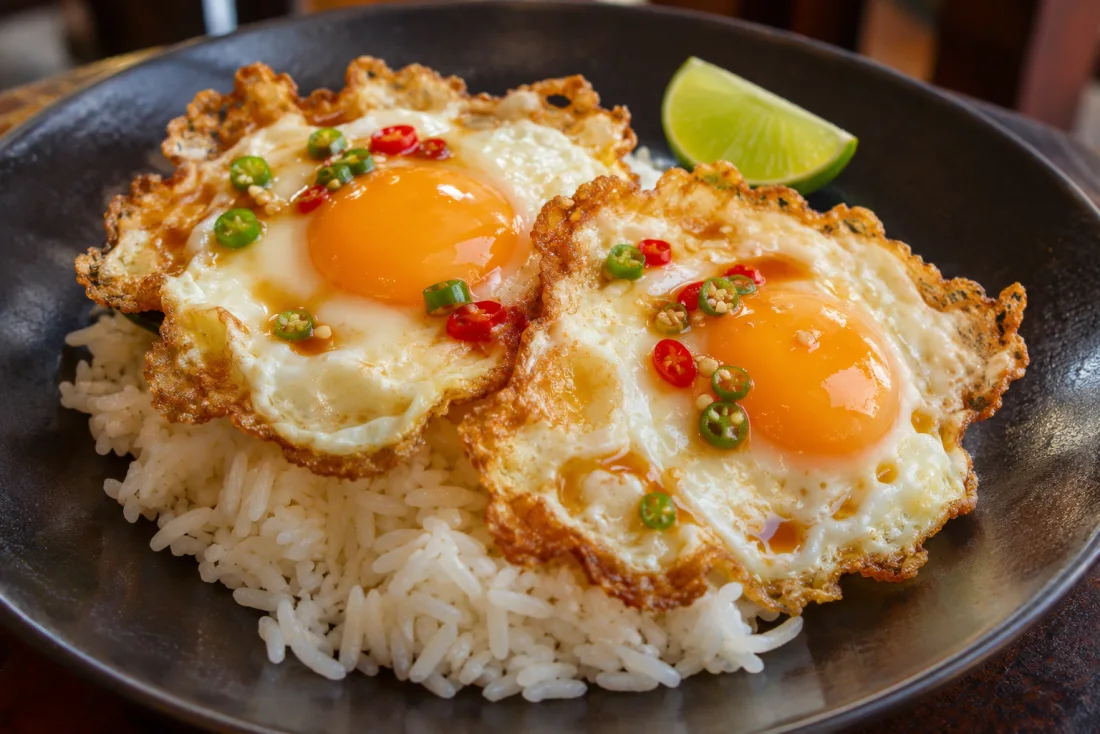
Khai dao is a whole fried egg. A mention of fish sauce identifies how this dish is seasoned, and phrik nam pla points to the chile condiment. One Thai cook serves the eggs over rice with garlic and lime. A Thai merchant has a multiple-egg version with crispy bacon.
Whole eggs and seasoning
Cook the eggs whole so the yolk and white remain visible. Fish sauce may season the egg during frying or in a separate dressing. Chile and lime make that dressing bright. A recipe can add garlic, shallot or a little sugar. The sauce softens the lacy edges if it sits for a long time.
Crunch and savory brightness
The rim is crisp and the whites and yolk are softer. Fish sauce gives savory saltiness, with lime acidity and chile heat arriving as the sauce coats the egg. Rice catches the thin dressing. Keeping it beside the eggs lets the guest decide how much to use.
Over rice or as a side
The rice version is a simple one-plate meal. A separate plate of eggs can come with a small dipping bowl or a little crispy bacon. The latter is a retailer’s variation. Menu portions should state if rice comes with the eggs and how many eggs are served.
Distinguishing other egg dishes
A fried egg with no dressing is a simpler choice. A Thai omelette uses beaten egg; a fried-egg salad generally cuts and tosses the eggs with other ingredients. Here the eggs remain whole and the seasoning goes over or beside them. Ask for the chile or dressing separately if wanted.
Allergens and doneness
Egg and fish are central allergens. Commercial sauces can add soy, wheat or oyster, and bacon can have its own ingredients. Ask about shared tools and oil if relevant. Fully set yolks and whites are an option to request; lime juice changes the dressing, not egg doneness.
If you have a food allergy, tell the restaurant before ordering and ask about ingredients, sauces and shared cooking equipment.