

 minced pork
 shrimp
 fish sauce
How the savoury crepe appears on Thai menus
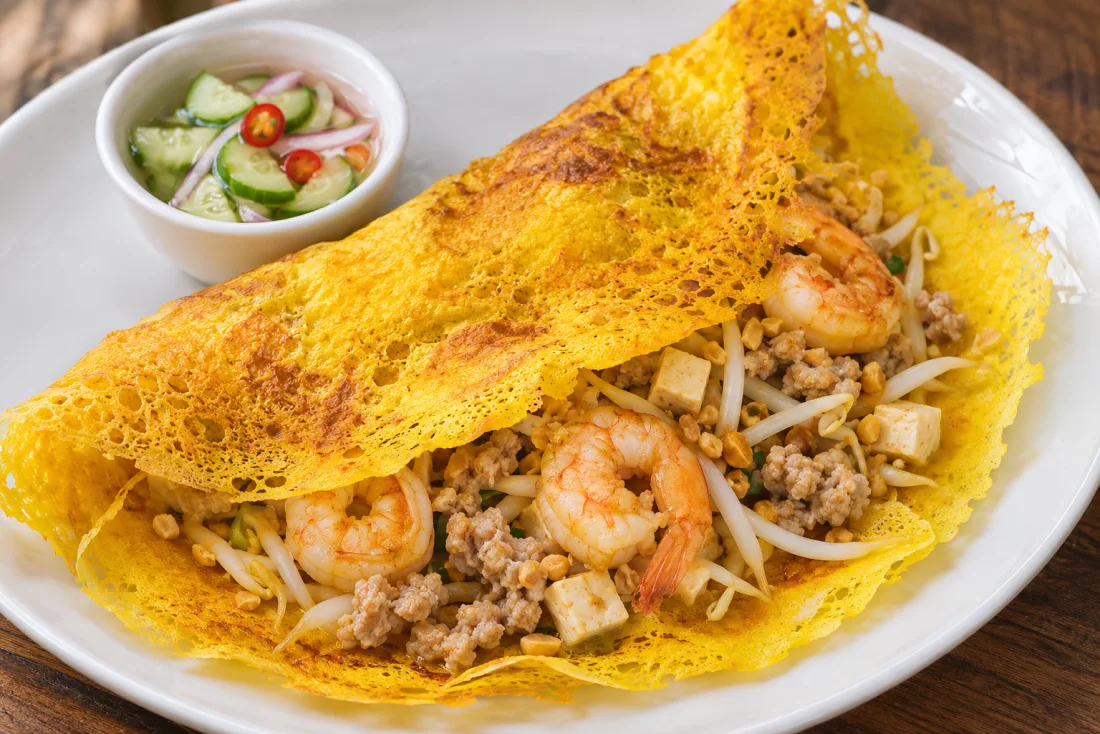
The full Thai name includes yuan. The crepe is often wide and folded, with crisp yellow edges and a savoury centre. Thai recipes document both crisp and softer skins, including a local crispy example in Saraburi.
Rice batter with pork, shrimp and bean sprouts
One batter uses rice flour, mung bean flour, turmeric, coconut milk and egg. A filling can include cooked pork, shrimp, wood ear, fried tofu and sprouts with fish sauce. Chicken and coconut is another documented choice.
Pouring the batter thin and folding the crepe
Tip the hot pan to spread a thin layer of batter. Cook the filling first. Add the sprouts late if a crisp bite is wanted, then fold the crepe around the filling. Serve sauce on the side to keep the shell crisp.
Crisp edges, savoury filling and a tart dip
The rim can be dry and crisp while the filled middle is softer. Shrimp adds sweetness, pork adds savour, and sprouts and wood ear add crunch. A sweet-sour cucumber dip refreshes the palate and can be used a bite at a time.
Vietnamese bánh xèo and Thai street crepes
Vietnamese bánh xèo can be served with raw greens and fish sauce dip. Thai preparations may use egg or serve ajat on the side. Small Thai khanom bueang is a different snack, often filled with egg white cream and golden egg threads.
Allergens in batter, filling and sauce
Shrimp adds crustaceans. The batter may contain egg and coconut, tofu contains soy, and fish sauce contains fish. Other versions may include peanuts or oyster sauce. Ask about wheat in mixes and seasonings, as well as shared pans and utensils.
If you have a food allergy, tell the restaurant before ordering and ask about ingredients, sauces and shared cooking equipment.