

 chicken thigh
 shrimp paste
Why thin rice noodles pair with green curry
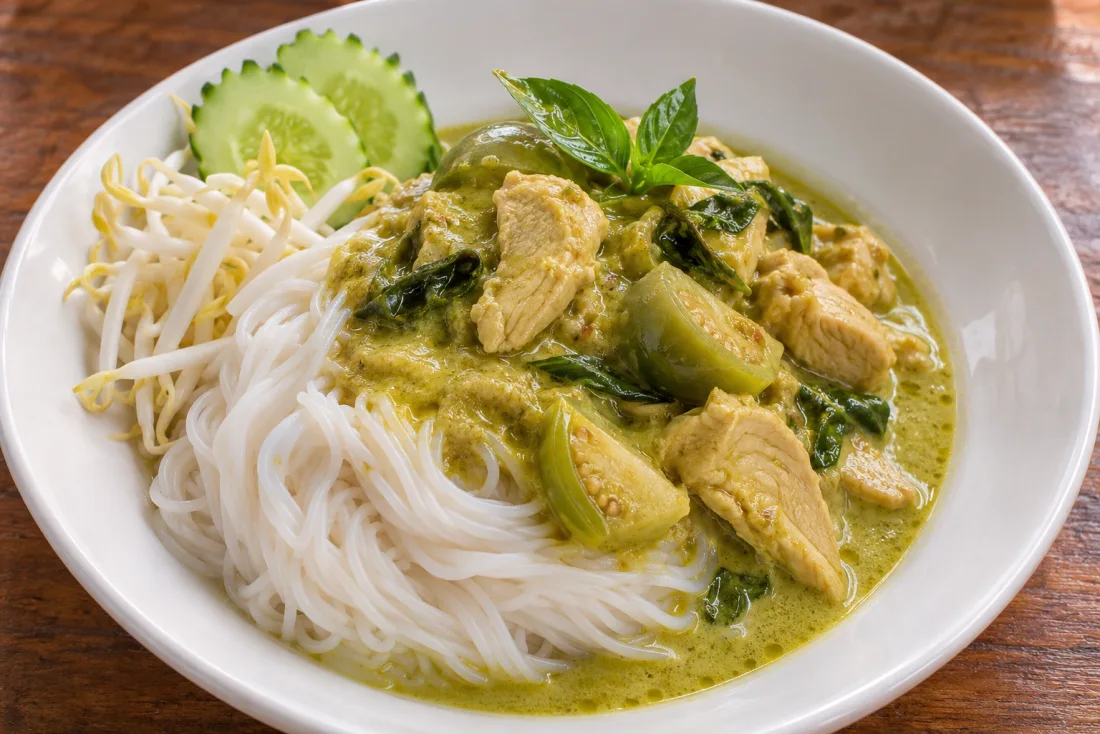
Thai cooks serve the rice noodles with many sauces. Fresh and fermented noodle styles exist. Central-style chicken green curry can go with rice or noodles. The menu name identifies the pairing and can leave the protein unspecified.
Making the chicken, eggplant and basil curry
One Thai home recipe heats green curry paste and shrimp paste in coconut milk, adds chicken and eggplant and serves it with khanom chin. Basil and makrut leaves may be used. Cook the sauce separately so the noodles keep their shape.
Coconut, herbs and green chili heat
Coconut smooths the heat, while basil and makrut leaves can add fragrance. Eggplant softens and chicken absorbs savor. Rice noodles have a mild grain fragrance and fermented noodles may be lightly tangy. A pale green curry can still be spicy.
Serving noodles and curry together or apart
Pour a little curry over a bundle and portion out the chicken and eggplant. Keep sauce and noodles separate for takeaway if desired. Ask about vegetable sides and adjustable heat.
How green, red and fish-based noodle sauces differ
Red curry uses a red chili paste and other aromatics, and some nam ya sauces get body from cooked fish. Northern khao soi often has a crisp noodle topping. Green curry rice noodles can be served with several proteins.
Allergens in curry paste, fish sauce and noodles
The featured paste contains shrimp. Fish sauce or fish balls add fish. Confirm coconut, soy or wheat in sauces and noodles and check shared cookware. Removing chicken and eggplant from the bowl does not remove contact with curry.
If you have a food allergy, tell the restaurant before ordering and ask about ingredients, sauces and shared cooking equipment.