

 chicken
 fish sauce
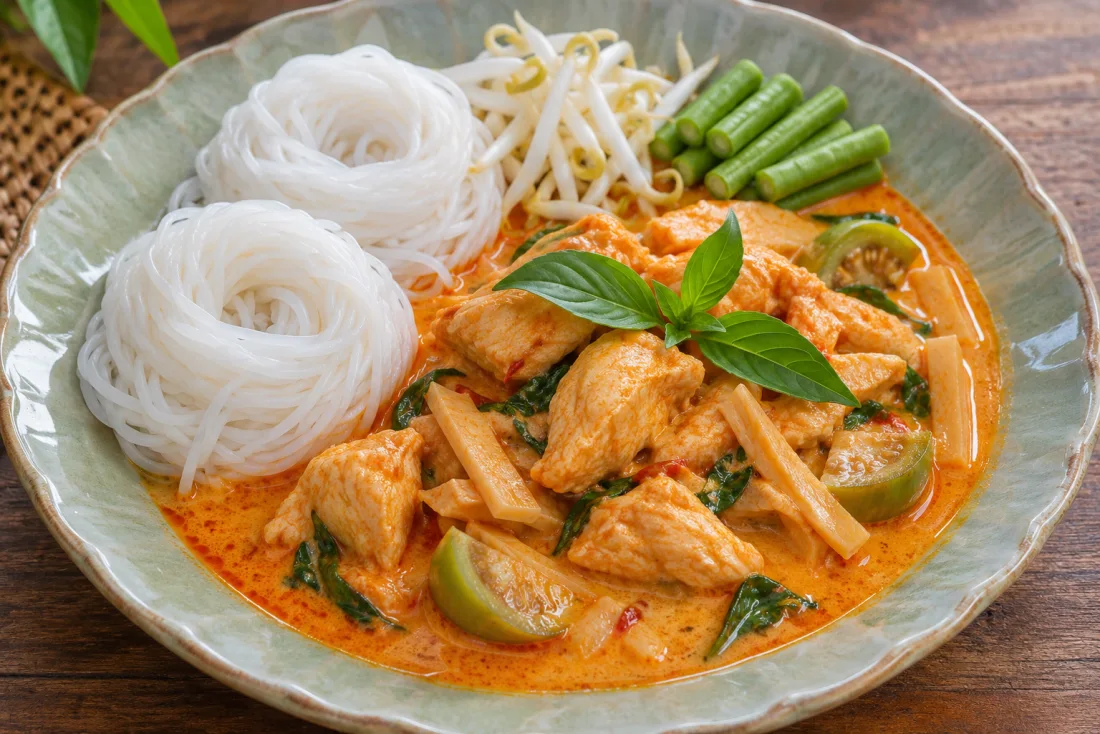
Rice noodle nests with chicken curry
Khanom jeen are fine Thai rice noodles often gathered in small nests. Kaeng kai is chicken curry. This serving uses red coconut curry with cooked pieces of chicken. The noodles may go alongside the curry or on a separate plate. The name khanom jeen kaeng phet kai specifies the red, spicy curry style. Green chicken curry and thick chicken nam ya are separate preparations that may use similar noodle nests, so look at the exact curry on the menu.
A Thai way to pair noodles with curry
Thai recipe authors serve red chicken curry with khanom jeen or with plain rice. A noodle platter divided into nests makes taking a serving easy. Thai tables offer several such noodle sauces, herbs and vegetables, and there is no basis here to assign this particular combination to a single province. It can be a light meal or a shared table dish. Ask whether the restaurant serves red or green curry, which vegetables are included and whether the curry comes separately.
Fine rice noodles, red curry paste and chicken
Rice is the main noodle ingredient. Dried red chilli, lemongrass, galangal, garlic and shallot can enter the paste, while coconut milk gives the curry body. The meat may be small chunks, sliced breast or drumsticks, cooked through. Thai eggplants, sweet basil or makrut leaf can be added, and long beans can be cooked or served separately. Fish sauce, salt and palm sugar adjust the flavour. Chicken feet, blood curd or other offal are not assumed unless named by a shop.
Finish the hot curry before serving the noodles
Fry the paste in thicker coconut milk until fragrant, then add the prepared chicken and thinner coconut milk and simmer until the meat is fully cooked. Leafy ingredients and delicate herbs can go in near the end. Place the ready rice noodles in nests and pour the hot curry at the table or serve it alongside. Start with a little sauce if you want the noodles to stay separate. Keep utensils handling raw ingredients apart from cooked curry and washed vegetables.
Silky noodles with coconut and red chilli
The coconut sauce tastes savoury and creamy before the red chilli heat builds. Drumstick meat can be soft and rich, while sliced or cubed breast feels leaner. Fine noodles carry a thin coating of sauce. Long beans or cucumber add a crunchy bite, and basil or makrut can give the finish an herbal note. Colour alone does not indicate how hot the curry is. Taste the sauce first and spoon more over the noodles to suit.
Allergens in the paste, seasonings and accompaniments
Red curry paste can contain shrimp paste and fish sauce contains fish. Other stocks or sauces may introduce soy, wheat or oyster. Ask about coconut if you need to avoid it. Rice noodles may contact other noodles or seasonings during preparation. Some meals add boiled egg as a side, so check it separately. Serving the curry separately helps with portioning but does not remove ingredients that have been cooked into it. Ask about shared bowls, ladles and blanching equipment.
If you have a food allergy, tell the restaurant before ordering and ask about ingredients, sauces and shared cooking equipment.