

 minced pork
 fish sauce
Why serve these Thai rice noodles with red curry
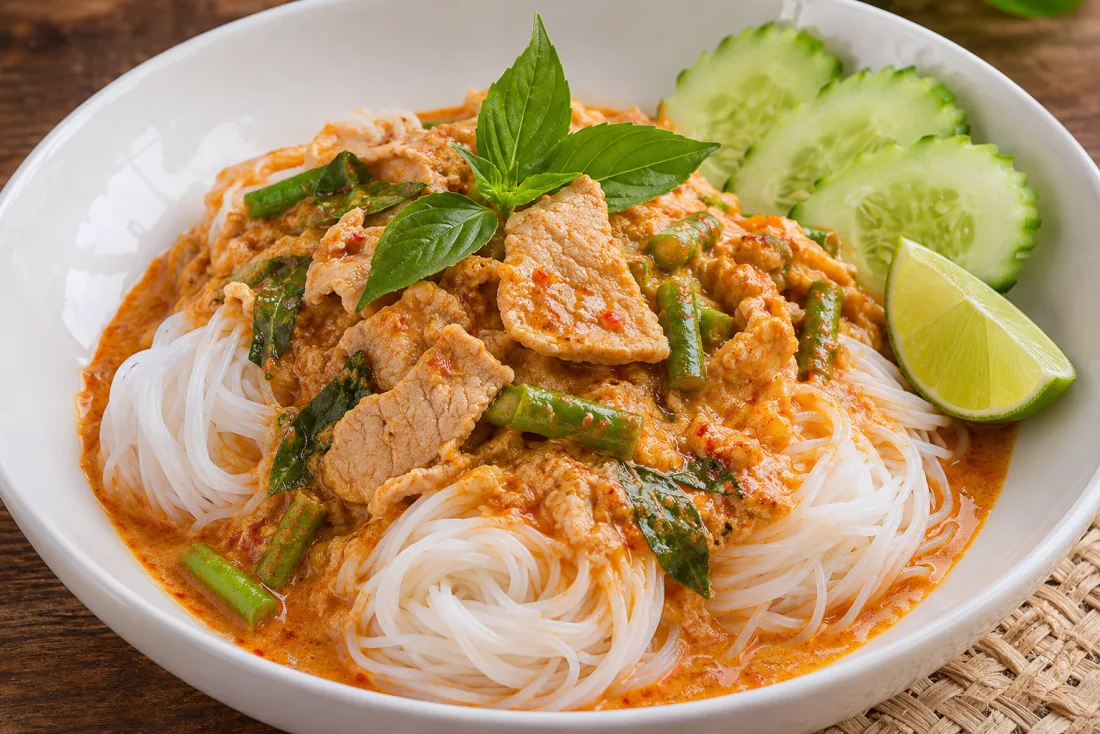
Khanom chin are thin rice noodles served in bundles, with fresh and fermented styles. Many Thai kitchens pair them with sauces. One modern red pork curry recipe takes inspiration from chicken curry served with noodles in Bangkok’s Kudi Chin community.
Cook curry first and sauce the noodles to serve
The recipe fries red curry paste in coconut milk, adds pork, more coconut milk and water, and seasons with fish sauce, palm sugar and makrut leaves. This particular recipe includes minced pork, pork blood cubes and ground nuts. Those additions depend on the kitchen.
Soft strands and a savory, gently sweet curry
Thin rice noodles are slippery. Fermented noodles can have a faint tang. Coconut softens the chili sauce and makrut leaves add citrus aroma. Minced pork mixes readily with the noodles, and sliced pork has a different bite. Add sauce gradually to preserve the noodle texture.
Portion noodles, toppings and sauce
Loosen a small bundle and add a spoonful of curry and pork. Cucumber, long beans or other vegetables can bring crunch. At a shared table, serve noodles and curry apart. Ask whether the portion includes toppings or a full bowl of curry.
Comparing coconut fish sauce, green and red curry noodles
Fish-based nam ya can be thickened with cooked fish. Green curry has a different chili and herb base. Red curry can use pork, chicken or fish balls. Northern tomato and pork noodle soup is a separate combination. Ask if coconut milk is in the sauce.
Allergens in red curry paste, fish sauce and toppings
Fish sauce contains fish and some curry pastes contain shrimp. Check ground nut ingredients, coconut, soy, wheat and egg or other toppings. Ask about noodle ingredients and shared tools. Moving noodles out of the sauce cannot undo contact.
If you have a food allergy, tell the restaurant before ordering and ask about ingredients, sauces and shared cooking equipment.