
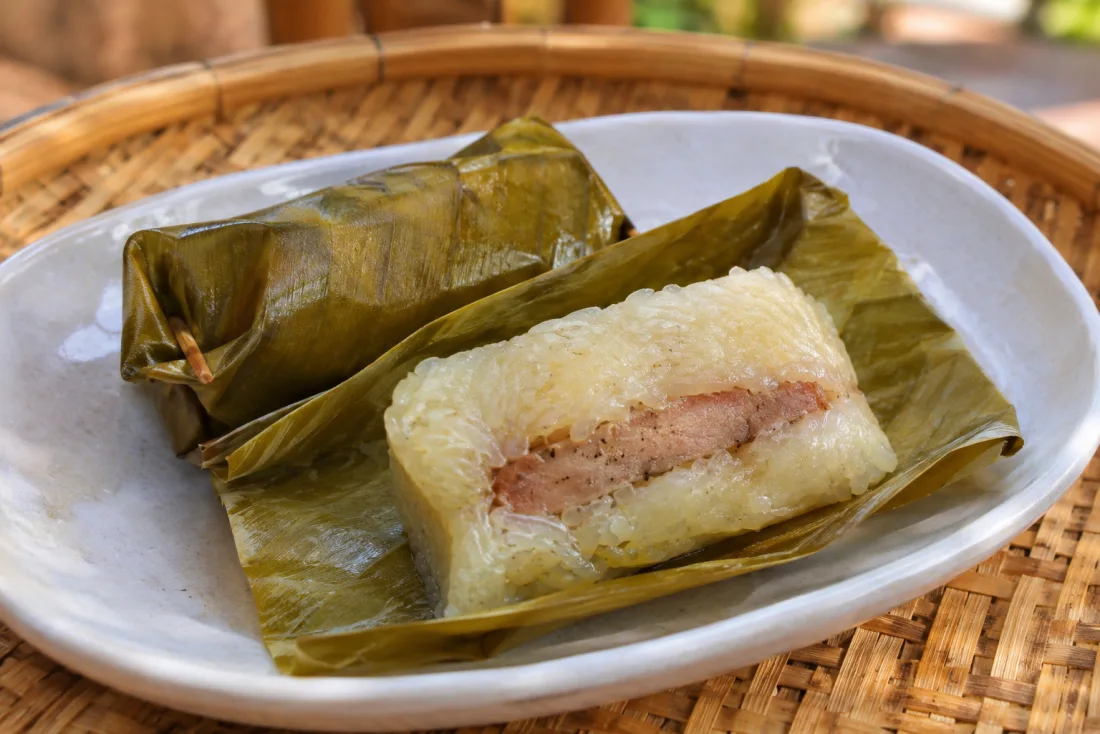

 pork
 fish sauce or cumin in some versions
The Name and Its Eastern Thai Context
Khao tom mat commonly names a family of tied, leaf-wrapped sticky rice parcels. Sai mu specifies pork filling. Khao tom mat tai is a local name for a long parcel wrapped like a traditional torch and tied in sections. The National Library in Chanthaburi records a family maker in Laem Sing who offered both pork and bean varieties, including boiled and charcoal-toasted styles. Two pork versions are shown here. The wrapper, cooking method and filling vary according to the maker, and the local interview documents a specific practice rather than a recipe for all regions.
Coconut Rice, Cooked Pork and Leaf Fragrance
Coconut milk softens and enriches the rice. The cooked grains can remain visible around the savory pork. A fatty cut can feel tender and rich beside the firmer fibers of the meat. Hulled mung beans are used in some traditional preparations and may give the cut surface a pale yellow shade as well as a softer, mealier texture. A steamed banana leaf gives a mild vegetal fragrance, while a grilled kapho palm wrapper can give a faint smoky scent. A light char on the wrapper does not mean that the rice is crisp.
The Long Chanthaburi Parcel
The local account describes glutinous rice, coconut milk, salt, sugar, pepper and shallot. Fatty pork is added for the meat filling, and split mung bean appears in traditional descriptions of this type of parcel. The narrow palm leaf wraps the rice into a compact cylinder and fine bamboo bands hold it in sections. Where the parcel is opened, the cooked pork can be seen among pale rice grains. Banana leaves also occur locally. Remove the wrapper and ties. A long parcel can be served whole or opened and divided into sections for sharing.
A Steamed Banana-Leaf Version
A Thai chef cooks pork collar seasoned with fish sauce and cumin, surrounds it in sticky rice prepared with coconut milk and salt, wraps the parcels in banana leaves and steams them. This particular version uses no mung beans or banana, so a piece shows a distinct strip of cooked meat encased in pearl-colored rice. The chef serves fried shallot and cucumber on the side for crispness and freshness. The small banana-leaf parcels have a different form from the long Chanthaburi package while featuring the same savory combination of pork, glutinous rice and coconut.
Identification and Serving
An intact wrapper can hide whether the filling is pork, sweet banana or beans. Look for sai mu or mu khem on a menu if that distinction matters. Unwrap a single parcel to eat it by itself, or remove the ties and slice a longer parcel for the table. The leaf and coconut aromas are more noticeable when warm. The family name can refer to traditional boiling even if a maker steams a batch or gives it a charcoal finish. Cucumber or fried shallot depends on the individual service. The rice already has coconut fragrance when opened, without any coconut sauce at the table.
Allergens and Dietary Details
Both examples contain pork and coconut milk. Fish sauce in the salted pork version contains fish. Some parcels may contain split mung beans, a legume, which may matter for a specific allergy. Fillings are not obvious under a leaf, and the stock of seasonings may differ between kitchens. Steaming equipment, wrapping tables, trays and knives can be shared with other fillings. Ask about specific ingredients and cross-contact when necessary, and remove the ties and wrapper before eating.
If you have a food allergy, tell the restaurant before ordering and ask about ingredients, sauces and shared cooking equipment.