

 dried shrimp
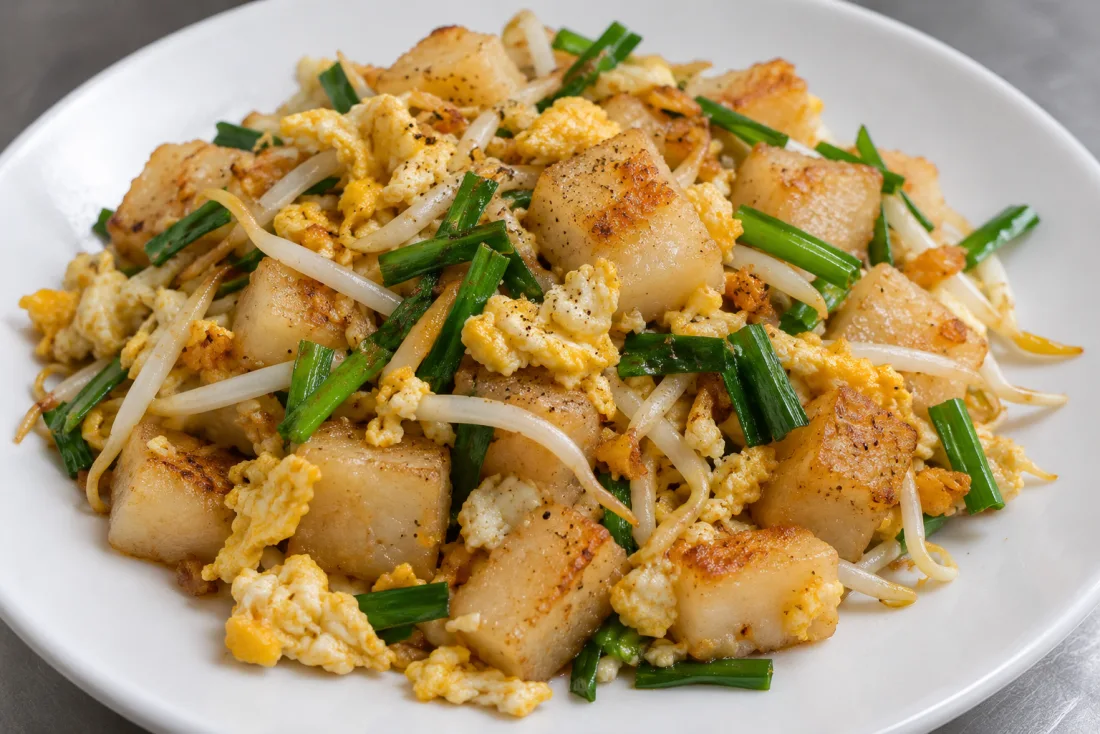
A daikon cake at a Thai stall
Khanom phak kat also appears as chai thao kuai, reflecting a Chinese name for radish cake. Phat khai identifies the egg-fried version. A stall may also sell steamed cake or pan-fried pieces as a snack.
Daikon and the rice-flour cake
Grated daikon brings a gentle vegetable sweetness. Rice flour and sometimes another starch hold it together when steamed. Cooks may add dried shrimp, shiitake, Chinese sausage or peanuts. A radish-rich cake can be softer.
Wok-frying with egg and greens
The cake browns directly against the hot pan. Egg sets into small pieces around it. Bean sprouts and garlic chives add crisp and aromatic bites. Pepper or soy sauce can add warm savoury flavour. Cooked eggs should be set throughout.
Small cubes or thicker slices
Small cuts have more edges and can mix with the egg. Thick pieces brown on broad faces while the centre stays soft. A shop may offer chilli vinegar or another sauce. The amount of pepper and heat varies.
Choosing a serving
Wok-fried cake usually has egg, sprouts and chives mixed through or alongside. Pan-fried cake may arrive as plain slabs with dip. Try a bite without added sauce first. Separate sauce preserves more of the surface texture on takeaway.
Allergens in cake and seasoning
Egg can be in the stir-fry or the cake. Dried shrimp is a crustacean, fish sauce contains fish and oyster sauce may contain molluscs. Some cakes contain peanuts. Check soy, wheat, sausage ingredients and shared equipment.
If you have a food allergy, tell the restaurant before ordering and ask about ingredients, sauces and shared cooking equipment.