

 minced pork
Lanna and Shan rice parcels
In northern Thailand, khao kan chin is also called khao ngiao. Regional documentation associates it with Shan foodways. It is eaten in northern kitchens and at a Kengtung-style restaurant in Bangkok. Some traditional recipes have pork blood without added mince, while others use both.
Cooked rice, pork and separate sides
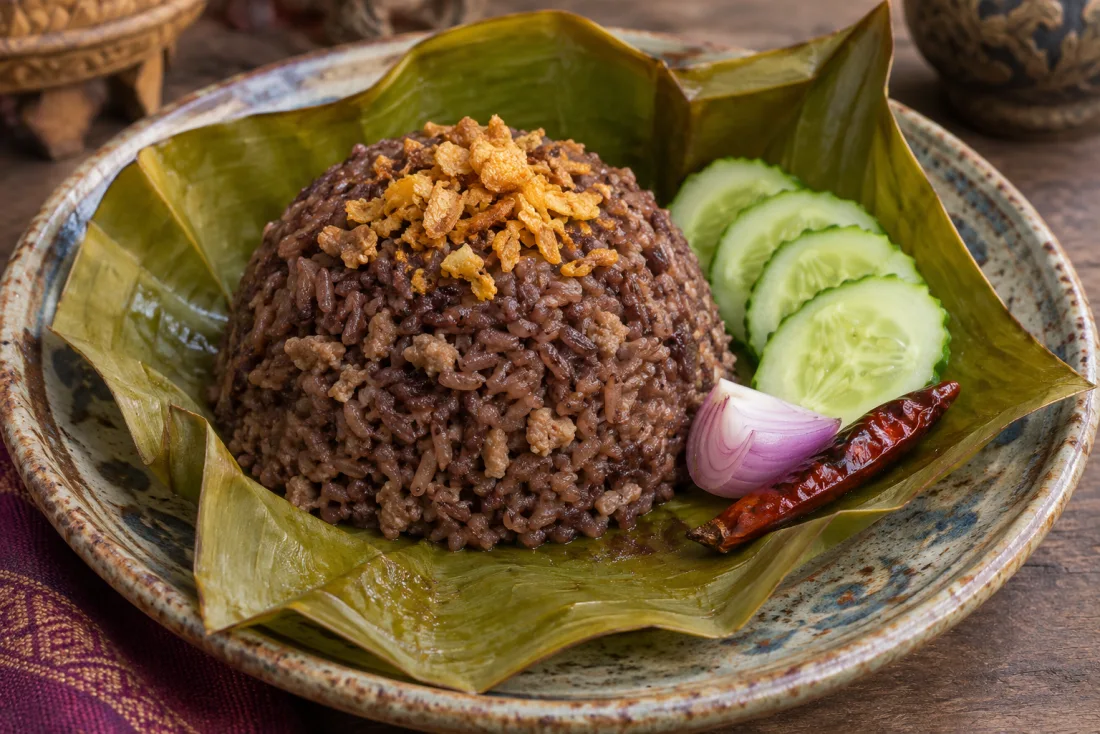
A documented version uses ordinary cooked rice, minced pork, pork blood, seasoning and fried garlic oil. A blood-free home adaptation uses ground meat without blood, and a shop can make that style with minced pork. Fried garlic, shallot, cucumber and dried chilli can be served outside the parcel.
Leaf fragrance and the colour of the rice
Warm banana leaf scents the soft grains. The traditional blood version tends to be darker and has a mild savoury taste. A blood-free adaptation can be paler and more prominently seasoned with garlic. Colour by itself does not establish the presence or absence of blood.
Wrapping and steaming
Pack seasoned rice in clean banana leaves. Steam until the entire parcel is cooked through, including meat and blood if used. Ground meat should reach 71°C. Open at serving and add condiments using clean utensils.
Ordering and eating the parcel
Ask whether the rice uses pork blood or mince. Open the banana leaf and eat the warm rice with fried garlic, cucumber, onion or dried chilli. Some northern restaurants offer it with nam ngiao noodles, which can have separate ingredients.
Allergens and dietary ingredients
Pork or pork blood can be present even when not visible. Soy, wheat, fish or molluscs can come from added sauces, depending on the recipe. Ask about the parcel, dressings, optional sides and shared equipment separately.
If you have a food allergy, tell the restaurant before ordering and ask about ingredients, sauces and shared cooking equipment.