

 pork leg
Where it is served and what the name means
Khao means rice and kha moo means pork leg. The MICHELIN Guide documents rice topped with braised pork leg as common Bangkok street food and describes a Si Lom shop that serves the meat in a separate bowl. That records how it is served in Bangkok today. It does not identify the dish’s first shop.
The name also helps with portion sizes. Kha moo can mean a dish of pork leg, while khao kha moo specifies a meal with rice.
What goes into a plate
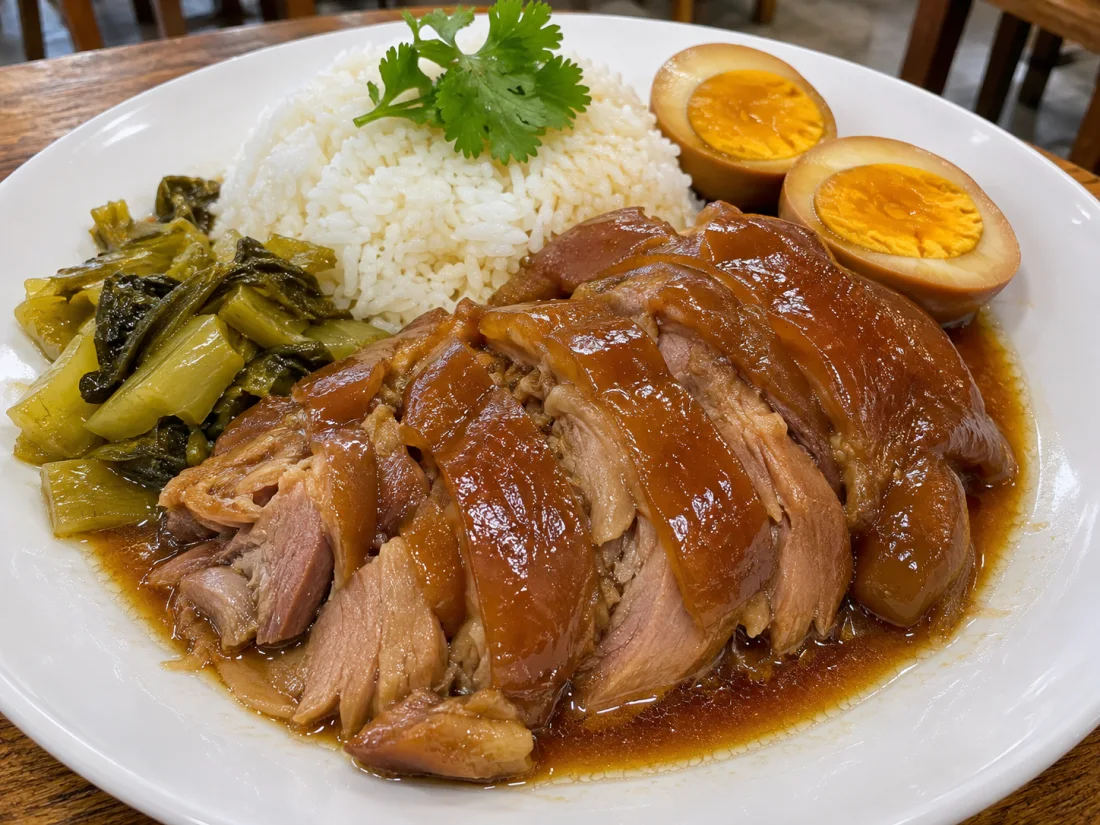
The cooked leg is portioned into meat, skin and fat. A stall may put it beside or over plain rice and spoon on some of the dark gravy. Published recipes show jasmine rice, egg, pickled mustard greens and blanched Chinese broccoli as a combination. The contrasting brown meat, white rice and green vegetables make an easy visual cue.
Braising liquids vary. Soy sauces, sugar, star anise, cinnamon and five-spice appear in different recipes, and some include garlic and shiitake. A restaurant can plate the gravy and sides separately.
What slow cooking does to the texture
One method braises the pork leg in a seasoned liquid until tender. As it cooks, the meat takes on the sauce’s color, while parts with skin and connective tissue can feel yielding or pleasantly springy. Leaner meat is easier to pull apart. The size of each slice and how much gravy goes with it change the intensity of a bite.
The liquid carries savory seasoning, spices and some richness from the pork. A bigger ladleful makes the rice wetter and more strongly seasoned. Gravy on the side lets diners add it gradually.
Soy, warm spices and sharp accompaniments
The gravy often tastes savory and gently sweet, with warm notes from star anise, cinnamon or five-spice. The sauce gives the meal more body than a clear broth. A bite of pork skin with rice can make the difference in textures clearer.
Pickled greens, crisp Chinese broccoli and chilli vinegar change the balance. Taste the pork and rice first if you prefer less heat. The color of the gravy does not tell you how hot a separate chilli vinegar is.
Ways it is served and what to compare
A single plate may come with meat, rice, egg and greens already combined. Another presentation keeps meat and gravy in a bowl with rice alongside. Restaurants may offer different proportions of skin, extra egg or different vegetables. Those choices depend on the shop.
When ordering, check the portion, whether egg comes with it, and whether chilli vinegar is already on the plate. The ratio of skin to meat is another useful detail to look for in a menu photo.
Allergens and ingredients to ask about
The gravy often contains soy sauce, which can involve soybeans or wheat. Egg is a common accompaniment. Some kitchens may cook it in the same pot, and ready-made seasonings may add other ingredients. A recipe example or photo cannot establish everything a particular restaurant uses.
If you have an allergy, name the ingredient and ask about the gravy, dipping sauce, recipe for the egg and shared knives, boards and ladles. Removing the egg from the plate does not address cross-contact. People avoiding pork should ask about any gravy spooned over the rice.
If you have a food allergy, tell the restaurant before ordering and ask about ingredients, sauces and shared cooking equipment.