

Why an Isan kitchen adds it
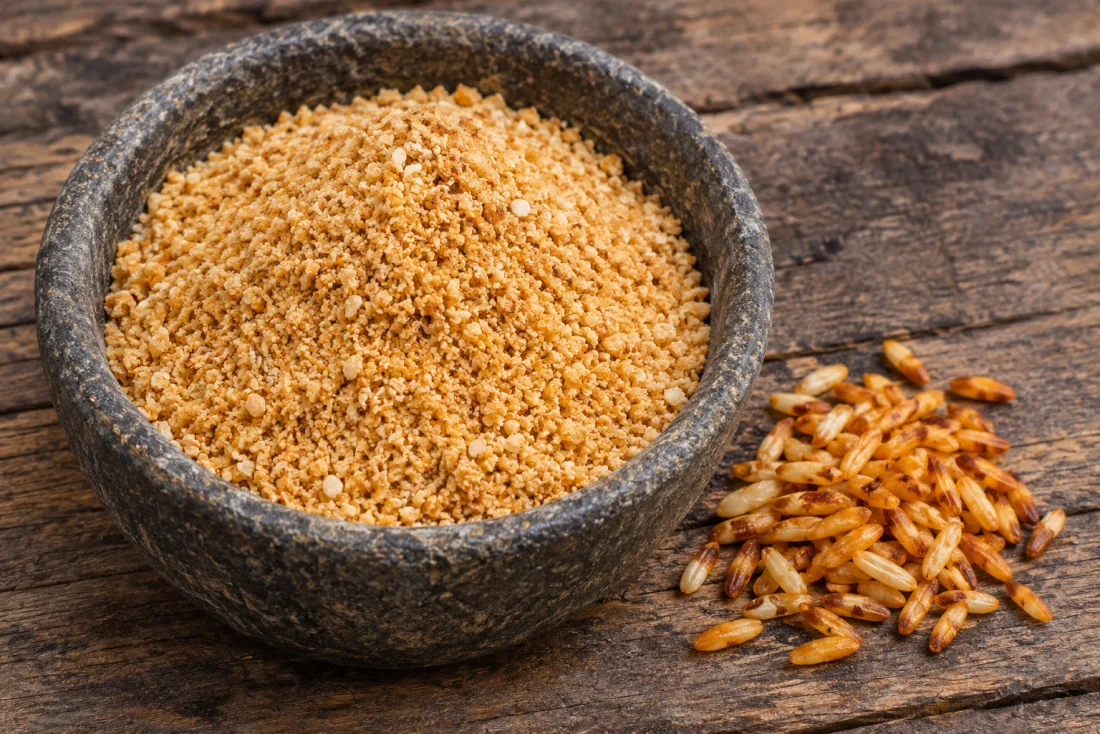
Khao means rice, and khua describes pan toasting. In cooked meat salads, chilli dips and some sour soups, a pinch contributes a grain aroma and a little texture. It normally appears as a kitchen ingredient rather than a standalone serving of rice.
Glutinous or jasmine rice
Glutinous rice is a familiar choice, while ordinary long-grain jasmine rice is a documented alternative. The grain and roast both affect the colour. Milling sets the texture, so fine powder does not identify the variety. Some versions add aromatics such as makrut lime leaf.
From dry grains to seasoning
Dry rice becomes golden and fragrant when toasted evenly, then pounded or ground. A mortar can leave small irregular granules, while a grinder can make finer powder. A burned taste can overpower the food. A dry spoon keeps the ground grains from taking up moisture.
What it does in a dish
Coarse grains offer a faint crunch in dressed larb. They soften as they sit in a dipping sauce. Fine grains work in pork tom saep, bringing a roasted aroma and a slight grainy feel. The bright acidity or chilli heat in those dishes comes from other ingredients.
Recognising it on the menu
A cook may add a small amount near the end, leaving golden specks. A ready-made packet may contain only toasted rice or be blended with chilli or herbs. Ask whether the kitchen can serve it separately if you prefer fewer grains or want to see its texture.
Allergens in powders and prepared dishes
Plain roasted rice can smell nutty without nuts. Check blends and shared milling equipment for peanuts, soy, wheat or other ingredients. Fish sauce and shrimp paste can add allergens to the final dish. People with rice allergy still need to check for this ingredient.
If you have a food allergy, tell the restaurant before ordering and ask about ingredients, sauces and shared cooking equipment.