

 shrimp paste
 sweet pork
A central Thai dish and a descriptive name
Khao means rice, khluk means to mix and kapi is fermented shrimp paste. Thai cooks describe this as a central Thai dish. That identifies a culinary tradition without establishing its first town, cook or shop. The paste is already mixed into the rice, while the other ingredients can be mixed into it at the table.
Cooked rice and the shrimp paste may be tossed together in a pan, which is why some menus call it shrimp paste fried rice. Some recipes first cook the paste with aromatics, mix that seasoning with the cooked rice and then shape it on the plate. Fragrant rice and recognizable toppings are often clearer clues than a broad fried-rice translation.
The seasoned rice and what sits around it
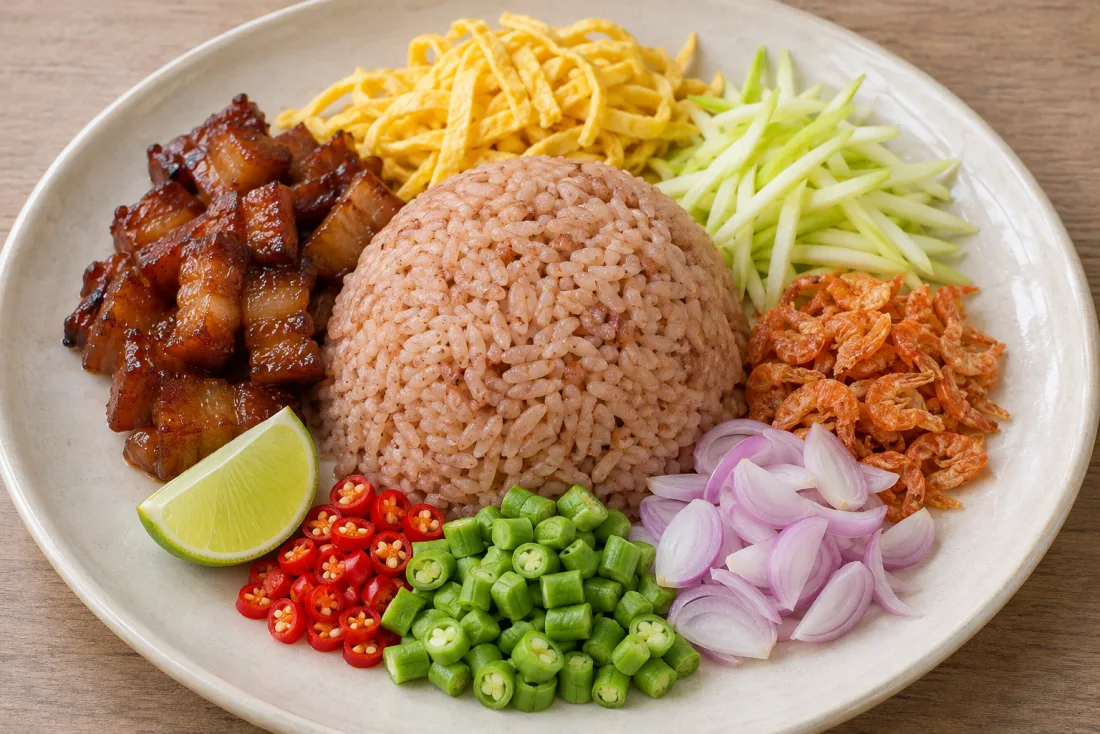
Cooked rice takes up the salty aroma and color of the shrimp paste. Sweet pork can be cooked with shallots, sugar, fish sauce and dark soy sauce until the seasoning coats the meat. Thin omelet is sliced into strips, and fried dried shrimp give crunch. Sour mango, shallot and long bean are sliced so they can be picked up with a bite of rice.
Lime, fresh chilli or cucumber may also come alongside. Restaurants use different assortments. Drier cooked rice helps the seasoning mix more evenly. The pork and omelet can be placed around the prepared rice separately, which makes the components of the plate easier to recognize.
Fermented savor, fruit acidity and sweet pork
The rice alone has the cooked, fermented savor of shrimp paste. The pork tastes sweeter and rounds out the salty rice. Green mango and lime add acidity, shallot and long bean add crunch, and omelet makes a spoonful feel softer. Fried dried shrimp contribute another crisp texture and seafood flavor.
A ring of toppings lets you vary the mix. Stirring in only some of the mango gives a few distinct sour bites, while squeezing lime disperses acidity more evenly. Fresh chillies can come at the side, though a cook can also mix chilli into the rice. Check the sauces and peppers before stirring everything in if you prefer a milder plate.
A complete meal on one plate
The rice, pork, egg and vegetables can make this a meal in itself. It can also be shared alongside other dishes. When rice sits at the center with separate piles around it, try some of the rice first to gauge the saltiness of the shrimp paste.
Start with a little sour mango and follow with a piece of sweet pork. Long bean adds crunch, while pork and egg round out the sharper flavors. Some people mix the whole plate, while others build each bite as they go. The arrangement makes it easy to choose different proportions of sour, sweet, spicy and savory.
Omelet-wrapped rice and other shrimp fried rice
Cooks sometimes wrap the seasoned rice in a thin omelet and place sweet pork, sour mango and the other toppings beside it. Its base is the same shrimp-paste rice as a plate with egg strips. Where the egg sits changes the experience. Vendors may also use other sour accompaniments or choose not to add fried dried shrimp.
Fried rice with fresh shrimp primarily uses fresh shrimp tossed with rice. Shrimp-paste rice has kapi worked into the grains, so it can taste of seafood even without visible shrimp. Kapi refers to fermented shrimp paste, while goong is a common word for shrimp.
Allergies in both rice and toppings
Shrimp paste and dried shrimp contain crustaceans. Omelet strips and wrappers contain egg. Sweet pork and brown seasoning may use fish sauce, soy sauce or a prepared sauce, which can introduce fish, soy or wheat. The rice can still contain shrimp even when dried shrimp are absent. Ask the kitchen about its actual ingredients.
Tell the restaurant what you need to avoid and ask separately about the rice, pork, egg and sauces. Woks, spatulas, containers and work surfaces may be shared with other foods. Before changing a topping, ask whether it has already been mixed in or is only added at the side.
If you have a food allergy, tell the restaurant before ordering and ask about ingredients, sauces and shared cooking equipment.