

 poached chicken
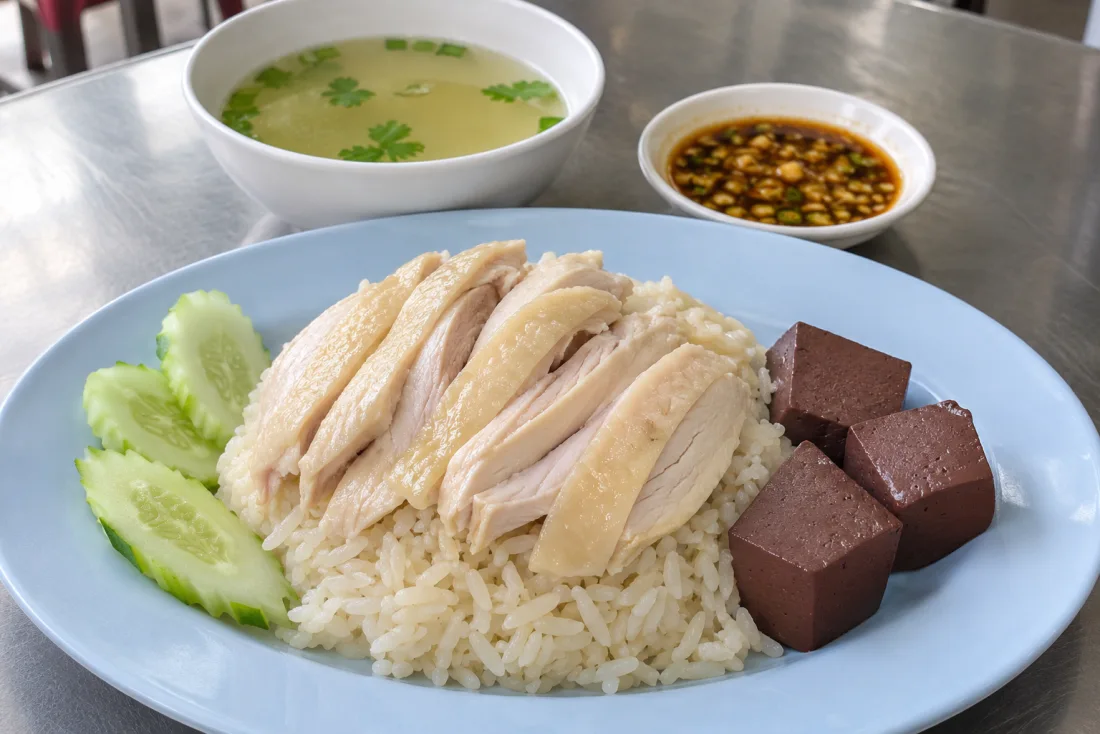
Khao man gai with fully cooked chicken blood curd
Khao man gai means seasoned chicken rice with chicken, and luat refers to blood. Luat tom means boiled blood. Here it refers to coagulated chicken blood served fully cooked in cubes or slices. The pieces can be picked up and eaten alongside chicken and rice. No liquid blood is mixed into the rice. Chicken liver is a distinct optional item. Look for the full menu name if you want to know which pieces are served.
Thai chicken-rice shops and optional accompaniments
A Thai chicken-rice restaurant describes a serving of cooked chicken with boiled blood. Another includes blood and says that liver and other offal are unavailable. Some shops sell blood curd separately. These menus document real Thai servings without identifying one province as the origin or making the topping universal. Khao man gai follows a Hainanese chicken-rice tradition adapted in Thailand. Ask about the size of the serving and whether the dips come separately.
Chicken, fragrant rice, broth and coagulated blood
Jasmine rice can be cooked in chicken broth or with chicken fat, garlic and ginger. Use thoroughly cooked chicken and thoroughly cooked chicken blood curd. Breast or thigh changes the texture. A clear chicken-bone soup may include daikon, winter melon or scallions. Cucumber and herbs give a fresh bite. The dip may use fermented soybeans, ginger, garlic, chili, sugar and an acid. Some venues serve several sauces.
Cook both chicken and the curd before serving
Use food-grade coagulated chicken blood and cook it thoroughly. Thailand's Department of Health advises chicken-rice vendors to boil the cubes for at least five minutes and to cook chicken thoroughly, including near the bone. Separate tools used for raw ingredients from cooked meat, rice and garnishes. Bring cooked components to the proper serving temperature, and use safe storage and reheating for purchased cooked curd. Color alone does not establish thorough cooking.
Fragrant rice and a tender, fine-textured curd
The rice is savory with ginger and garlic. Poached chicken has a mild meat flavor, and the curd gives a tender, lightly springy bite. Taste it before adding sauce, as chili and fermented soy can quickly lead. Cucumber brings a cool crunch and soup adds moisture. Texture varies with the thickness of the pieces. Try dipping a little at a time to taste the rice and curd separately.
Allergens in dipping sauce, stock and seasonings
Chicken meat and chicken blood are present. Egg, if used, is separate. Soybean paste and soy sauce contain soy and may contain wheat. Fish sauce contains fish, oyster sauce can contain oyster, and additions can include sesame or shrimp paste. Check stock seasoning and the exact purchased curd. Ask about sauces and shared spoons, pans or boards. If avoiding blood, choose a confirmed version and ask whether the soup was cooked with it.
If you have a food allergy, tell the restaurant before ordering and ask about ingredients, sauces and shared cooking equipment.