
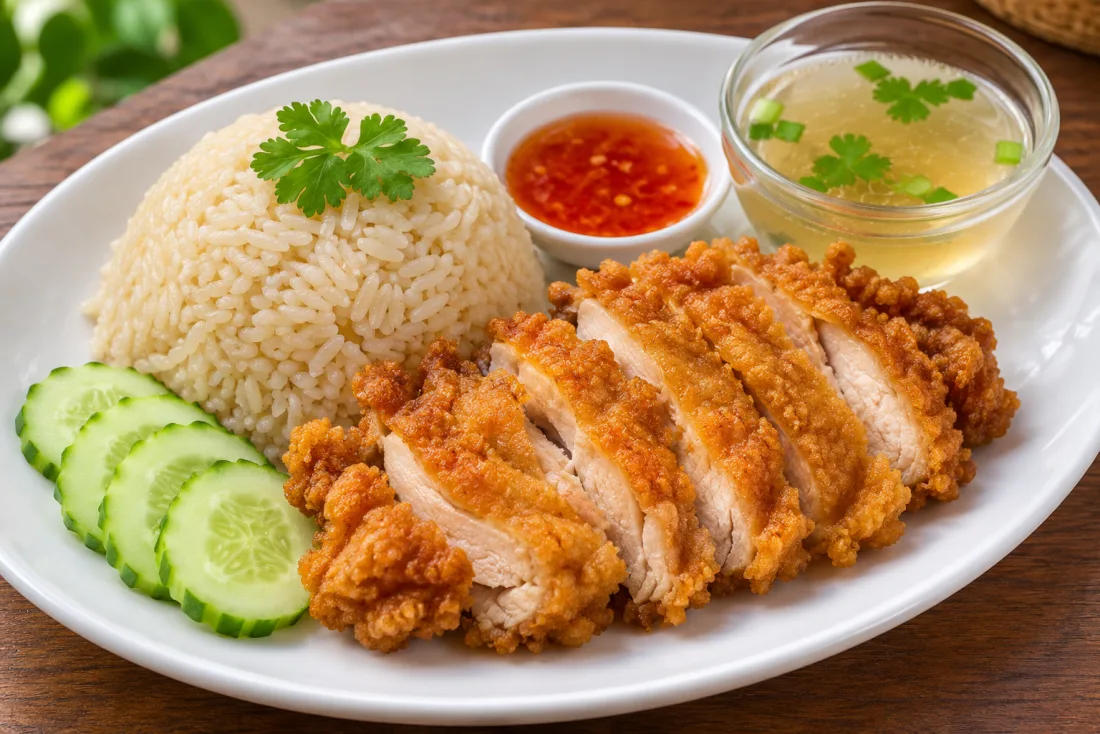

 fried chicken
The name and Thai chicken rice
Khao man refers to fragrant rice cooked with fat; gai tod means fried chicken. KRUA.CO documents a fried version and its dipping sauce. Thai menus may also offer poached chicken or a combination plate. The name describes the serving style rather than identifying a first vendor.
Rice, chicken and sides
The example cooks jasmine rice with chicken fat, stock, garlic and ginger. A crisp coating surrounds the fried chicken. Cucumber provides a fresh bite. If served with clear soup, that may contain chicken bones, pepper and winter melon in the stock.
Why the rice and chicken cook separately
Rice absorbs stock and aromatics, while frying sets the chicken’s crust. Cutting after frying makes the pieces easy to serve. Packing sauce separately can preserve the crust until eating. Steam from rice can soften chicken left directly on top.
Crisp chicken, fragrant rice and tart sauce
Try the rice first for chicken, garlic and ginger aromas. The chicken is crisp outside and can be juicy inside. The fried version’s dip can taste sweet, tart and hot, with vinegar used for acidity. Cucumber and clear broth make a lighter contrast.
Fried, poached and combination plates
Look for gai tod if you want only fried chicken. A combination can come with both fried and poached slices; grilled versions have a browned surface. Ask whether broth or separate sauces come with the plate.
Allergens in breading, stock and sauce
Ask about wheat or egg in breading, soy or wheat in seasonings, and fish in sauces. Check the stock, marinade and shared frying oil, tongs and spoons. Chicken fat and stock can be part of the rice even when meat is removed.
If you have a food allergy, tell the restaurant before ordering and ask about ingredients, sauces and shared cooking equipment.