
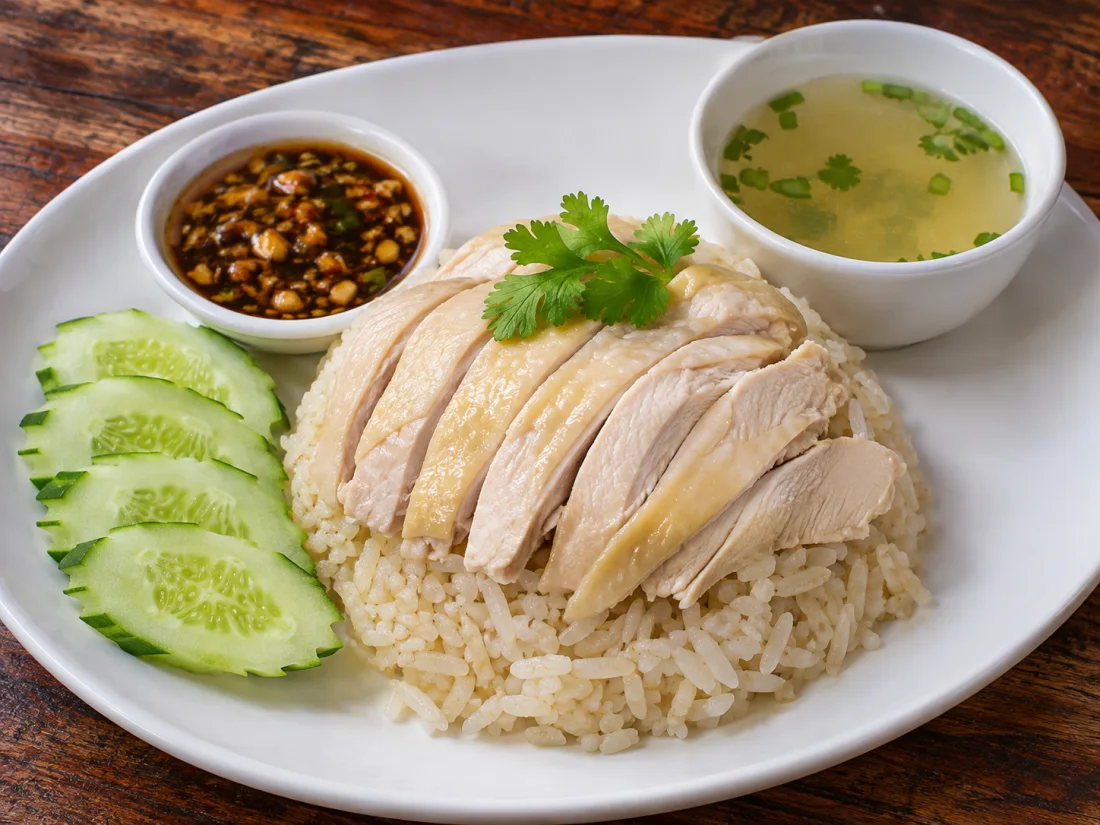

 chicken
From the Hainanese chicken-rice tradition to Bangkok
Khao man gai is a Thai form of Hainanese chicken rice, a tradition found across Southeast Asia. The combination of chicken, stock-cooked rice and a separate dip appears in more than one place. Thai versions often mix fermented soybean paste, ginger and chilli into the sauce. Khao means rice, man here refers to the richness of the rice, and gai means chicken.
Bangkok’s Pratunam district offers a documented example. Go-Ang’s operator traces its business to a local chicken-rice stall in 1960. It later brought its version to Singapore. That is the story of one business, rather than a date or place of invention for the dish. Recipes from Thai cooks also show how varied a home preparation can be.
The four parts of a serving
The first part is chicken. Cooks may poach a whole bird or pieces and then slice the meat with or without the skin. The second is the fragrant rice. Some recipes fry garlic and ginger first, then cook the rice with chicken fat and stock. The third is the set of accompaniments. Cool cucumber and a small bowl of soup provide a change of taste and texture between bites.
The fourth is the dip. A common Thai style starts with fermented soybean paste, ginger, garlic and chilli. It may also contain soy sauce, vinegar and sugar. Thickness, acidity, ginger and heat vary. The sauce often comes separately so diners can adjust each bite. The soup may be prepared or seasoned separately from the stock used for the rice.
How stock flavours the rice
Some cooks gently poach the chicken and reserve stock. Chicken skin or fat can provide the oil used to cook garlic and ginger before the rice goes in. Stock flavours the grains while the fat adds richness and the aromatics give the rice its fragrance. The grains cook in seasoned liquid, rather than being served as plain rice with broth poured over them.
Sliced poached chicken is tender, while the rice can retain distinct grains. A whole dish of spicy, fermented-bean sauce can overpower the rice. Try chicken with rice first, then dip a little at a time to notice the separate flavours of garlic, ginger, stock and fermented beans.
How to taste it and identify common variations
Poached chicken tastes mild and the rice is aromatic. The sauce often supplies most of the heat. Khao man gai tod is a fried-chicken version. Some shops serve a combination of poached and fried chicken, with contrasting skin and meat textures and potentially different dips. Ask separately about the batter and oil if you choose fried chicken.
You may be able to ask for thigh or breast, for the skin removed, or for the sauce on the side. Taste the chicken and rice together, use cucumber for a crisp break and sip the soup. The dip can come in later, after you have tasted the chicken and rice.
Where you may see it
Specialist stalls and shops can sell chicken rice as a complete plate for one. A restaurant may also serve a shared portion of chicken with separate bowls of rice. The Pratunam shop and a MICHELIN Guide interview with its restaurateur are concrete examples of the dish in Bangkok and overseas. They show dining settings and what one business did, rather than national sales figures.
Menu names include Khao Man Gai, Khao Mun Gai and Thai Hainanese Chicken Rice. The romanisations can name the same dish. The way the kitchen prepares the chicken, whether soup and sauce are included, and the portion format tell you more. In cities with several styles of chicken rice, the dipping sauce can be a better clue than the spelling.
Allergens in the sauce, stock and shared equipment
Fermented soybean paste and soy sauce usually involve soy. Some soy sauces, fermented seasonings and blended products may also contain wheat. Rice is a main ingredient, but its appearance cannot tell you whether the whole meal contains wheat. Ask about the stock used to cook it, the dip and whether the coating on an optional fried version includes wheat or egg.
If you have a food allergy, ask the staff about the chicken, rice and soup separately, along with the sauce. Simply removing the sauce dish does not change the stock already in the rice. Ask about shared cutting boards, ladles, frying oil and tools for garnishes. The restaurant’s actual ingredients and handling are what matter.
If you have a food allergy, tell the restaurant before ordering and ask about ingredients, sauces and shared cooking equipment.