
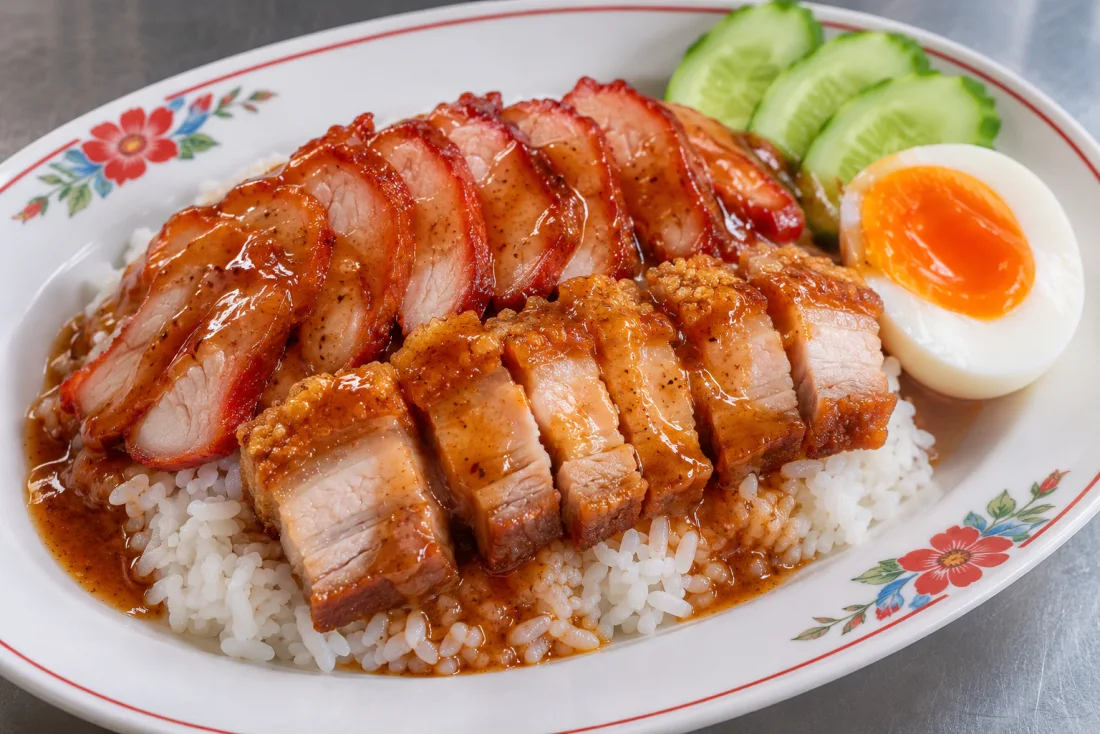

 crispy pork belly
Why two pork preparations share one rice plate
The Thai title names red roast pork and crispy pork separately. The Nakhon Pathom tradition documents both on a plate with gravy. Restaurants can change the portions and accompaniments such as egg, cucumber or Chinese sausage.
Roasting, crisping and preparing gravy separately
One home recipe marinates pork with pounded coriander root, garlic and pepper, then roasts it. Crisp the belly separately. Cook a lightly thick gravy with stock, sugar and seasonings. Sesame, peanuts and bean paste appear according to the version.
Sweet roast pork and crisp belly
Red roast pork has sweet-savory edges. Pork belly contrasts crisp skin with tender layers. The gravy brings sweetness and savor while cucumber or chili vinegar can provide crunch and acidity.
Serving the gravy and keeping the skin crisp
Add sauce to the rice or ask for it on the side so the pork skin stays crisp. Divide both cuts before sharing. Ask which sides are included or packed separately.
Two-cut rice, single-cut rice and braised pork leg
Roast pork rice can use one roast cut, and crispy pork rice emphasizes belly skin. Braised pork leg has a soft texture. Red roast pork noodle soup is a different way to serve the meat.
Allergens in marinade, gravy and sides
Soy and wheat can be present in soy sauce or bean paste, fish in fish sauce, and mollusks in oyster sauce. Gravies can contain sesame or peanuts, and sides may include egg. Ask about shared tools and dressings. Removing the gravy does not undo prior contact.
If you have a food allergy, tell the restaurant before ordering and ask about ingredients, sauces and shared cooking equipment.