
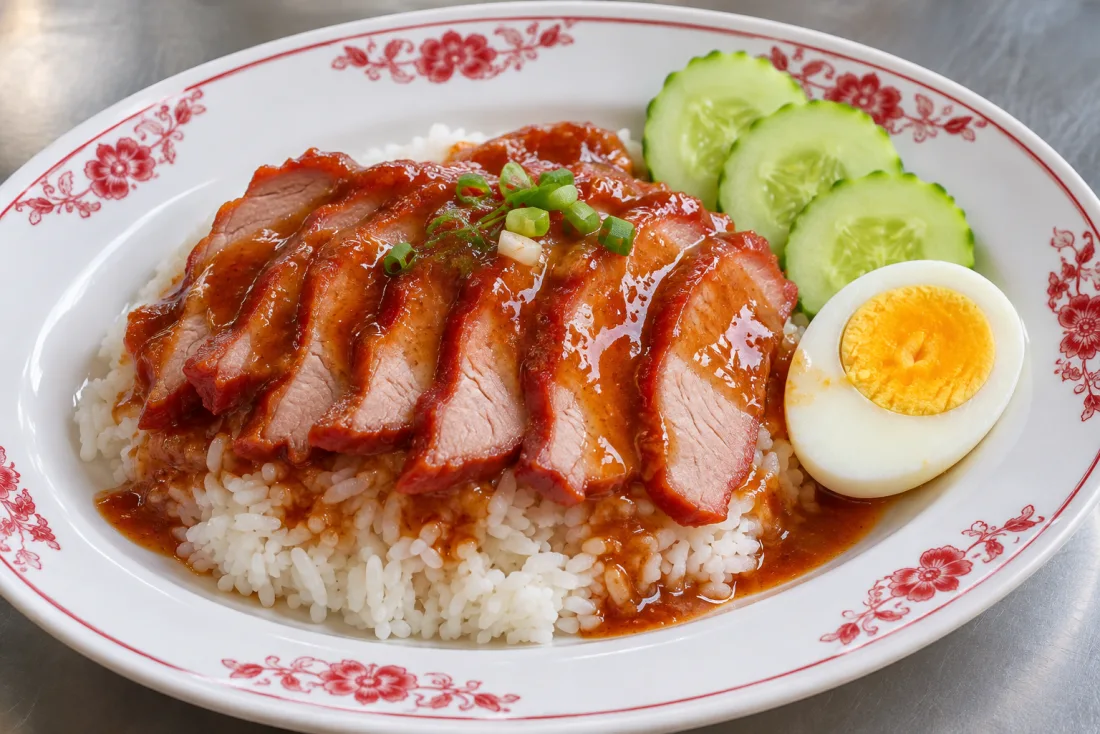

 pork neck
The name and central Thai rice plates
The Thai name means rice with red pork. KRUA.CO documents central Thai styles, including a Nakhon Pathom recipe. Red pork also goes with noodles. On the rice plate, the gravy and garnishes distinguish the Thai serving style.
Pork, rice, gravy and sides
One recipe uses pork shoulder or neck, Chinese sausage, cucumber and boiled duck egg. Its gravy contains pork stock, fermented soybean paste, peanuts and sesame. Another example uses roasting juices, soy and oyster sauces, and sesame. The actual gravy depends on the shop.
Why the meat is roasted and the gravy thickened
Cooks season the pork before roasting, then slice it for service. Cut, fat content and browning affect texture. A little starch can make the gravy cling to the meat and soak into the rice. It can also be served separately.
Sweet-savoury meat and refreshing sides
The red pork tastes sweet, savoury and lightly roasted. Gravy may carry five-spice or sesame. Chinese sausage can be firmer and sweeter, while cucumber adds crunch. Some shops provide a tart dark-soy condiment alongside the gravy.
Red pork, crispy pork and combination plates
Moo daeng means red barbecue pork; moo krop is crispy pork. Menus may list them separately or offer both. Ask whether sausage and egg are included and whether you can have the gravy separately.
Allergens, gravy and marinades
Ask about soy and wheat in the sauces, peanuts and sesame in the gravy, molluscs in oyster sauce, and any egg in the serving. Recipes vary. Check marinades, condiments and shared cutting implements. Pork stock can be present in gravy without visible pieces of pork.
If you have a food allergy, tell the restaurant before ordering and ask about ingredients, sauces and shared cooking equipment.