
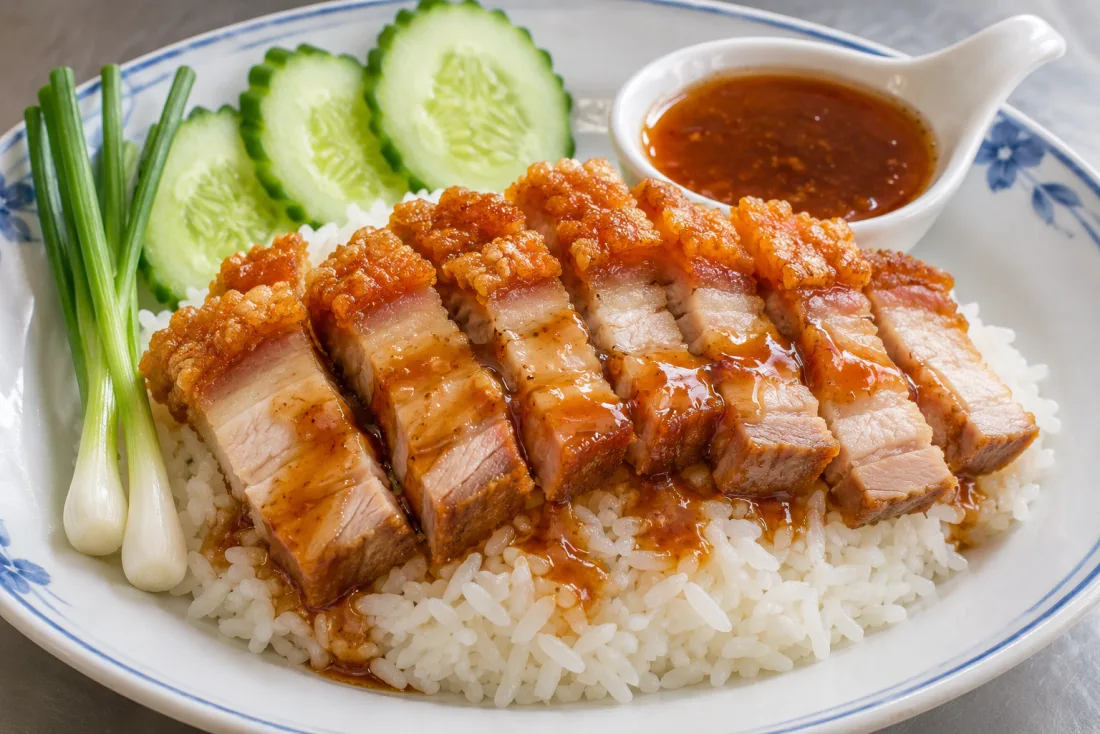

 crispy pork belly
A plate of crispy pork and rice
Khao means rice and moo grop means crispy pork. Thai recipes set chopped pork on steamed rice, while restaurant toppings and sauces vary. Some serve egg, cucumber, sausage or a separate dip.
Preparing the pork, rice and gravy
Cook skin-on pork belly and roast or fry the skin until crisp. Chop it into strips or thick pieces with crackling and place it on rice. A documented gravy uses pork stock, soybean paste, soy sauce, peanuts and sesame, while other kitchens use different sauces.
Crackling and a sweet-savory sauce
The skin is crisp, the meat is tender and fatty layers give richness. Gravy can be sweet and savory, with nuttiness from peanuts or sesame in some versions. Sauce softens the skin over time.
Choosing portion and accompaniments
Ask about the included egg, sausage, cucumber and sauces. Gravy can sometimes be packed separately and poured over rice at the table. Divide rice and pork evenly when sharing.
Red pork, seasoned rice and stir-fries
Khao moo daeng is red roast pork rice; it can be sold with crispy pork. Khao man moo grop uses seasoned rice. Stir-fried crispy pork with basil or greens is another dish. Khao pad means the rice itself was fried.
Allergens in gravy and accompaniments
Gravy may contain peanut, sesame, soy or wheat. Egg is present when added, and dips may contain fish sauce or oyster sauce. Check sausage, marinade and shared oil, knives, boards and spoons.
If you have a food allergy, tell the restaurant before ordering and ask about ingredients, sauces and shared cooking equipment.