
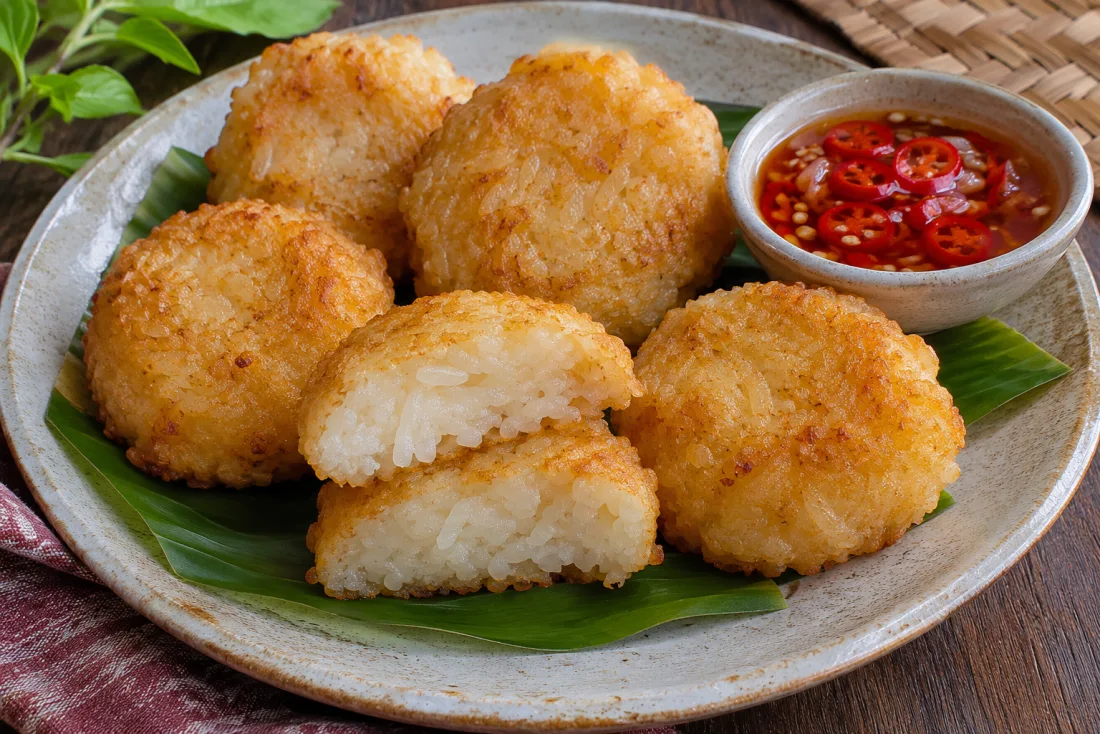

Khao neow thot starts with cooked sticky rice
Khao neow means glutinous rice and thot means fried. The dish can be a compact cake of cooked rice whose grains remain visible when split. A thin round cake has a wide area of crunch, while a thicker rectangular cake can hold more chewy rice in the middle. These shapes can both be unfilled. A cake made by kneading glutinous rice flour has a more uniform interior. Fried rice is usually cooked loose in the pan, whereas this dish is pressed into a piece before frying.
A snack or the rice served beside a savory dish
A Thai cook’s recipe makes a plain fried snack and compares it with northern grilled sticky rice, another dish shaped from steamed rice. That comparison helps describe the method. It gives no single birthplace for the fried cake. A Thai professional kitchen recipe also pairs a version of fried sticky rice with hang lay pork chop. A small cake works with a dip and a larger one can take the place of rice beside a savory dish. The round and rectangular shapes both fit this preparation.
Sticky rice, frying oil and an optional saltwater brush
The plain version needs steamed sticky rice, vegetable oil for frying and optionally a light brush of salt water. Moisture in the rice keeps the middle pliant as the surface dries and turns golden. A coating is unnecessary for the rice to crisp. Another cook's version encloses chopped grilled pork and coats the parcel with egg, flour and breadcrumbs. That is an optional stuffed variation. The plain version has rice grains right up to the edge, and often a thin crisp crust.
Steam the rice, shape it and fry it
Steam the rice until cooked and still recognizably grainy. While it is pliable, press portions evenly into rounds or rectangles. Use a light brush of salt water if desired. Fry the pieces in batches until the surface colors, then drain on a rack. Crowding the oil can make it cool and make pieces stick together. A rack lets steam escape from the underside. Dried Thai rice crackers are often fried to puff and crisp across the whole piece. Here the portion is shaped and fried from cooked rice, preserving a softer center.
Golden crust, chewy rice and mild grain sweetness
A thin rim breaks first, followed by the soft rice in the middle. The rice tastes mild and faintly sweet. A saltwater brush makes it lightly savory, and the golden corners suggest toasted grain. A thin cake gives more crunch, while a thicker cake offers more chewy rice. A sweet chili dip can add tartness and heat. A savory pairing can add meat juices. The original cook also suggests sweetened condensed milk with the unsalted version. Taste the cake plain first since a long soak in dip softens the crust.
Allergens in dips, fillings and shared oil
Plain rice, vegetable oil and salt generally contain no added egg, milk or wheat, but ask about the oil, seasonings and any outer coating. Breaded versions can contain wheat and egg. Sweetened condensed milk contains dairy, and dips may contain fish sauce or soy sauce with soy and possible wheat. Fillings can bring their own sauces. Sharing a fryer with breaded items or seafood can cause cross-contact. Ask about the inside, coating, dips and shared oil separately when avoiding an allergen.
If you have a food allergy, tell the restaurant before ordering and ask about ingredients, sauces and shared cooking equipment.