

 chicken
Lotus-leaf rice in Bangkok Cantonese dining
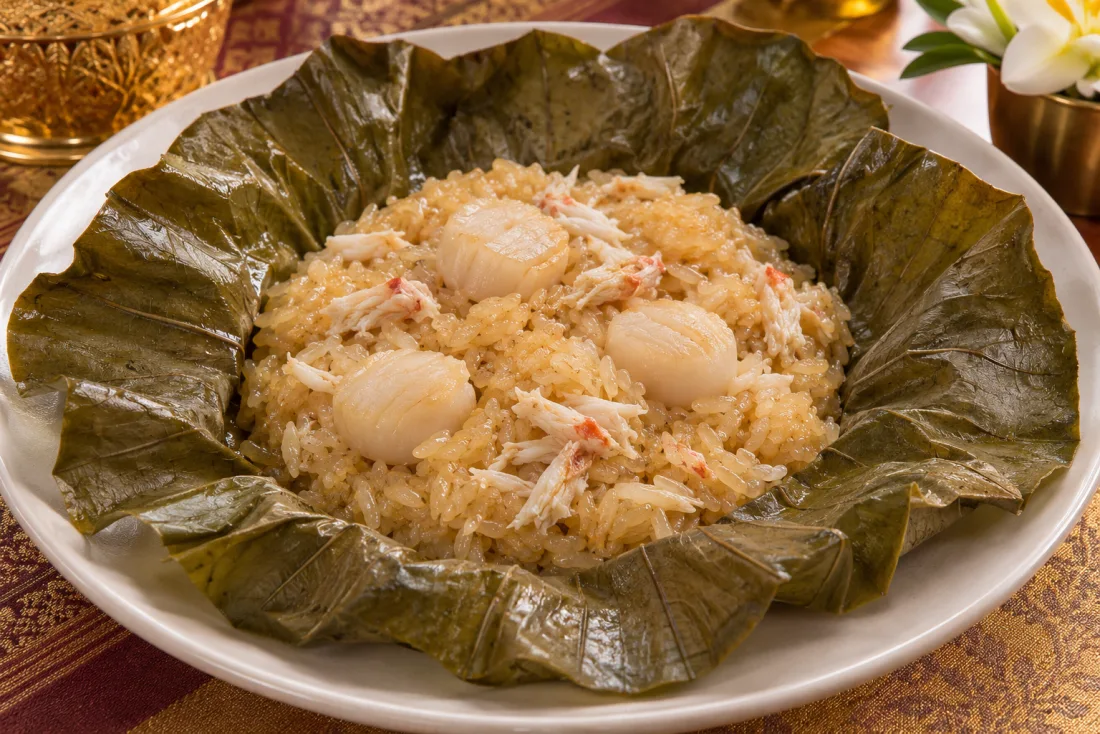
In Thai, khao niao ho bai bua means sticky rice wrapped in lotus leaf. Hoi chell identifies scallop on the menu. Bangkok Cantonese restaurants serve this style both among steamed dim sum and as a larger rice course. Yào's menu lists Hokkaido scallop and mud crab from Chanthaburi. That pairing brings Thai and imported seafood to a Cantonese preparation. Other Bangkok kitchens advertise a smaller dried-scallop parcel. The restaurant and meal service determine which form is available.
Sticky rice, lotus leaf and two forms of scallop
Steamed glutinous grains hold together while retaining visible individual outlines. The lotus leaf encloses the food and lends a subtle fragrance. Fully cooked fresh scallop has a plump, gently springy white muscle. Dried scallop softens in the filling and may break into fine strands that season more of the rice. Crab adds softer fibres alongside a whole scallop muscle. A dried-scallop parcel may also include cooked chicken and the rich, fine-grained texture of salted yolk.
Steaming and presentation
A leaf parcel brings the seasoned rice and its filling together under steam. Kitchen preparation before the final steaming can vary. At service, diners unfold the leaf to see where the seafood, chicken or yolk sits among the grains. A large leaf can open flat for sharing. An individual parcel may open just enough to reveal the rice and centre. Lift the food off the leaf when serving. The colour of the rice can reflect seasoning or stock and reveals little about the exact intensity of the seasoning.
Flavour and serving
The fresh scallop and crab style has soft seafood sweetness and a light leafy fragrance. Dried scallop brings a deeper savoury note, rounded by salted yolk and chicken where present. A serving spoon can lift rice and filling together from a shared parcel. Smaller parcels sit naturally alongside other steamed dim sum, vegetables or a clear soup. A menu photo can show portion size and whether the scallop comes as a whole piece or in fine shreds.
Allergens and kitchen variations
Fresh and dried scallop are both molluscs. The mud crab version also contains a crustacean, and any added prawn is a crustacean too. Salted yolk contains egg, and diners who avoid poultry should ask about the chicken filling. Ask about the actual stock and seasonings, including oyster sauce, fish-based stock, soy sauce and wheat-containing sauces. A steamer or utensil may be shared with seafood or egg dishes. Picking visible scallop out of the rice leaves a risk from stock, seasoning and contact.
Naming the menu entry
Cantonese lotus-leaf sticky rice with scallop describes the method and main seafood. Add crab or salted yolk where the kitchen uses it and specify dried scallop when appropriate. Bangkok identifies the city of service, while Cantonese describes the culinary style. The specific origin of crab or scallop belongs in a restaurant's description only when it applies to the serving. A photo of the opened large parcel or a single dim sum parcel should correspond to the portion offered.
If you have a food allergy, tell the restaurant before ordering and ask about ingredients, sauces and shared cooking equipment.