

 chicken
A Thai street-food meal
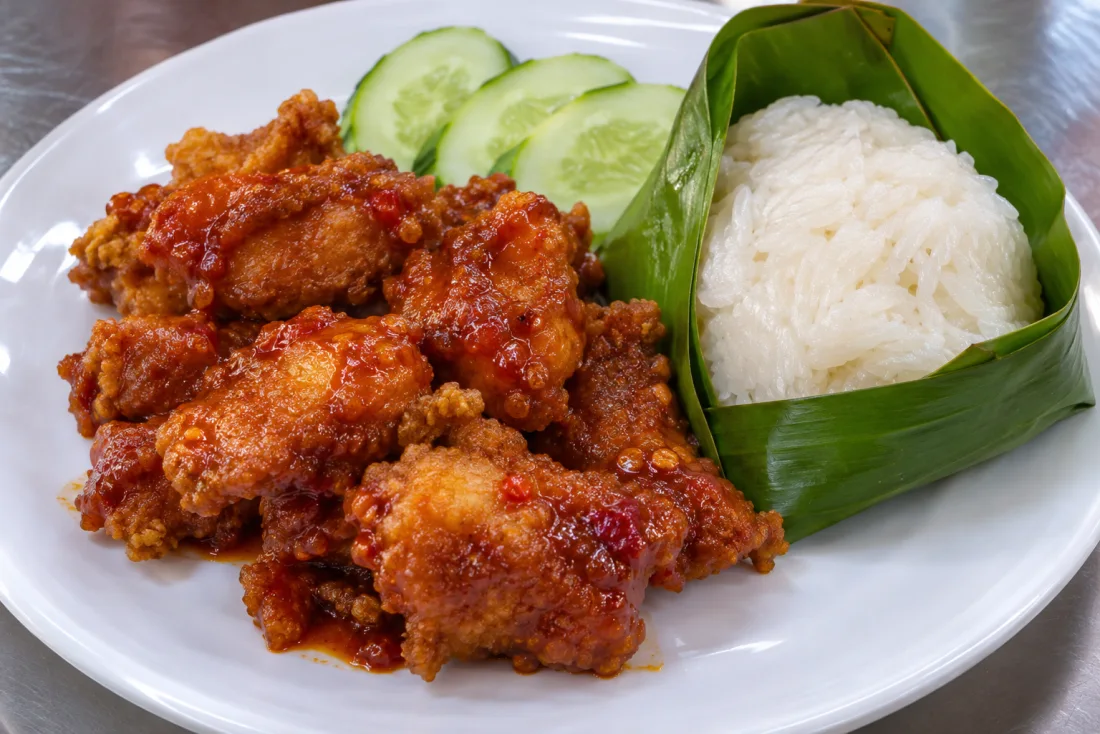
Khao niao is sticky rice, gai thot is fried chicken, and sot phet indicates a spicy sauce. Stalls and takeaway shops may sell the two foods in one package or have a little rice packet alongside. A shorter menu name can mean a different cooked chicken, so read the preparation.
Rice, chicken and seasoning
Steamed white glutinous rice sticks together and is easy to break into little bites. Chicken can be fried in smaller pieces or as a larger cut. Different shops use different batter, meat cuts and chilli seasonings. The amount of sauce and whether it touches the rice are variable.
Sauced crust and spice
A chilli sauce clings to the surface of fried chicken and can soften a little of the crunch. Other versions put the seasoning in the fried coating and apply less glaze. Sugar, salt and acidity in the sauce vary. Plain sticky rice gives a gentler bite in between pieces.
Chicken pieces or a fried steak
Smaller chunks are easy to alternate with sticky rice. A large fried cut can have a stronger contrast between meat and crust. A leaf liner, paper or small basket can hold the rice separately. Ask if the cut is boneless when that matters.
Choosing the heat
A menu may offer plain fried chicken nearby. Ask whether heat comes from the seasoning in the crust or from a sauce that can be separated. Fried shallots from Hat Yai chicken and charred grilled chicken skin are different features from this spicy fried coating.
Allergens in the crust, sauce and oil
Batter may have wheat or egg. Marinades or sauces can have milk, soy, fish, oyster, shrimp or sesame depending on the recipe. Check what the shop uses and ask about shared fryer oil, tongs and packing tools. A separate rice packet does not establish separate preparation.
If you have a food allergy, tell the restaurant before ordering and ask about ingredients, sauces and shared cooking equipment.