

 optional minced pork
How Thai menus put the pair together
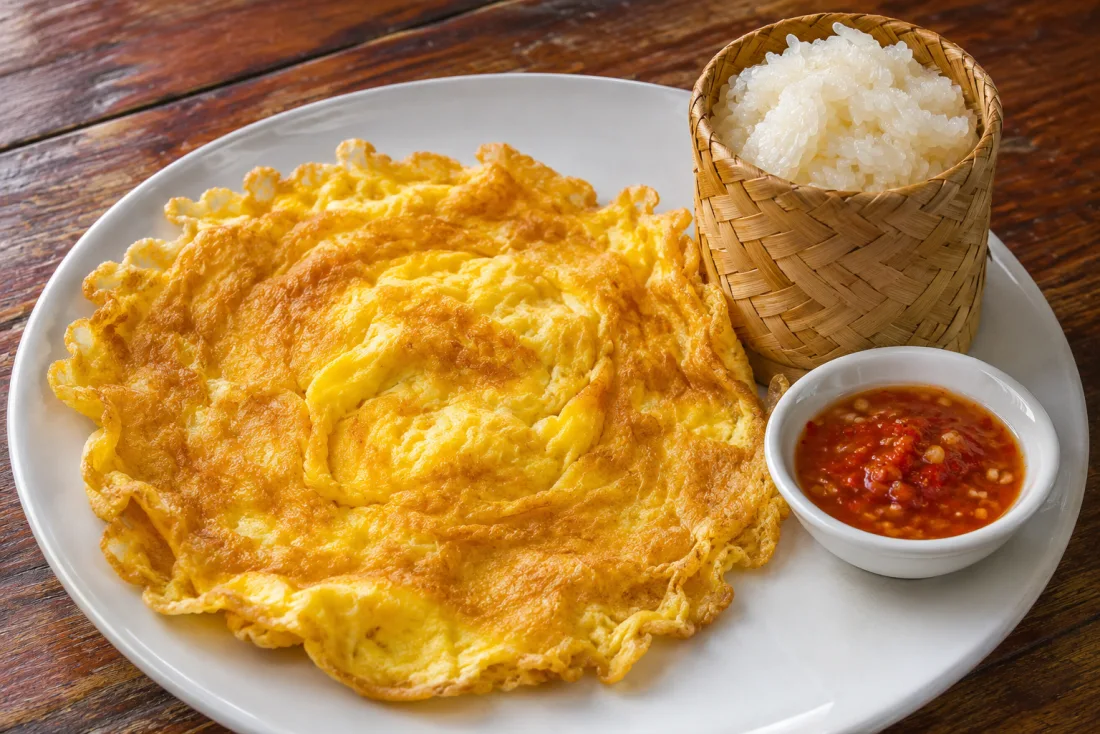
The Thai name identifies sticky rice and an omelette. Thai merchants list either a plain omelette or minced pork omelette as the companion. This serving uses cohesive glutinous rice rather than a plate of loose-grain jasmine rice.
Two separate components
Well-steamed sticky rice is softly cohesive and can be portioned in a basket or leaf. Eggs may be seasoned with fish sauce, soy or salt. The pork version shows fully cooked mince inside the omelette.
Cook the omelette through before serving
Hot oil gives the omelette a thin crisp edge. The middle is softer and must be fully cooked along with any pork filling. Briefly drain the omelette before placing it beside the rice.
Soft rice and a crisp bite
The rice is mild and chewy, offset by savoury egg and crisp cooked edges. Pork makes a thicker bite. A separately served dip lets diners try the egg plain first.
Basket and whole omelette, or leaf and cut wedges
One plate keeps the thin whole omelette beside an open sticky-rice basket. Another pairs cut pork omelette wedges with an opened banana-leaf rice portion. Containers and quantities depend on the shop. Leaving room on the plate lets diners portion rice and omelette one bite at a time. The crisp edge and soft middle then stay easy to taste separately.
Allergens and further seasonings
Egg is present and the pork version contains pork. Fish sauce and soy seasonings may introduce fish, soy or wheat. Ask about the omelette, dip and shared oil or tools separately.
If you have a food allergy, tell the restaurant before ordering and ask about ingredients, sauces and shared cooking equipment.