
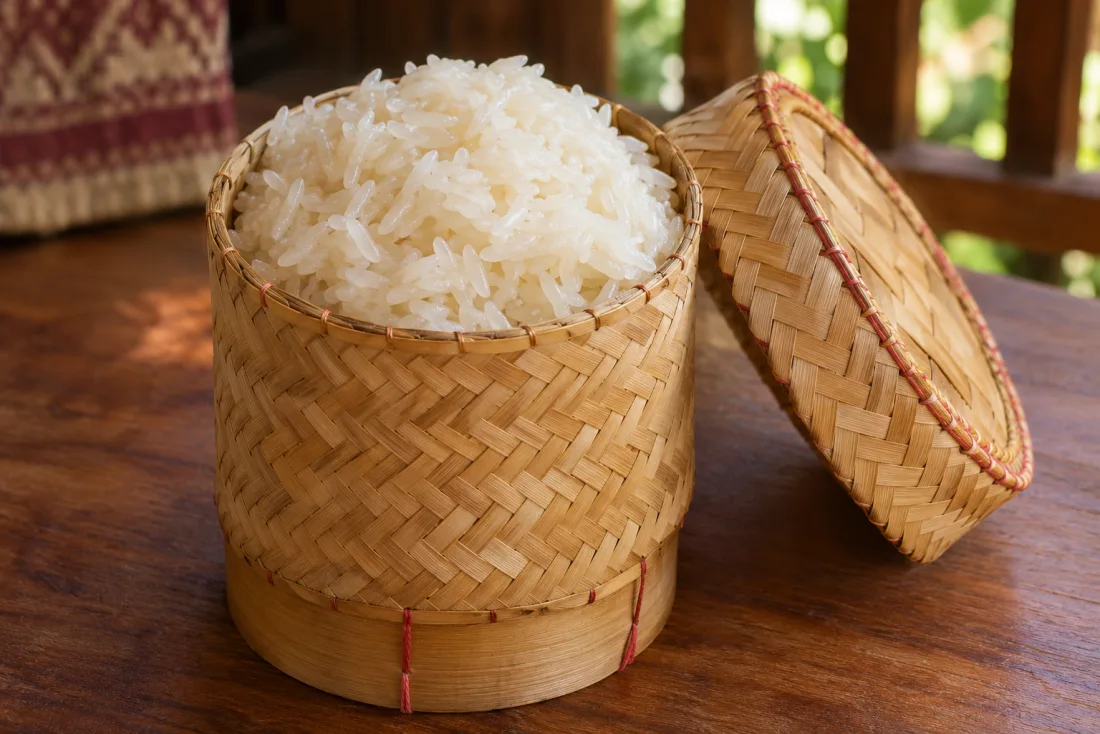

Recognise the cooked grains and rice basket
Open the basket to see soft, slightly glossy grains that hold together. Rice can also be served on a platter or in a wider basket. White rice is the example here, while darker glutinous varieties are also used for other servings.
A Lanna daily staple and local rice varieties
Chiang Mai University’s Lanna museum documents vessels for soaking, steaming, loosening and serving cooked glutinous rice. Research also documents different regional glutinous varieties. A restaurant name alone does not establish the farm, variety or exact origin.
Soak, steam and loosen the rice
Wash the glutinous rice, soak it and drain it before steaming on a basket or cloth. Turn a thick layer when necessary. Spread and loosen the cooked rice before moving it to a clean serving basket.
Mild grain flavour with northern dishes
Warm fresh rice is soft and mildly fragrant. It pairs with grilled meat, Thai northern sausage, vegetables, curry or chilli dip. Taste the rice before dipping. White and black sticky rice can have different textures.
Sharing from a basket or ordering a side
Ask whether khao nueng means a separate portion of white sticky rice. Divide it with a clean spoon or clean hands, and use separate sauce dishes. Keep wet dishes separate for takeaway.
Allergens and clean serving tools
Plain rice and water are the ingredients here, though rice can itself be an allergen for some people. Check sauces and meat for fish, crustaceans, soy and wheat. Ask about shared steamers, utensils and baskets.
If you have a food allergy, tell the restaurant before ordering and ask about ingredients, sauces and shared cooking equipment.