
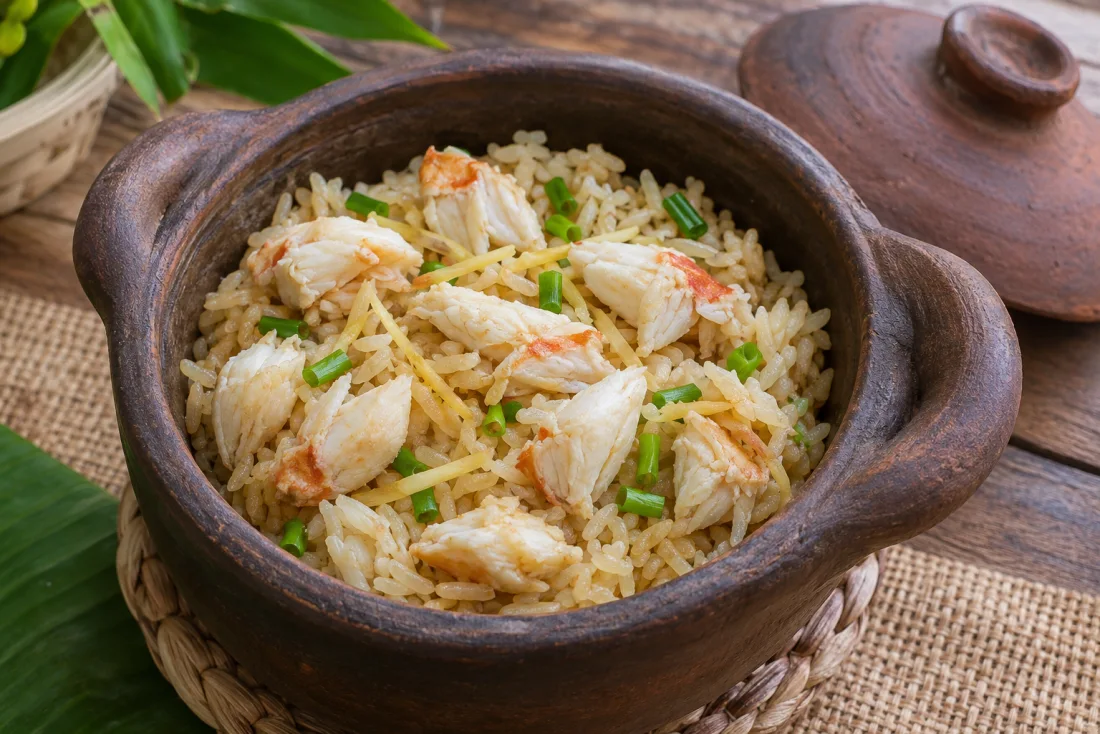

Khao ob pu means baked crab rice
Khao identifies rice, ob refers to covered baking or cooking in this context, and pu is crab. The grains can cook in crab-flavored stock. Some crab goes in early and some can finish the dish. A bowl or a plain plate can contain the same kind of cooked rice. Khao pad pu is a different method that stir-fries cooked rice with crab. Ob does not call for a cheese topping.
A home rice cooker and a Thai restaurant clay pot
A Thai recipe author took inspiration from a dish in Japan and adapted it for a rice cooker. The rice cooks with stock and crab, then receives larger pieces near the end. Thai restaurant examples also use a clay pot; one Cantonese restaurant pairs its crab rice with crab broth and sauce. These show different preparations without identifying one Thai province as the origin. Ask about serving size and whether sauce comes separately.
Rice, crab, stock and optional vegetables
One original recipe uses Japanese rice and light fish stock, with crab shells, crab legs, onion and Japanese scallion to flavor the liquid. It mixes small pieces of crab and vegetables through the rice, then tops it with lump crab. Another cook can use jasmine rice for a different aroma and texture. Garlic, soy seasoning and herbs depend on the dish. Strain shell stock before adding it to the grains.
Strain the stock, cook the rice and heat the crab through
Cook raw crab thoroughly. Use clean utensils to pick cooked crab and remove shell pieces. Strain the flavored stock and use an appropriate quantity for the rice and cooker. Add a lump-crab topping near the end if called for, heating it through without breaking it up. Fluff gently after cooking. A clay pot can remain hot at the table. Refrigerate leftover cooked rice promptly.
Gently sweet crab and rice that has absorbed the stock
Rice, onion and crab stock are noticeable when the pot opens. Crab is soft and mildly sweet. The grains taste savory from the liquid, while jasmine rice or short-grain rice gives its own texture. Optional scallions or cilantro add freshness. A side sauce can be sharper and hotter, while the rice itself can be mild. A crisp bottom depends on the method.
Allergens in crab, broth and seasonings
Crab is a crustacean, including when shells are used for stock. Fish stock and fish sauce contain fish. Oyster sauce can contain molluscan oyster. Soy sauce usually contains soy and may contain wheat. Egg, dairy and sesame depend on additional ingredients. Taking off the crab topping cannot remove its stock from the rice. Ask about the broth, toppings, sauces and shared equipment.
If you have a food allergy, tell the restaurant before ordering and ask about ingredients, sauces and shared cooking equipment.