
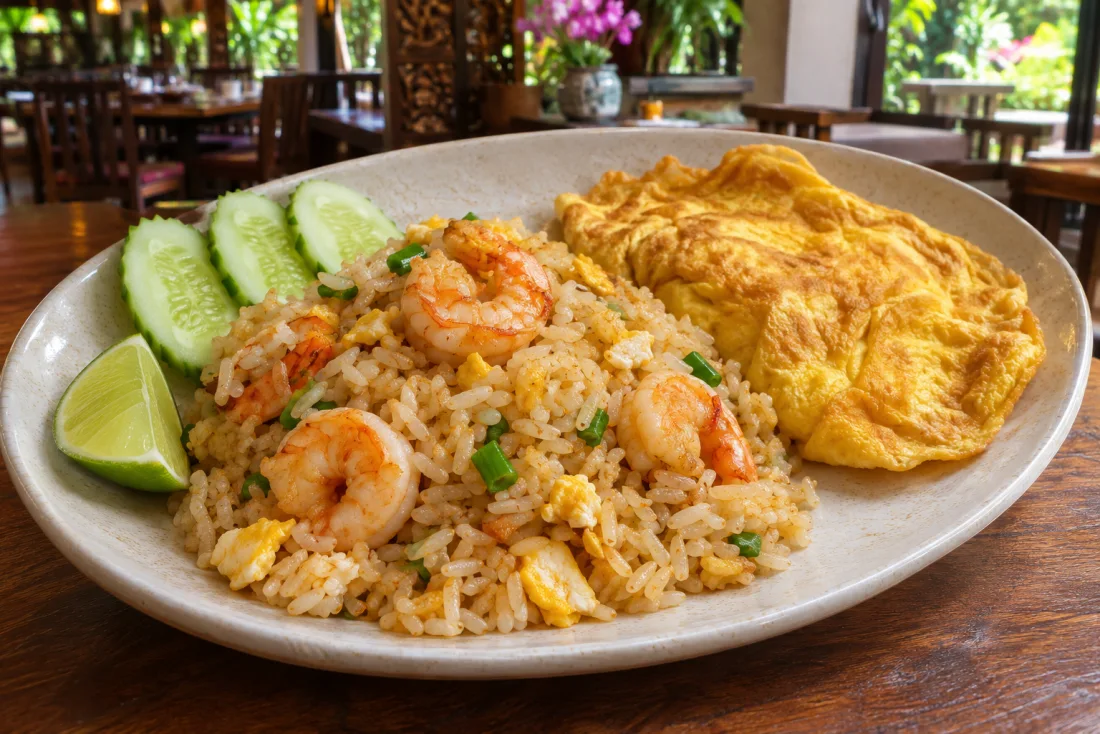

 shrimp
A set meal in Thailand
The main dish is khao pad goong. Menus may name the extra dish alongside it or list a set. A Chiang Mai restaurant serves a fluffy fried omelette with shrimp rice, while a local meal plan lists soup and watermelon. Standalone fried rice may only have simple garnishes.
Rice grains, shrimp, egg and scallions
Cooked white rice is fried until the grains are separate, with cooked orange-pink shrimp, soft flecks of egg and chopped scallion. Some cooks season the rice with fish sauce or soy sauce. Light seasoning lets the shrimp and rice come through.
Cooked and portioned separately
Shrimp and rice are wok-cooked and a separate Thai omelette gets a golden edge. Soup goes in its own bowl to keep the rice dry, and cut watermelon is kept away from the warm rice so its juice stays separate.
What to expect on the plate
Soft egg and springy shrimp contrast with the loosely fried grains. A wedge of lime can add a fresh accent and an optional chilli condiment can add heat. The omelette adds a crisp edge, while clear broth and cool fruit make a lighter tasting meal.
A plated omelette or soup and fruit
One plate pairs shrimp fried rice with a Thai omelette and simple vegetables. A set tray may put rice, clear soup and watermelon into separate compartments. The exact portion and other accompaniments depend on the menu.
Allergens in each part of the set
Shrimp is a crustacean allergen and egg may be mixed into the rice or served separately. Fish sauce, oyster sauce and soy sauce may bring fish, mollusc, soy or wheat ingredients. Ask about the stock and preparation for shared wok, oil and utensils.
If you have a food allergy, tell the restaurant before ordering and ask about ingredients, sauces and shared cooking equipment.