
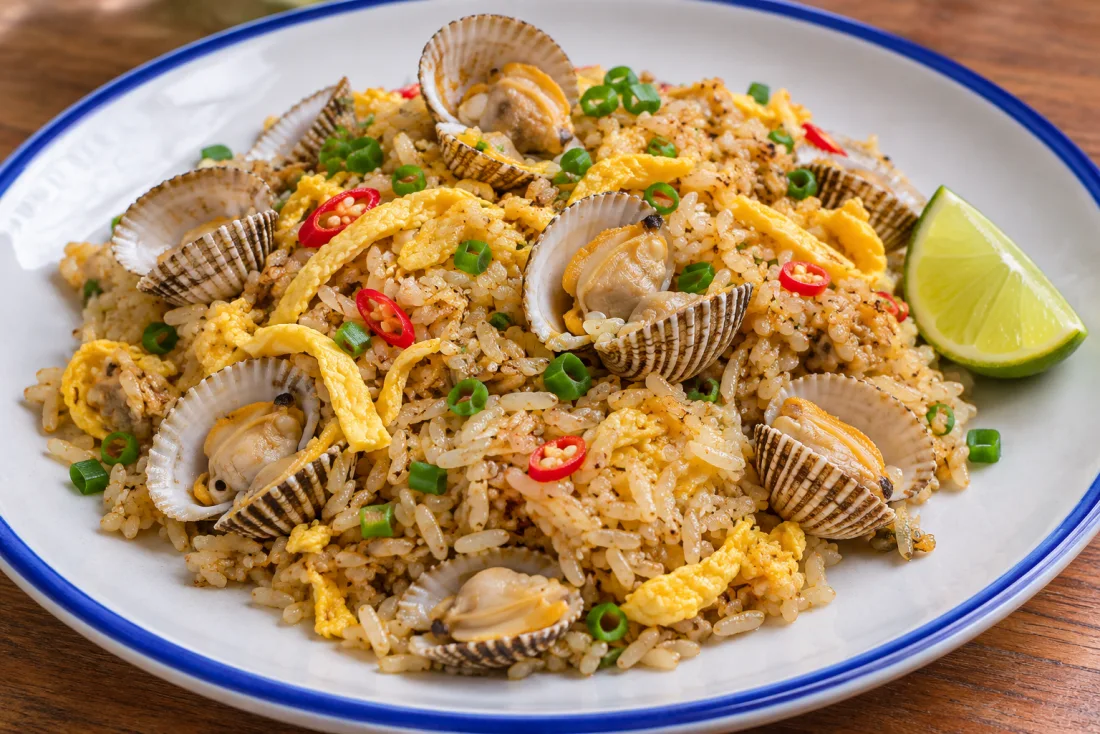

The clams in Thai fried rice
Hoi lai refers to patterned clams used in Thai cooking. The exact species can depend on the supplier. Some plates have shelled meat, others retain shells. In stir-fried clam rice the shellfish is cooked with the grains, while a separate clam stir-fry can be served with plain rice.
Garlic, roasted chili jam and rice in the wok
A recipe fries garlic and shelled clams, seasons with roasted chili jam, oyster sauce, seasoning sauce and sugar, then adds egg and rice. Drain wet clams to keep the grains from getting soggy. Another version adds fresh chili and Thai sweet basil.
Briny clams, egg and distinct grains
Clams have a briny flavor and a slight chew. Chili jam may be toasty, sweet and spicy. Egg can form pieces or coat the grains. Thai sweet basil adds an anise-like note when used. Dish color depends on sauce as well as heat.
How to eat the shell-on version
Remove the shells from whole clams before mixing the meat with rice. Taste before adding lime or chili fish sauce. Cucumber or greens can bring crunch. Ask whether the chili jam or separate chilies determine the heat.
Clam fried rice, tom yum clam rice and mixed seafood rice
Tom yum clam rice can use lemongrass, makrut leaves and acidity and may come wrapped in egg. Mixed seafood fried rice can include shrimp, squid or fish. Ask whether the cooked rice itself is wok-fried with clams.
Mollusks, egg and possible seasoning allergens
Clam and oyster are mollusks, and the example contains egg. Chili jam may contain shrimp or fish; some seasoning sauces contain soy or wheat. Ask about shared oil and utensils. Removing clams does not remove the allergens already in the rice.
If you have a food allergy, tell the restaurant before ordering and ask about ingredients, sauces and shared cooking equipment.