

What jay means on a Thai menu
Khao pad is fried rice and jay names a Thai dietary tradition. Thai sources describe avoiding animal foods, eggs and dairy, along with specified pungent plants including garlic, onion and chives. Phuket and other Thai communities hold vegetarian festivals, and specialist restaurants serve jay dishes throughout the year. Vegetables alone do not show how a plate was cooked.
Rice, shiitake, tofu and seasoning
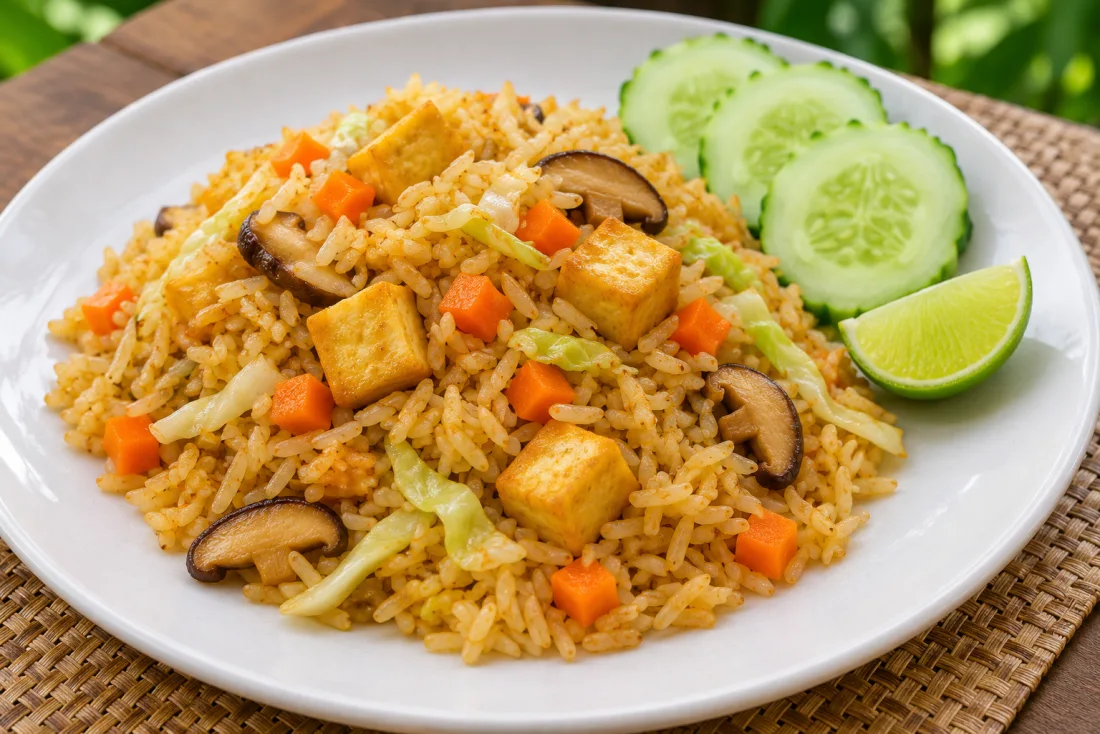
One documented recipe uses cooked rice with shiitake, tofu sheets and textured plant protein, seasoned with soy sauce and pepper. A restaurant variation uses tofu, mushrooms and carrots. Mushrooms and soy seasoning provide savouriness. Tofu is tender and tofu sheets give extra chew. Check the ingredients of mushroom or vegetarian sauces if these matter to you.
Fry the mushrooms, then loosen the rice
Soften and drain dried ingredients where used, then fry the mushrooms so their aroma scents the oil. Toss the plant ingredients and rice in the hot wok, separating the grains before adding seasoning. Prepared toppings can be folded in toward the end. Extra moisture can clump the rice. The jay style develops flavour without fish sauce, eggs or alliums.
A savoury wok aroma and contrasting textures
Hot rice, mushrooms, soy seasoning and pepper give a toasted, savoury flavour. Carrot and other vegetables bring a little sweetness and crunch. Tofu can stay soft inside and tofu sheets have more bite. Ask about a lime wedge if you want acidity. Even a pale plate can be well seasoned and fragrant.
Distinguishing jay from other vegetable fried rice
A dish described as vegetable or vegetarian fried rice may still contain alliums or egg. If you need strict jay, ask about animal seasonings, eggs, the listed vegetables and how it is prepared. Specialist restaurants and festival stalls are common places to find this style. Check the mixture of mushrooms and soy products if you have other dietary restrictions.
Checking allergens separately from jay practice
The example uses soy products and soy sauce. Some sauces or plant proteins contain wheat, and some recipes or shared equipment may involve peanuts, sesame or tree nuts. Ask about the sauces, toppings and cookware if you need to avoid an allergen. A plant-based ingredient list alone does not establish how cross-contact is handled.
If you have a food allergy, tell the restaurant before ordering and ask about ingredients, sauces and shared cooking equipment.