
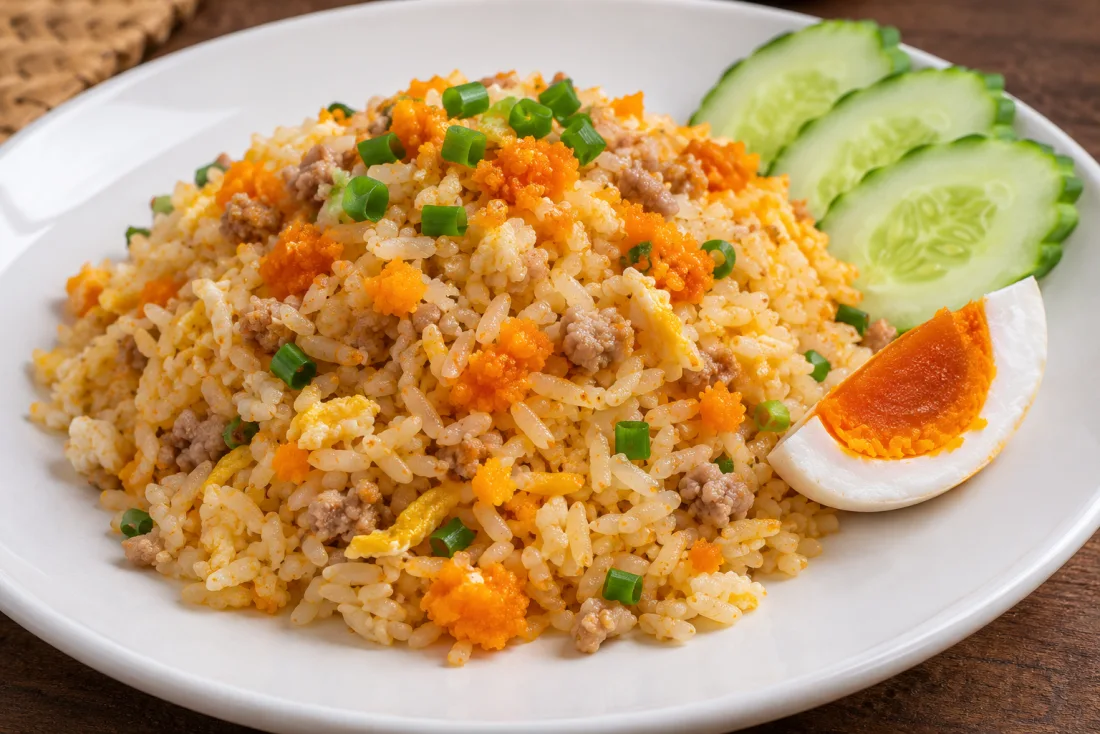

 minced pork
What salted egg means
Khai means egg and kem means salty. Salted duck egg is a common choice, though egg type varies. The yolk adds orange crumbs, and the firmer white adds salt. Some cooks also mix in fresh chicken egg or leave a piece of salted egg on the side.
How Thai kitchens serve it
Thai home recipes use minced pork or sliced pork, sometimes adding onion, tomato or holy basil. It works as a single rice plate with cucumber, scallion or chilies in fish sauce. A fried egg can be an optional topping.
Salted egg, pork and rice
A home recipe uses cooked rice, salted egg, minced pork, fresh chicken egg, garlic, light soy, salt, sugar and pepper. Another uses sliced pork, onion, tomato, scallions and roasted chili paste. The proportions of yolk, white and pork vary.
Timing the salted egg
Cook the pork and egg, loosen the rice in the wok, and toss cooked salted egg through near the end to keep pieces visible. More stirring breaks up the yolk and spreads it over the grains. If the salted egg is raw, cook it through. Account for salt in the egg before adding extra sauce.
Sandy yolk and crisp sides
The yolk adds a slightly sandy richness, and the white adds a firmer salty bite. Pork deepens the savory flavor. Roasted chili paste can add sweetness and heat, while cucumber and lime give a fresh contrast.
Allergens in eggs and seasoning
Cured duck egg and fresh chicken egg contain egg. Soy sauce contains soy and may contain wheat. Fish sauce contains fish, and roasted chili paste can contain shrimp or fish. Oyster sauce may contain molluscs. Ask about premixed salted egg sauce and shared cookware.
If you have a food allergy, tell the restaurant before ordering and ask about ingredients, sauces and shared cooking equipment.