
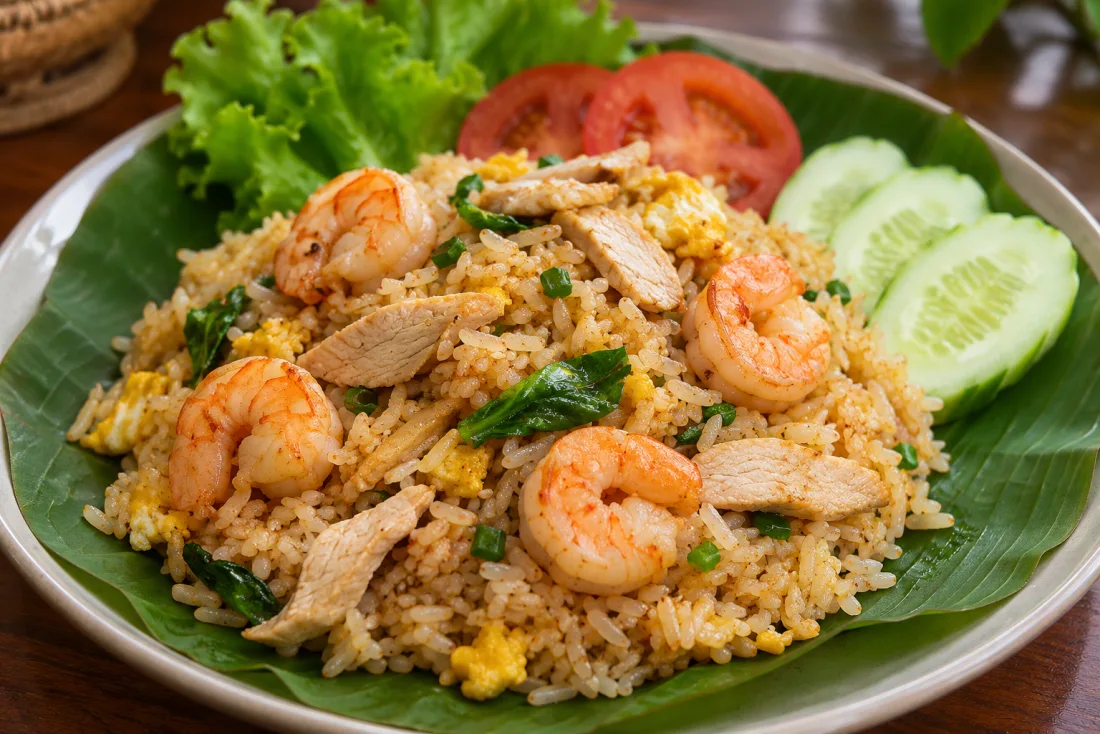

 chicken
 shrimp
Two proteins on one plate
The Thai phrase ข้าวผัดไก่ใส่กุ้ง says chicken fried rice with shrimp added. Some restaurant menus use slashes for separate choices. This entry refers to the documented preparation with both proteins. A Thai home cook also records a chicken and dried shrimp version.
Recognizable chicken and shrimp
The photographed style has chicken pieces and fully cooked pink shrimp folded through loose rice. Egg fragments, spring onion and vegetables may be visible. A recorded version includes tomato and Chinese kale. Fish sauce, soy or a touch of pepper may vary. Dried shrimp is a separate variation with a more concentrated savor.
Grains and contrasting textures
Rice should stay loose enough to carry the egg and aromatics. Shrimp feels springy, while cooked chicken is firmer and less briny. Green onions and wok aroma tie the bites together. Tomato can add a little acidity, and lime can brighten the finished plate.
Two serving styles
One plate includes visible chicken, shrimp, tomato, greens and cucumber outside the mound. The other uses smaller chicken pieces, spring onions and lime. Egg in the fried rice is separate from a fried egg ordered as a topping. The menu should state both meats if both are included.
Making the choice on a Thai menu
Ask for both chicken and shrimp when a menu offers only one protein at a time. You can also ask whether the shrimp is fresh or dried. Chile fish sauce, lime and a mild soup can accompany the rice separately. Basil, pineapple or curry powder mark other variants.
Allergens and actual sauces
Shrimp and dried shrimp are crustaceans. Egg, fish in fish sauce, soy and wheat in soy sauce, and molluscs in oyster sauce depend on the kitchen. Ask about shared wok tools when necessary. Chicken and shrimp should be thoroughly cooked. Lime does not serve as a substitute for cooking.
If you have a food allergy, tell the restaurant before ordering and ask about ingredients, sauces and shared cooking equipment.