

 fish sauce
Egg or chicken in the Thai name
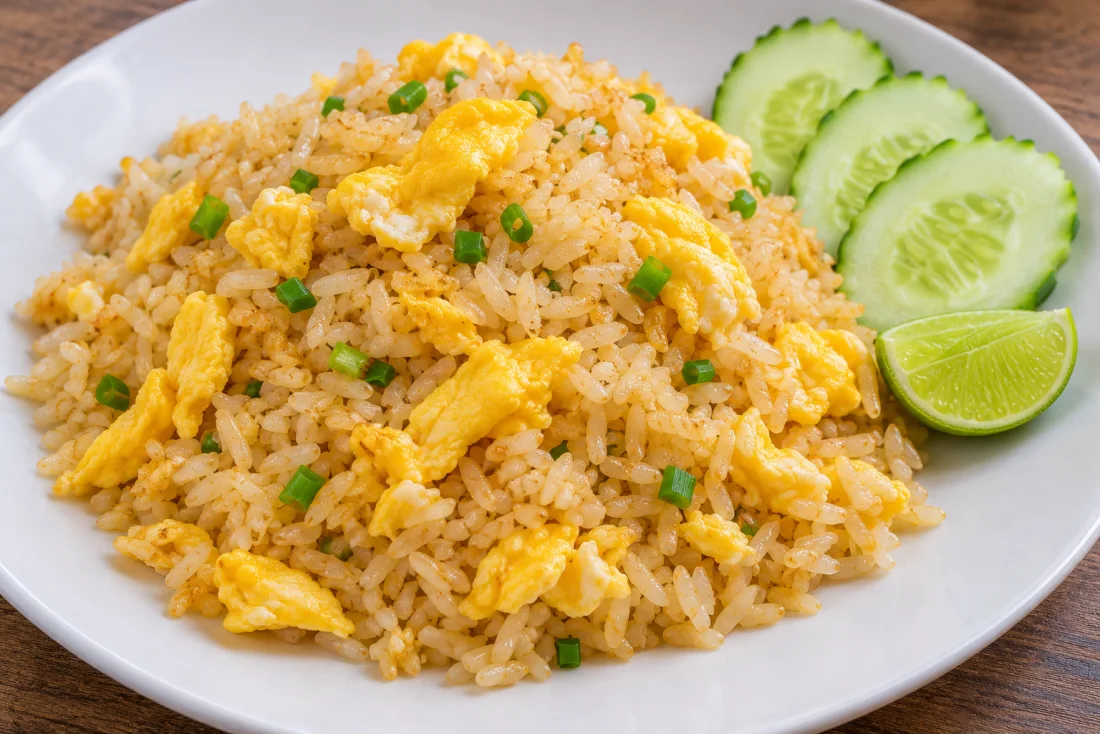
Khai written ไข่ means egg. Kai written ไก่ means chicken. Romanized names can blur the distinction, so the Thai spelling and menu description matter. Here the egg is scattered through the rice, with any separate fried egg listed as another topping.
A simple Thai rice counter meal
One restaurant describes a version fried with two eggs and without meat or vegetables. Home and restaurant versions can have scallions, cucumber or lime. It can be mild with table chili served separately. Fish sauce and light soy are two possible seasonings.
Jasmine rice, egg and seasonings
A Thai chef uses cooked jasmine rice, eggs, vegetable oil, sea salt, fish sauce, black pepper and scallions. The egg can partly coat the grains or be left as larger soft pieces. Light soy, garlic or sugar appear in other recipes.
Egg first and rice into the wok
Scramble the eggs until they start to set, then break up the rice and toss it into the hot wok. Brief high heat helps cook off excess moisture and leave the grains loose. The color depends on the eggs, seasoning and heat.
Egg aroma and crisp accompaniments
Soft egg and savory rice are the principal flavors, with warmth from ground pepper. Cucumber brings crunch and lime adds acidity. Chilies in fish sauce may be served separately so the diner can choose the heat.
Allergens in egg and seasonings
Egg is present. Fish sauce contains fish, and light soy contains soy and may contain wheat. Some restaurants use oyster sauce, compounded seasonings or butter. Ask about the sauce, cooking fat and shared wok if you need to avoid a specific allergen.
If you have a food allergy, tell the restaurant before ordering and ask about ingredients, sauces and shared cooking equipment.