
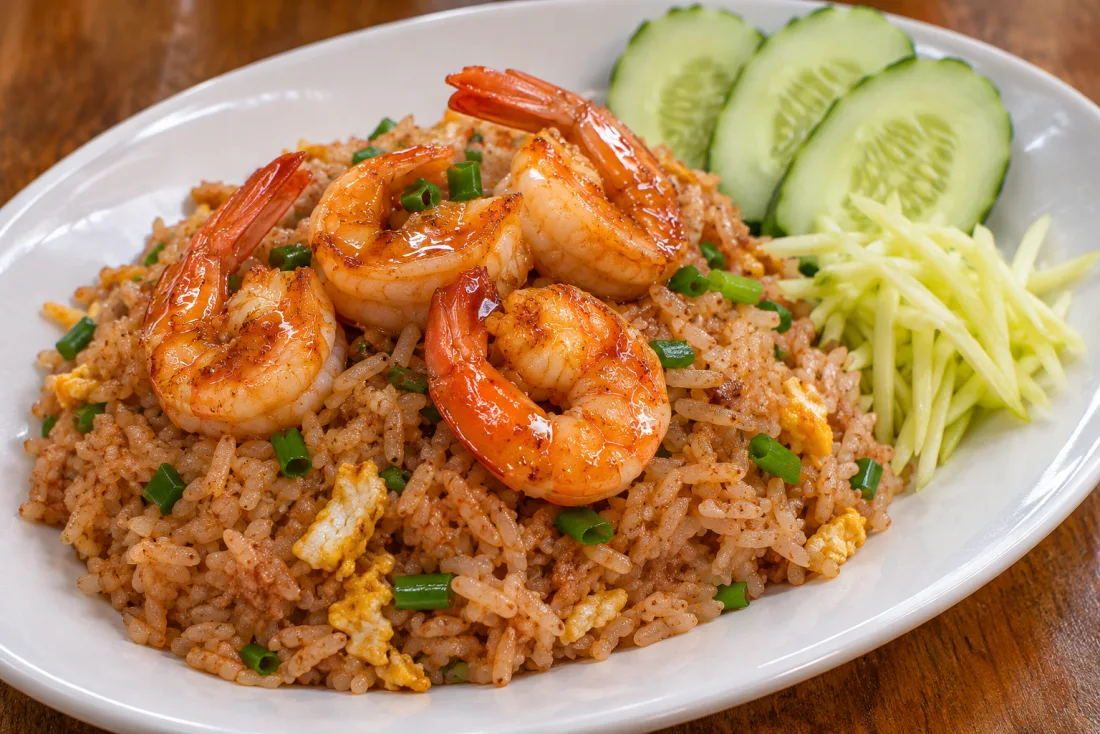

 shrimp paste
Fermented shrimp paste as the main seasoning
Kapi gives the grains concentrated savory aroma even if there are no whole shrimp. Thai kitchens can use different pastes and accompaniments. The name points to the rice and the seasoning.
Getting shrimp paste and egg into the wok
One home recipe uses shallot, egg, cooked rice mixed with shrimp paste, seasoning sauce, sugar and sweet peas. Egg can go in the wok or be made into a thin omelette for the side. Shrimp can be cooked separately.
Deep savor, shrimp sweetness and fresh lime
Shrimp paste is salty and fermented; shallots soften the aroma and egg or fresh shrimp can add more texture. Lime can be served for tartness, and chili is optional.
Eating a plate with separate toppings
Taste the rice first and add the egg, shrimp and vegetables. Remove tails and add lime or chili to your portion. The garnish and rice can be portioned separately when sharing.
Shrimp paste fried rice and khao khluk kapi
Khao khluk kapi can include sweet pork, dried shrimp, green mango, shallot and egg strips. Its rice can also be fried with the paste. A fried rice title can highlight the rice with fewer fixed accompaniments. Ordinary shrimp fried rice may omit shrimp paste.
Crustacean and egg allergens
Fermented shrimp paste and whole shrimp contain crustaceans; egg adds egg. Check soy, wheat, fish sauce and oyster when used. Ask about shared equipment. Removing the shrimp does not take shrimp paste out of the rice.
If you have a food allergy, tell the restaurant before ordering and ask about ingredients, sauces and shared cooking equipment.