

 shrimp
 fish
 squid
Why the drunken stir-fry style works with rice
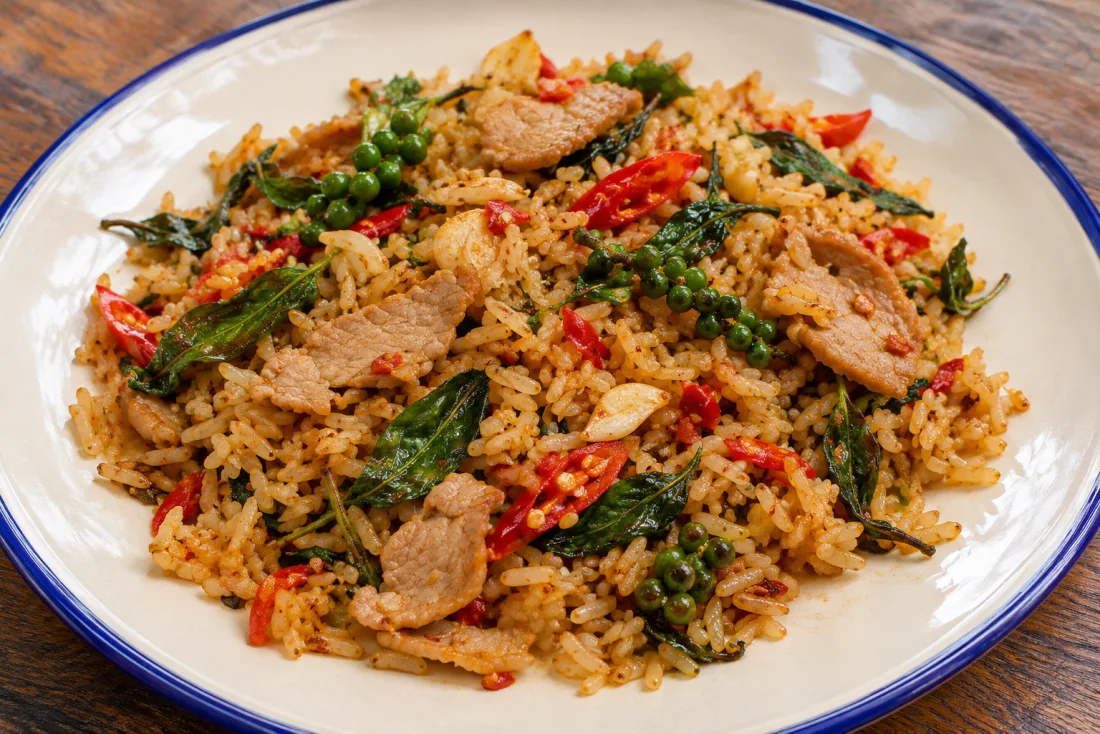
Thai cooks use this spicy stir-fry style with pork or seafood and can add cooked rice. One chef serves a seafood version with crisp basil and duck egg. A domestic recipe uses pork and toasted dried chili. Ask about ingredients if avoiding alcohol.
How garlic, fingerroot and green peppercorn enter the rice
A chef fries chopped garlic, red chili, holy basil, fingerroot and green peppercorn. Prawns, fish and squid are cooked separately, then returned with rice; light soy, fish sauce, sugar and sweet dark soy season it. A pork version can use chopped pork and dried chili.
Several kinds of heat and aroma
Chili gives direct heat, fingerroot herbal warmth and green peppercorn a sharper aroma. Holy basil adds fragrance and can be crisp at service. Shrimp, squid and fish differ in texture. Dark soy adds color and lime is optional.
Eating the rice with egg or sharing
Serve with egg, cucumber and lime when included. Divide the proteins before the rice. Check for shells or bones and ask whether the kitchen can adjust the heat.
Distinguishing fried rice, drunken noodles and a rice topping
Drunken noodles stir-fry noodles with similar aromatics. A topping served with plain rice keeps the rice out of the wok. Holy basil fried rice overlaps, but drunken recipes often add fingerroot or green peppercorn.
Allergens vary with seafood, sauces and egg
The seafood recipe includes shrimp, squid and fish. Fish sauce supplies fish; soy sauces can contain soy or wheat. Duck or chicken egg adds egg. Pork versions may share seafood seasonings or equipment. Removing toppings does not undo contact.
If you have a food allergy, tell the restaurant before ordering and ask about ingredients, sauces and shared cooking equipment.