
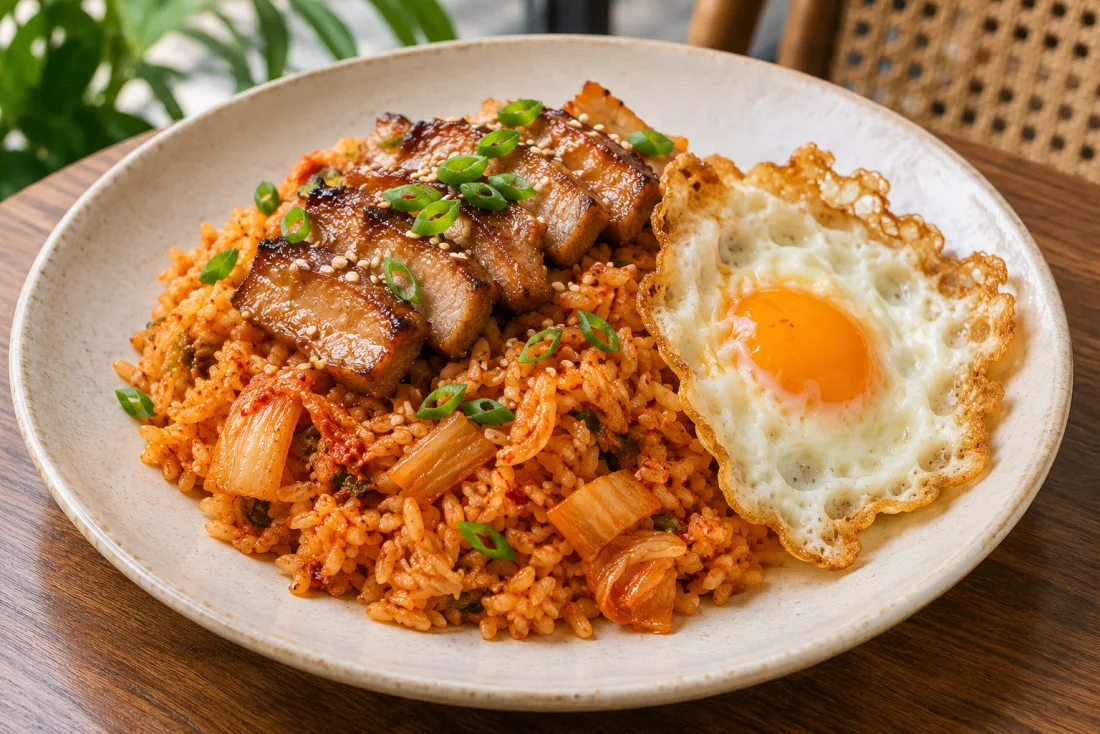

 pork neck
How Thai cooks serve this Korean rice
Kimchi is fried into cooked rice. Thai cooks also make versions with pork, sometimes grilled separately. Korean-style fermented kimchi remains the main seasoning and the rice can be served with or without meat.
Cooking the grilled pork and rice
One chef marinates pork neck with barbecue sauce, gochujang, paprika and shoyu. Stir-fry chopped kimchi with cooked rice and pan juices, then add butter and serve with egg and sesame. Another home version uses sesame oil and vegetables.
Fermented acidity, chili and grilled pork
Kimchi brings sour-salty savor and chili warmth. Pork can have browned edges and a juicy interior, with egg bringing a soft texture. Butter and sesame contribute different aromas. Color does not determine heat.
Serving pork, rice and egg together
Portion sliced pork and add egg or extra kimchi as desired. Ask whether pork is grilled separately or mixed through the rice. Keep garnish separate if needed.
Kimchi fried rice, stir-fried pork over rice and curry rice
Pork with kimchi can be served as a topping over plain rice. Here the rice itself is fried with kimchi. Thai red curry paste fried rice gets its aroma from another seasoning.
Allergens in kimchi, gochujang and the grilled pork sauce
Check kimchi for fish or shrimp. Shoyu and some gochujang may contain soy and wheat. Butter, egg and sesame add milk, egg and sesame in the featured recipe. Ask about shared equipment and sauces. Removing toppings does not undo contact.
If you have a food allergy, tell the restaurant before ordering and ask about ingredients, sauces and shared cooking equipment.