
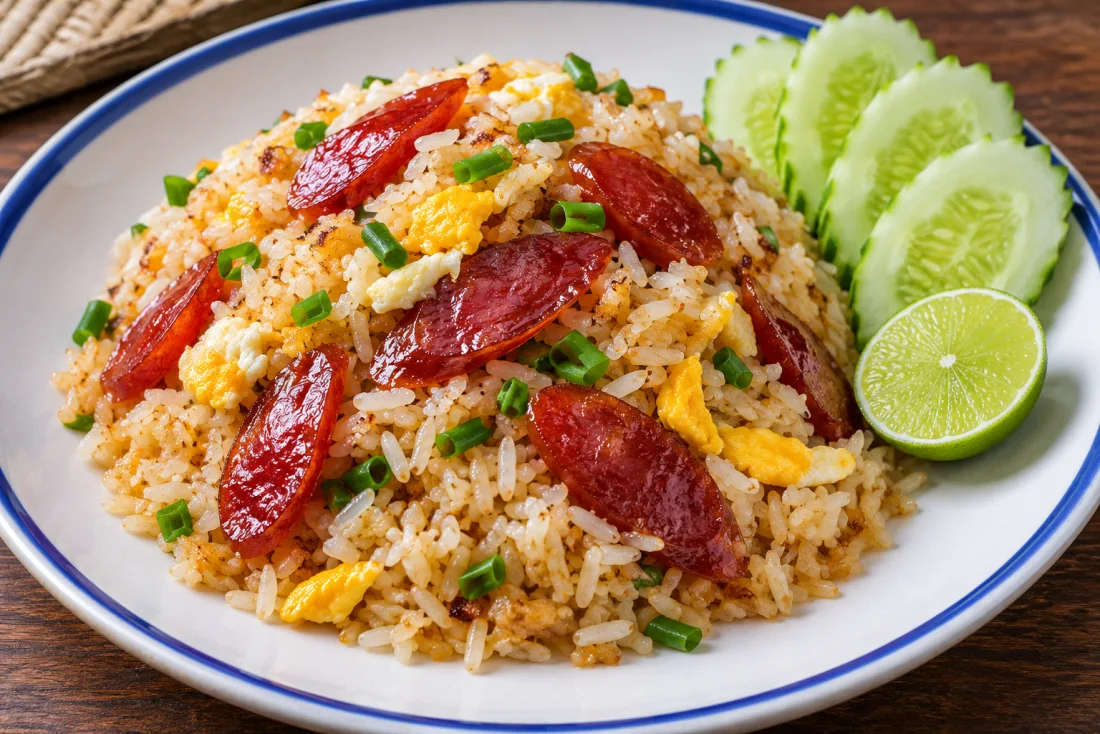

 chinese sweet pork sausage
 fish sauce
Identifying kun chiang
Kun chiang written กุนเชียง refers to Chinese-style dried sausage. Pork versions are common. Its texture and sweet-savory flavor differ from fermented sour sausage or hot dogs. The short Romanized name koon refers to the full Thai name of the sausage.
A Thai-Chinese ingredient in fried rice
Thai home recipes combine the sausage with jasmine rice and egg. Some add Chinese broccoli, tomato and onion. A made-to-order style can serve it with cucumber, lime, chili fish sauce or a separate fried egg. The vegetable and seasoning choices vary.
Rice, sausage, egg and vegetables
One Thai recipe uses cooked rice, Chinese sausage, eggs, light soy, oyster sauce, fish sauce and sugar. Another uses dark soy, Chinese broccoli, onion, tomato and white pepper. Sausage slices give a chewy bite, while diced pieces spread through the rice.
Browning the sausage before frying rice
Fry the sausage until cooked and lightly browned, then set it aside while the egg and vegetables cook. Return it to the wok with loose rice. Tomatoes can go in late to retain their texture, and sausage sugars can darken quickly in the hot pan.
Sweet-savory sausage and fresh sides
The sausage adds sweetness, savor and browned edges. Egg gives a tender contrast. Crisp cucumber or Chinese broccoli and a little lime brighten the plate. Extra chilies in fish sauce can make a sweet-salty bowl hotter and saltier.
Allergens in egg, sausage and sauces
Egg is present in these recipes. Fish sauce contains fish, oyster sauce can bring molluscs, and soy sauce contains soy and may contain wheat. Check sausage labels for further ingredients. Ask about the rice seasoning, side sauce and shared wok.
If you have a food allergy, tell the restaurant before ordering and ask about ingredients, sauces and shared cooking equipment.