
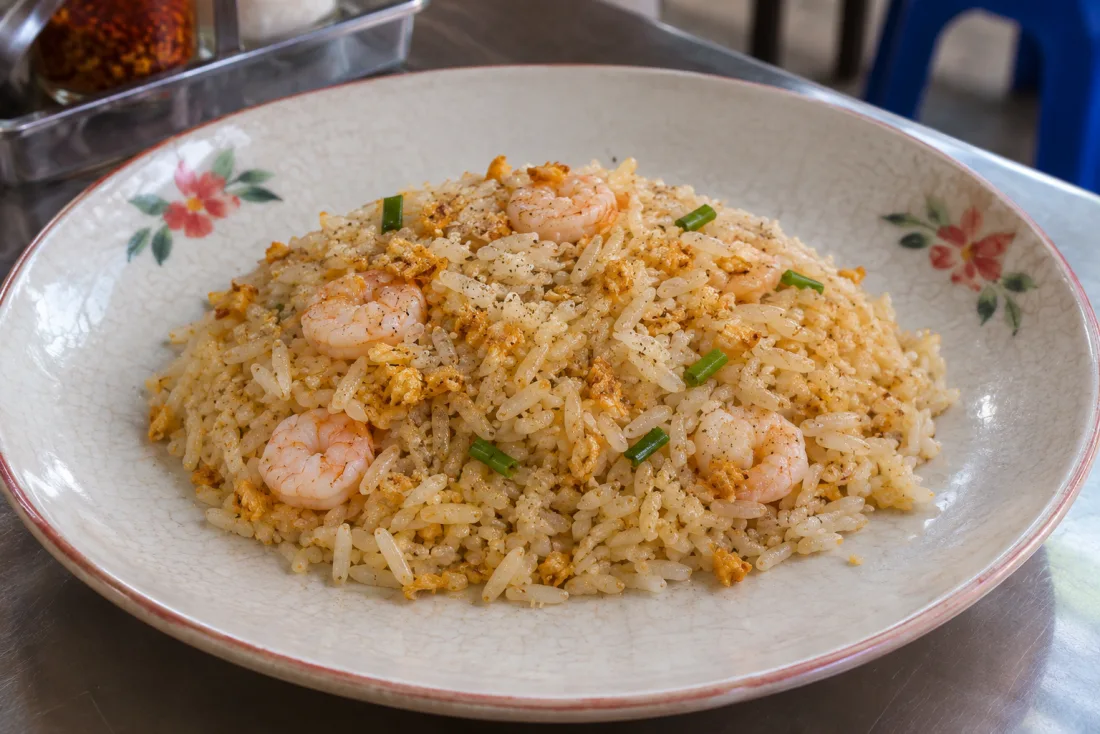

 shrimp
What the menu name describes
Khao pad means fried rice. Goong means shrimp, and krathiam phrik thai points to garlic and pepper. A Thai made-to-order restaurant can list ordinary shrimp fried rice separately. When shrimp is poured onto a mound of plain rice instead, the service style and how the rice takes up seasoning are different.
Rice, garlic and pepper
Cooked jasmine rice separates into tender grains in the hot pan. Fine garlic coats the grains while rougher bits can turn lightly crisp. White pepper may be less visible, and cracked black pepper adds darker speckles. Light soy sauce, oyster sauce or a little sugar may round the dish.
Chopped or whole cooked shrimp
Small peeled pieces distribute shrimp across the rice. Large peeled prawns give a fuller bite. A cook may start the prawns separately and bring them back to the pan to finish cooking and mix with the rice. Fried garlic, scallion and coriander are possible finishes.
Light garlic or black pepper versions
A light version can use chopped shrimp and mild pepper. A darker version may use cracked black pepper and whole shrimp. Some kitchens use butter, others cooking oil. Egg can be added by the shop but is not inherent to the garlic-pepper combination.
Serving and choosing a plate
Taste the hot rice before adding lime or a chilli condiment. Some kitchens serve those separately. Ask whether the shrimp is mixed through the rice, whether chopped shrimp is available, and which sides or dipping sauces come with the plate.
Allergens in shrimp, sauces and cooking fat
Shrimp is a crustacean, while oyster sauce may contain a mollusc. Fish sauce brings fish, and soy sauce may include soy and wheat. Egg and butter add egg and milk allergens. The rice can retain shrimp and sauce traces even after the visible pieces are removed.
If you have a food allergy, tell the restaurant before ordering and ask about ingredients, sauces and shared cooking equipment.