

 pork roll
 fish sauce
A fried rice named for its seasoning
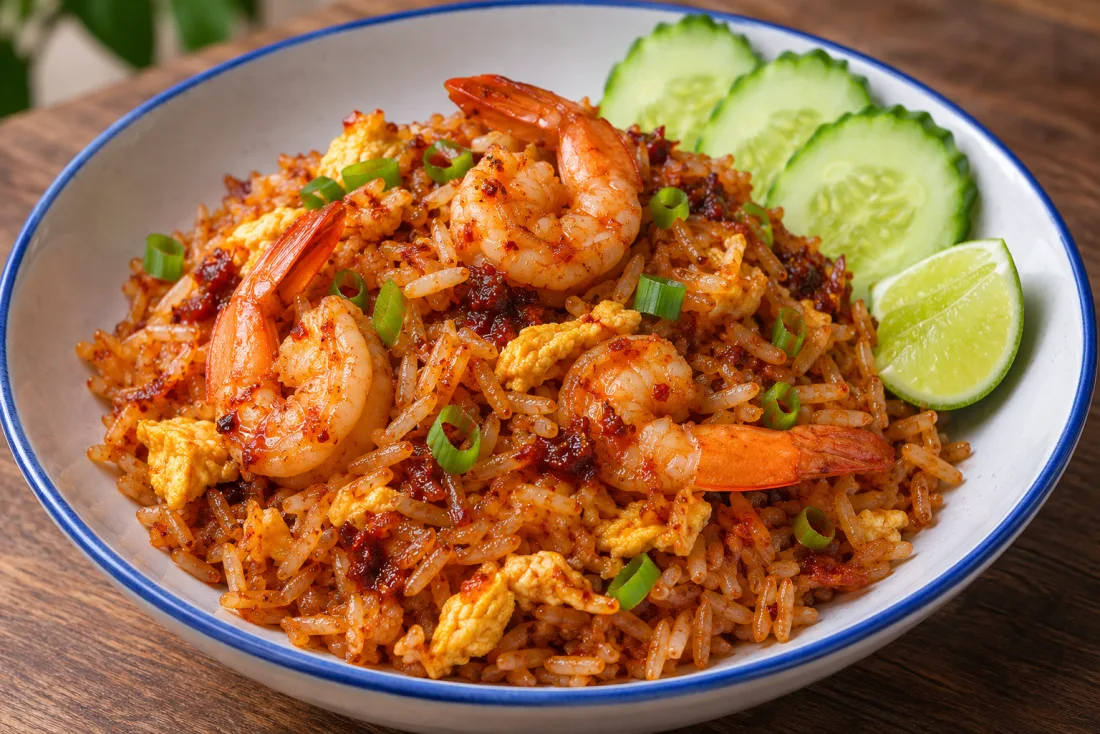
Nam prik pao is Thai roasted chili jam. Thai recipes use ingredients including pork sausage or ground chicken with sweet basil. The menu name identifies the seasoning, and the main protein can vary.
Frying the rice with roasted chili jam
Dried chili, shallots and garlic are cooked into a paste with oil, tamarind and sugar. Some versions add shrimp or fish ingredients. Fry the aromatics and protein, break up the cooked rice, then stir in jam. Finish with basil or fresh chili as desired.
Sweetness, sourness and roasted aroma
Tamarind gives fruit acidity, sugar makes the paste sticky, and roasted chili and shallots add depth. Different pastes vary in sweetness and heat. Fresh bird chilies can add sharper heat. The seasoning should coat the grains.
Serving with cucumber, lime or egg
Eat as a complete rice dish with cucumber or lime. Fried or salted egg can be added. Ask whether raw chili can be served separately and whether the amount of paste can be reduced.
Tom yum and red curry fried rice
Tom yum rice can also use chili jam, plus lemongrass, galangal, makrut lime leaf or a clearer sour note. Red curry fried rice has a different base paste. Khao pad identifies rice that is fried in the wok, unlike a stir-fry put over plain rice.
Allergens in the paste and accompaniments
Traditional chili jam can contain dried shrimp, shrimp paste and fish sauce. Oyster sauce adds mollusks and packaged seasonings may contain soy or wheat. Added eggs contain egg. Ask about the paste, other seasonings and shared utensils or oil.
If you have a food allergy, tell the restaurant before ordering and ask about ingredients, sauces and shared cooking equipment.