

 beef
A beef option on Thai fried rice menus
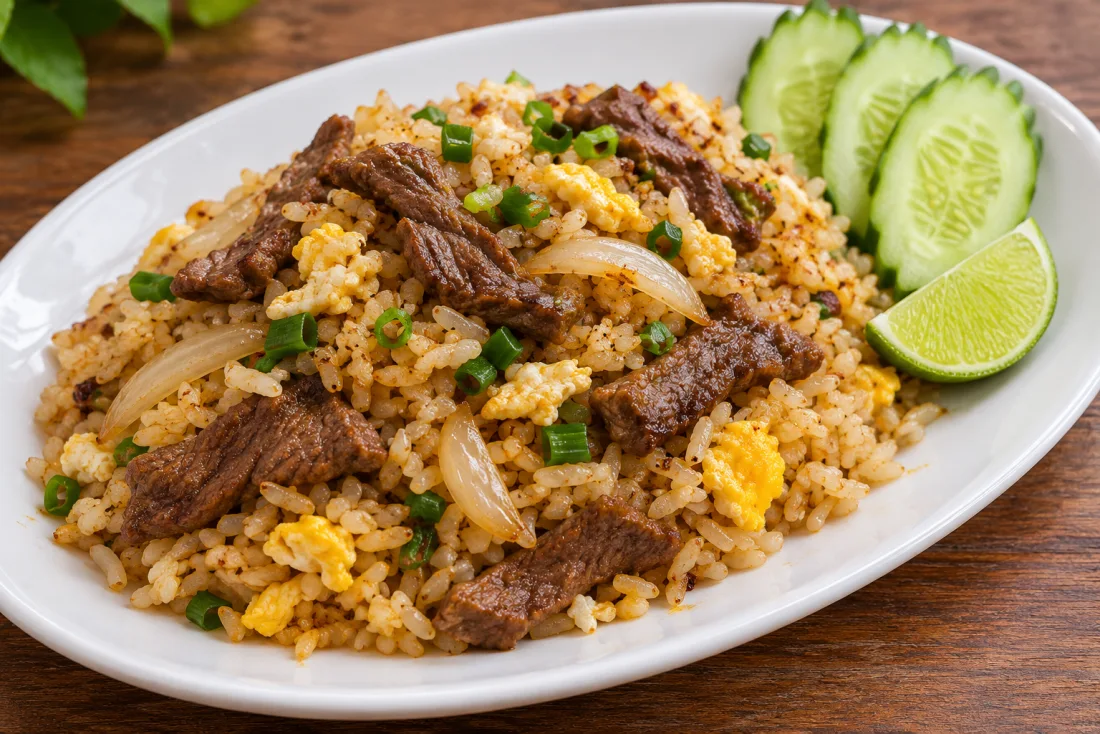
Neua means beef here. Thai restaurants list beef fried rice alongside other fried rice proteins. Common examples use cooked rice, egg and beef, while other menus specify salted beef or a distinct cut.
Cooking the beef and rice in the wok
Sliced or diced beef can be browned with garlic, then tossed with cooked rice and seasonings. Egg may be scrambled in the wok. Onion, scallions and vegetables vary. Some versions cook marinated beef separately and serve it on the rice.
Browned beef and savory rice
Beef can give a toasted aroma and a gently savory flavor. Thin slices and diced pieces are distinct, and egg softens the texture. Oil, soy, fish sauce and pepper change the final savor, color and heat.
Serving as a rice meal
Serve with optional cucumber, lime and egg. Taste before adding chili fish sauce and distribute both rice and beef when sharing. Ask whether the rice uses beef fat or vegetable oil and whether the egg is cooked in.
Salted beef, beef fat and krapao versions
Neua khem indicates salted beef, and beef fat rice emphasizes rendered fat. A holy basil beef topping can sit on plain rice, whereas khao pad means the rice itself went into the wok.
Allergens in egg, marinade and seasonings
Egg is present when used. Soy sauce can add soy and wheat, fish sauce brings fish, and oyster sauce can bring mollusks. Ask about the beef marinade, table sauces and shared woks, utensils, oil and cutting boards.
If you have a food allergy, tell the restaurant before ordering and ask about ingredients, sauces and shared cooking equipment.