

 fish sauce
A fish option with several preparations
Pla means fish. Pla thu refers to mackerel, and pla salit is snakeskin gourami. Thai recipes document fresh fish, mackerel, fried gourami and canned fish. The name can be expanded to tell diners which is used.
Preparing fish and loose grains
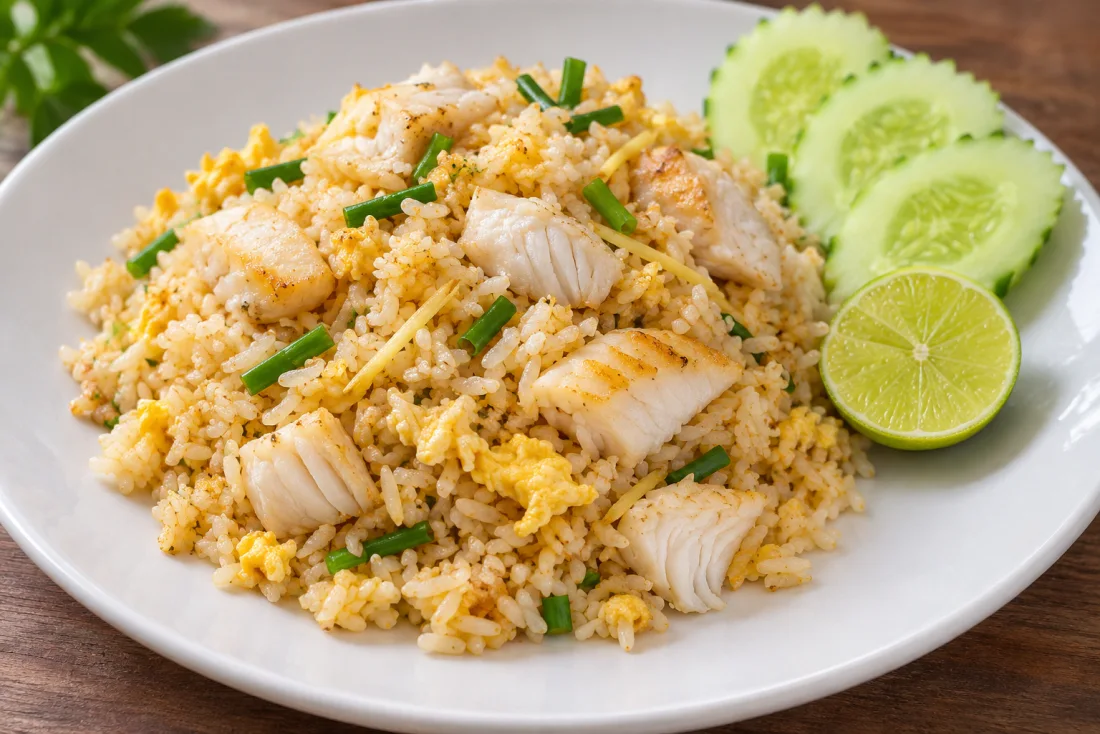
Debone the fish and cut or flake it. Break up cooked rice before frying and fold in the fish gently. Garlic, chili, fish sauce, soy and vegetables vary. Some cooks use cha-om, pickled garlic, peppercorns or Thai basil.
From tender fish to crisp edges
Fresh fish can be delicate, mackerel richer and fried fish crisp. Canned fish with tomato has a different taste. Garlic, pepper or optional fresh chili and lime affect the final flavor. Egg adds a softer texture when used.
Serving and handling fish bones
Serve fried rice with optional cucumber and lime. Share both fish and rice. Ask if the fish is deboned, especially for diners who cannot easily pick out small bones, and ask what species is served.
Squid, shrimp and mixed seafood rice
Pla muk means squid or a similar cephalopod, kung means shrimp, and talay can mean mixed seafood. Pla khem means salted fish. Rad khao can be a topping on plain rice. Khao pad identifies fried rice.
Fish and other allergens
Fish and fish sauce contain fish. Egg, wheat in coating, soy and wheat in sauce, and mollusks in oyster sauce depend on the recipe. Ask about shared cutting boards, woks, utensils and fryer oil.
If you have a food allergy, tell the restaurant before ordering and ask about ingredients, sauces and shared cooking equipment.