
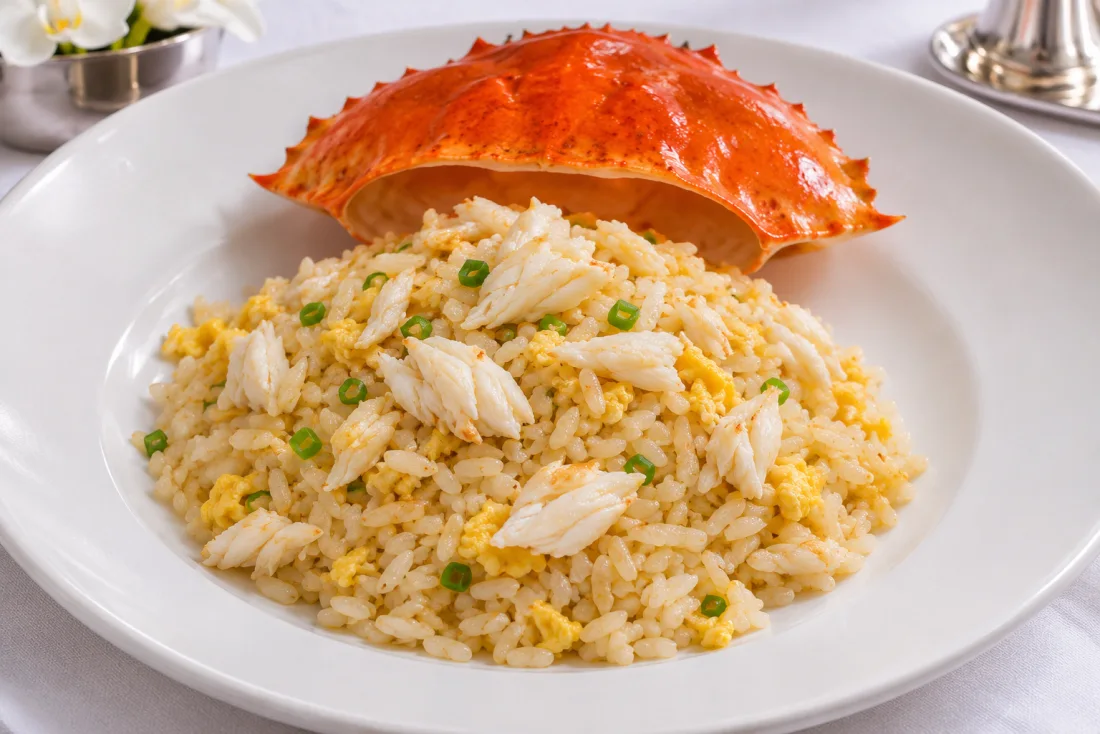

What the shell does
Most of the food is cooked rice and picked cooked crab. A Bangkok presentation used the top shell as a lid, while a Cantonese version holds the rice within the shell. Treat the hard shell as part of the presentation and watch for small fragments when eating picked crab.
Documented restaurant examples
At the Bangkok branch of Ministry of Crab, Kani Chahan was a Japanese-style crab fried rice prepared with its mud crab. A diner documented the rice beneath the shell. A separate original Cantonese menu describes fried rice baked in the shell, and a Kuala Lumpur menu lists shell service when available. These examples do not establish a single national origin, present availability, or a popularity ranking.
Rice, crab and seasonings
Fried rice and cooked picked crab are the core. Mud crab is documented for the Bangkok example. The visible shell does not identify which crab supplied every piece of meat. Egg and spring onion vary by recipe, as do soy sauce, pepper, butter and additional seafood. A cover is placed at service in one style. Rice is heated inside the shell in the baked style.
Crab sweetness and the grain texture
Delicate crab sweetness and fragrant fried grains are the main sensations. Separate grains may still be moist. In the covered form the texture comes from the fried rice. Baking in a shell can lightly toast and dry patches on top while the interior stays softer. The red shell does not measure the chilli heat.
Recognising both presentations
A top shell sits above or alongside the rice. The baked style exposes rice through the shell opening and makes it possible to scoop from the shell. Neither plate nor shell size measures the amount of crab. Ordinary crab fried rice shares most of the base. Roe, cheese or creamy sauce belong to specific versions when listed.
Allergens and shell contact
Crab is a crustacean. Rice can contact crab meat, shell and stock. Removing the shell after serving does not remove crab from the rice. Confirm egg if used, fish in fish sauce, molluscs in oyster sauce, soy or wheat in soy sauce and milk in butter or baked dairy toppings. Ask about shared cookware when relevant and watch for small shell fragments.
If you have a food allergy, tell the restaurant before ordering and ask about ingredients, sauces and shared cooking equipment.