
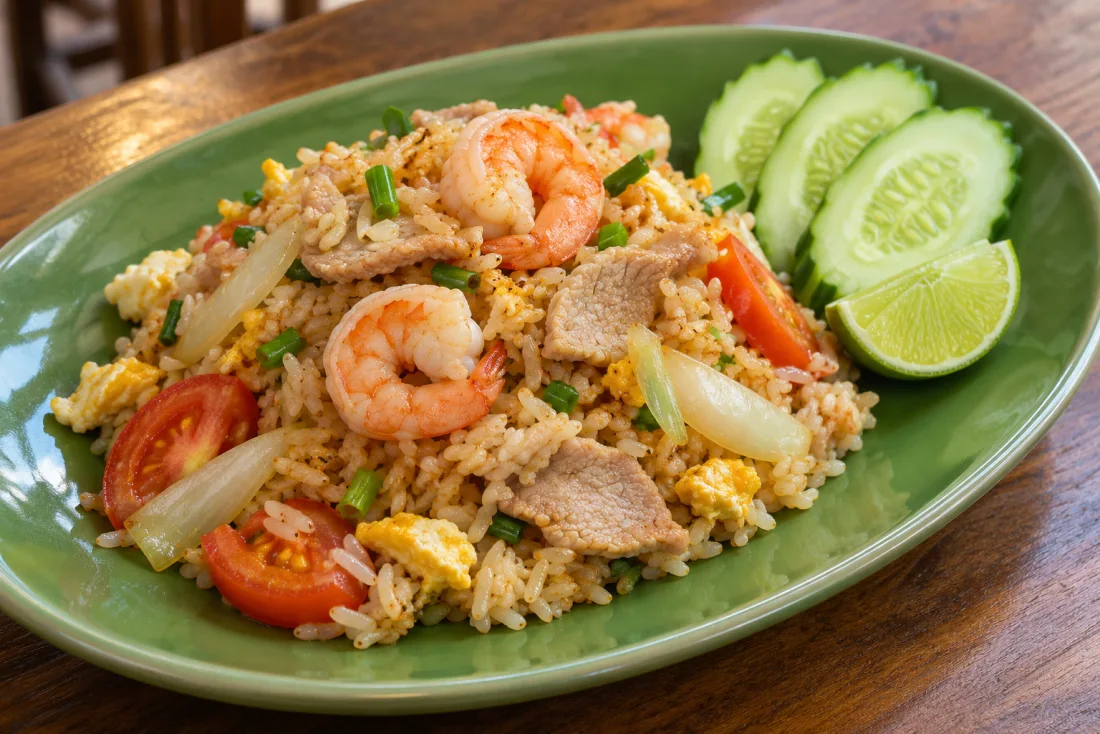

 pork
 chicken
 shrimp
What the combination label means
The Thai title signals more than one filling. A mix can contain land meats and seafood, but no specific pairing is guaranteed. Restaurants and home cooks can choose different ingredients.
How the ingredients and rice meet in the wok
One recipe starts pork and chicken, then adds egg and shrimp, followed by rice, Chinese kale, onion and tomato. Seasoning sauce and sugar season it. Cook fillings in stages to keep their texture and keep excess liquid out of the rice.
Rice, egg and contrasting textures
Chicken, pork, shrimp and egg give the plate several textures. Kale and cucumber add crunch and onion or tomato sweetness. Sauces provide saltiness. Lime and chili fish sauce can be added separately, and other versions can include chewy squid or crisp pork cracklings.
Ordering and sharing a portion
The dish can be a single plate or takeaway. Divide meat and seafood evenly for sharing. Ask what is included and whether eggs or more shrimp are extras. Taste the rice before adding lime or chili fish sauce.
Combination fried rice, seafood rice and rice with toppings
Seafood fried rice focuses on seafood, while a combination can include pork or chicken. Some menus serve an assorted sauce over fried rice separately. Tom yum mixed fried rice adds a sour, herbal seasoning profile.
Allergens in the mix and sauces
The example contains egg and shrimp. Squid or oyster sauce can introduce mollusks, and fish sauce or fish adds fish. Check soy and wheat in seasonings and ask about shared woks. Picking out toppings does not undo contact.
If you have a food allergy, tell the restaurant before ordering and ask about ingredients, sauces and shared cooking equipment.