

 prawn
 fish sauce
Recognising pineapple fried rice on Thai menus
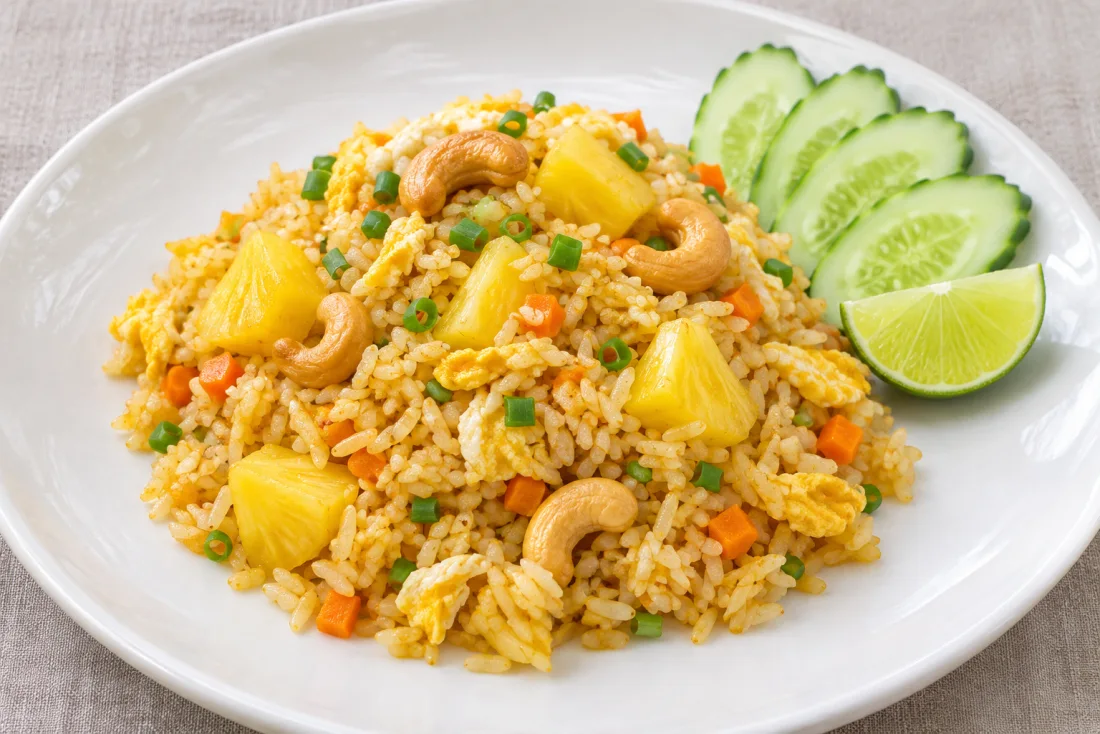
Khao pad means fried rice, and sapparot means pineapple. Look for separate grains and juicy pineapple pieces. Curry powder can turn the rice golden. Cook Pailin Chongchitnant describes pineapple fried rice as one of the familiar Thai fried-rice dishes.
Menus in Bangkok and Phuket include it, and a Thai publisher shows how to serve it in a pineapple shell. The records show it in different restaurants and preparations. They do not establish a first province or require a particular serving dish.
How pineapple, rice, curry powder and cashews work together
Pailin’s recipe uses cooked jasmine rice, egg, shrimp, fresh pineapple, onion, curry powder, soy sauce, fish sauce, white pepper and roasted cashews. Tomato, scallion and cucumber also appear. The fruit provides sweet acidity and juice, the curry powder gives colour and fragrance, and cashews give a crisp bite.
KRUA fries curry powder in coconut cream and uses squid, shrimp, carrot, pineapple, egg, rice and ham, with light soy sauce and sugar. Fried cashews and pork floss go on top. Coconut cream and added seafood or meats vary by recipe.
How a hot wok keeps the rice loose and the fruit juicy
Cooked rice with a dry surface is easier to break apart in the pan. Some cooks sear shrimp, take them out, then fry egg and rice. After the curry powder and sauces coat the rice, the shrimp go back in. That helps keep them springy.
Drain the pineapple if it gives off a lot of juice. Folding it through towards the end can heat the fruit while retaining its bite. Other methods fry it earlier to flavour the sauce. Cashews hold their crunch best when added late.
Sweet acidity, savoury spices and toasted cashews
Try some rice first to taste the curry powder and savoury seasoning. Then take a bite with pineapple and notice how the fruit juice changes the balance. Shrimp can be tender and springy, while toasted cashews crunch. White pepper gives a mild warmth and chilli heat depends on the blend and the cook.
Cucumber adds a cool bite between mouthfuls. A ripe pineapple can make the rice sweeter, while a tart one gives the finish more acidity. Coconut cream can make the grains feel richer.
Pineapple shells, different fillings and reading the menu
KRUA halves a pineapple lengthwise, uses some of the flesh for the stir-fry and fills the shell with the rice. It is a recognisable serving style for sharing. A plate can hold the same style of fried rice. Restaurants can offer shrimp, mixed seafood or extra meat such as ham.
Ask about the fruit, cashews and how the shrimp are served if you want a particular texture. If you avoid pork, ask about ham and pork floss even when the menu only names pineapple fried rice.
Allergens to ask about: shrimp, egg, cashew, fish and sauces
Shrimp is a crustacean and cashews are tree nuts. Egg often goes in with the rice. Fish sauce contains fish, shrimp paste contains a crustacean, and soy sauce usually contains soy and may contain wheat. Squid, coconut cream and prepared seasoning can add other ingredients.
Name the ingredient you need to avoid and ask about both the fried rice and its toppings. Shared woks and spoons can matter. Removing cashews visible on top does not undo earlier contact.
If you have a food allergy, tell the restaurant before ordering and ask about ingredients, sauces and shared cooking equipment.