

 shrimp
 fish sauce
How tom yum becomes fried rice
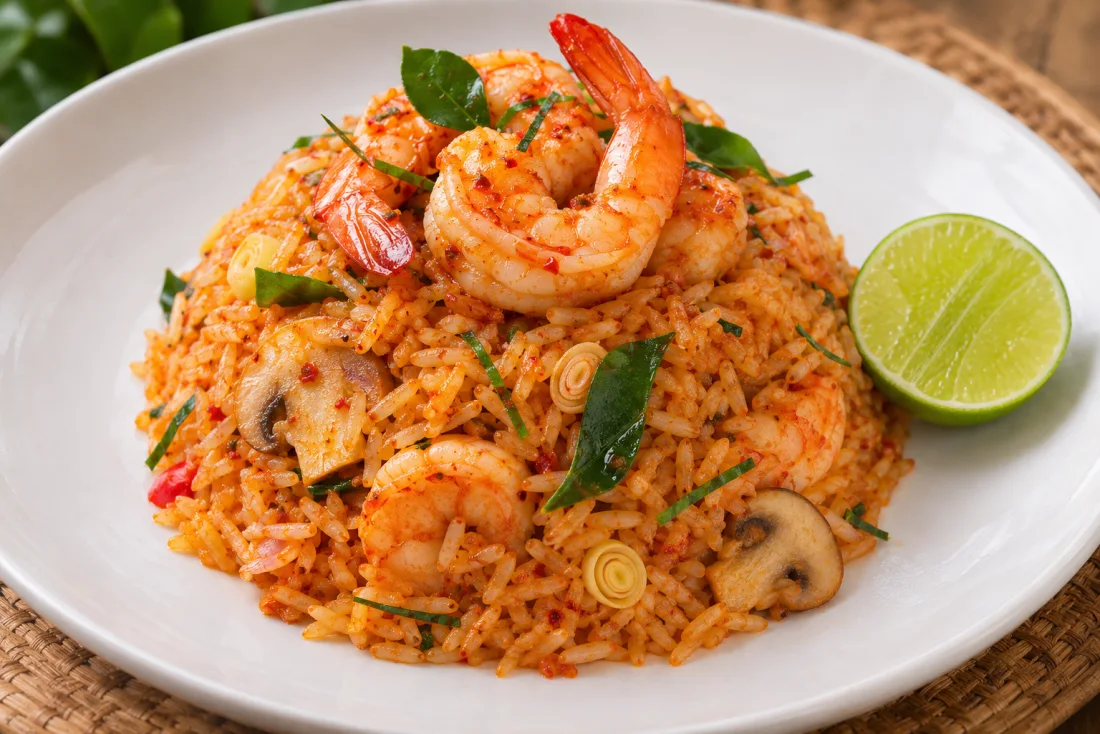
Khao pad tom yum kung combines the flavors of tom yum shrimp with wok-fried rice. Galangal, lemongrass and makrut lime leaves give the dish its character. Sauce clings to the rice, and the shrimp can be peeled, tail-on or whole. Mixed seafood versions may also use squid or shellfish.
Single-plate meals in Thailand
Thai fried-rice recipes use shrimp and vegetables with familiar soup aromatics. Cucumber, lime and sometimes boiled salted egg can accompany the plate. The vegetables and heat depend on the kitchen, and it works as a one-plate meal.
Shrimp, fresh aromatics and sauce
One recipe uses tail-on white shrimp, cooked rice, galangal, lemongrass, lime leaves, chilies, baby corn, tomato and scallions. Roasted chili paste, sugar, fish sauce, oyster sauce and lime juice season it. Other recipes add straw mushrooms, shallots or shrimp fat.
Preserving lime fragrance and shrimp texture
Cook the aromatics and shrimp through, then toss in the seasonings and break up the rice. Add lime near the end to retain its fragrance. Fully cooked shrimp should be firm and opaque. Keep sauce light enough that the rice stays loose.
Sour, hot, savory and herbal
Roasted chili paste contributes savory sweetness and a toasted aroma. Lime brightens the fried rice, chilies add heat, and shrimp gives mild sweetness. Straw mushrooms or baby corn add different textures. A lime wedge lets diners increase the acidity.
Allergens in shrimp, sauces and toppings
Shrimp is a crustacean, fish sauce contains fish and oyster sauce can contain molluscs. Roasted chili paste may contain shrimp, fish, soy or wheat depending on the product. Salted egg contains egg. Ask about sauces, additional seafood and shared cookware.
If you have a food allergy, tell the restaurant before ordering and ask about ingredients, sauces and shared cooking equipment.