
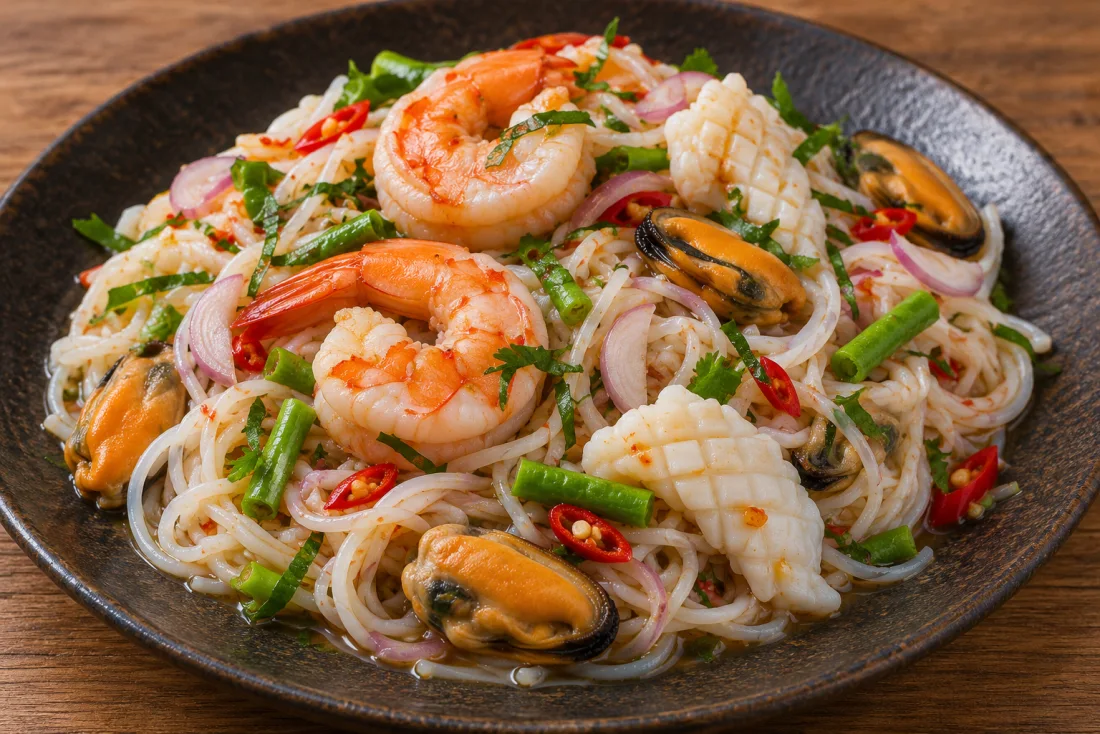

 shrimp
 squid
 fermented fish sauce
The Isan seafood noodle plate
Khao poon is the Isan name for soft rice noodles also known as khanom chin. Sua khao poon describes a mixed style, and talay names the seafood. Restaurants and home cooks also use the related description yam khanom chin talay. This version identifies fermented fish in the dressing.
Cooked shrimp, squid and optional mussels
Cooked shrimp are sweet and firm. Squid rings or scored pieces can curl as they cook and remain springy. A recipe may add steamed mussel meat, while another keeps shrimp and squid as the main toppings. Other fish or prepared toppings are specific to the kitchen.
Lime and fermented fish dressing
Fermented fish seasoning and fish sauce give depth; lime and chilli make the flavour bright and spicy. Palm sugar can soften the edges. Ground roasted chilli, fresh chilli or toasted rice may be used. The dressing coats the strands rather than filling a soup bowl.
Noodles, long beans and herbs
Thin rice noodles take up the dressing and balance the firmer seafood. Chopped yardlong beans add a crunch. One cook may use blanched cabbage, dill or cha om; another uses culantro, coriander or spring onions. Lime and chilli can be served separately.
Ordering the version you want
Thin rice noodles look different from translucent glass noodles. Ask which cooked seafood the salad contains and whether the dressing has already been mixed with the noodles. Many shops can adjust chilli or put the sauce on the side.
Separate seafood and sauce allergens
Shrimp is a crustacean. Squid and mussels are molluscs. Fermented fish sauce and fish sauce contain fish. Prepared seasonings or toppings may also include soy, wheat or egg. Ask about shared cooking water, tools and mixing bowls when managing allergies.
If you have a food allergy, tell the restaurant before ordering and ask about ingredients, sauces and shared cooking equipment.