
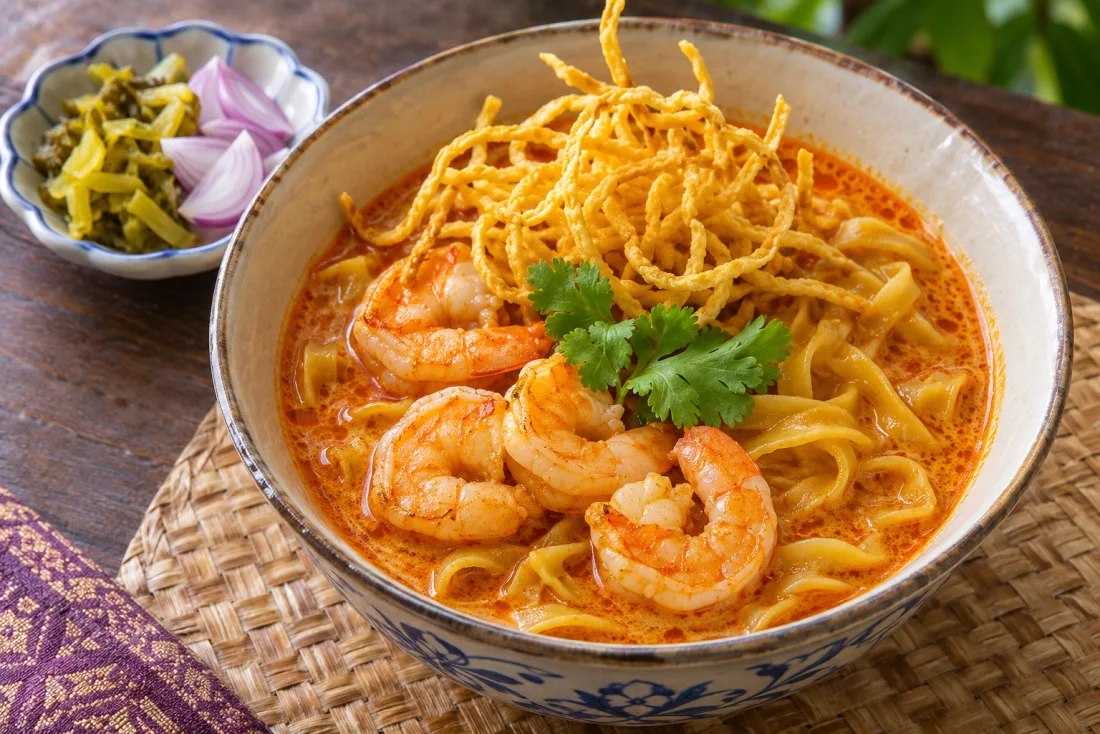

 prawn
A prawn version of northern Thai curry noodles
Northern-style khao soi is widely associated with chicken or beef. Prawn versions are documented in a Chiang Mai cooking class and on restaurant menus in Hua Hin and Samui. A hotel menu pairs prawns with fresh egg noodles, crisp noodles, pickles and chilli paste.
Prawns, coconut, spices and two noodle textures
Prawns add sweetness and a firm bite. Coconut milk carries the curry paste, which can include dried chilli, galangal, lemongrass and shallots. Soft egg noodles and crisp noodles can share the bowl. Pickled greens, red onion, lime and chilli can come alongside.
Cooking the curry and assembling the bowl
Heat the curry paste in coconut milk and simmer to develop the broth. Prawns cook quickly and can go in late, or be taken out and returned near serving. Boil soft noodles separately and pour over the curry. Add the crisp noodles at the end.
Creamy spice, sweet prawns and a crisp topping
The coconut broth is rich and fragrant, the prawns are sweet and firm, and the noodles are both silky and crunchy. Pickles and lime brighten the bowl. Colour varies and does not reliably indicate heat. Chilli paste or oil may be served separately.
Poached prawns, fried prawns and dry versions
Some restaurants poach prawns in the curry, while others serve battered fried prawns. A dry version can coat the noodles in a thicker sauce. A tom yum prawn noodle bowl typically has a different sour broth and does not depend on the same crisp noodle topping.
Allergens in prawns, noodles and curry paste
Prawns are crustaceans. Egg noodles commonly contain egg and wheat, coconut milk contains coconut, and seasonings can use fish sauce or shrimp paste. Ask about batters, toppings, stock and shared fryers or noodle baskets if avoiding an ingredient.
If you have a food allergy, tell the restaurant before ordering and ask about ingredients, sauces and shared cooking equipment.