

 pork
 shrimp paste
 fish sauce
Pork in a northern Thai curry noodle bowl
The Thai name identifies pork khao soi. A Thai diplomatic training publication gives a pork recipe, and Mae Hong Son records include a vendor selling this version. A Nan shop lists braised pork shank. The cut and broth can vary by restaurant.
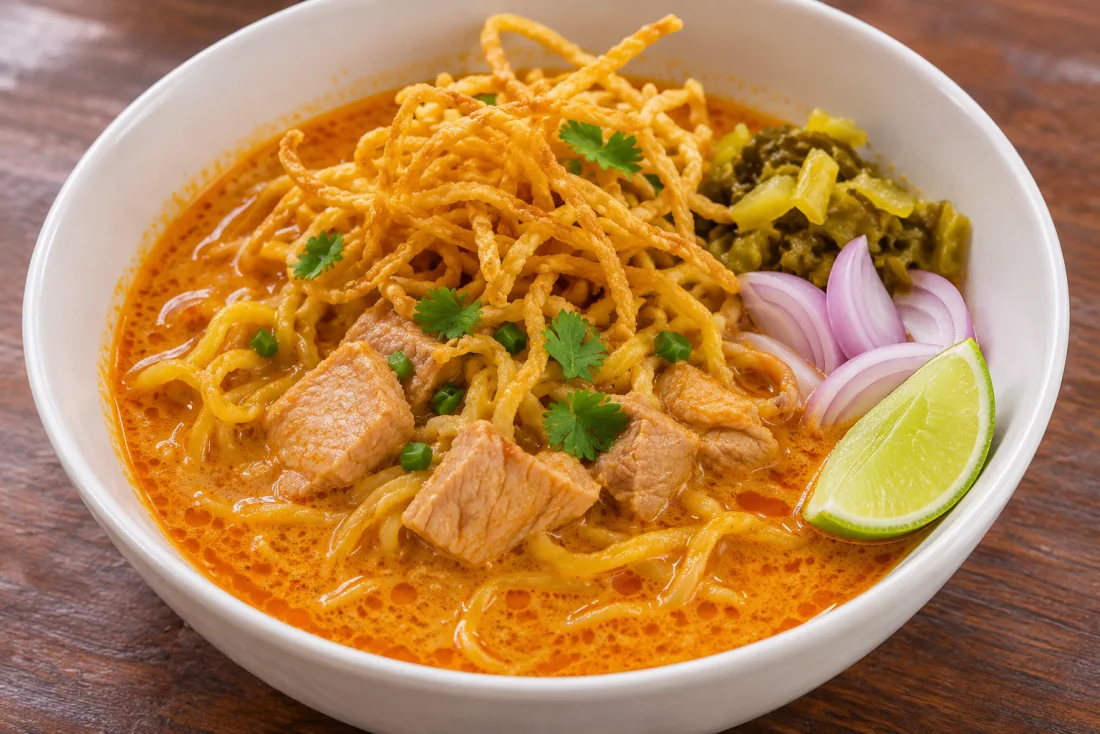
Pork, coconut milk, flat egg noodles and pickles
A reference curry simmered with pork uses coconut milk, dried chillies, galangal, makrut lime zest, coriander root, garlic, shallots, pepper and shrimp paste. Fish sauce and palm sugar season it. Soft and fried noodles can be accompanied by pickled mustard greens, lime and chilli oil.
Simmering the pork and preparing the two noodles
Cook the curry paste in thick coconut milk, add pork, and simmer with the remaining liquid until the meat is cooked and tender. Boil the main noodles separately, then ladle the curry and pork over them. Finish with newly fried crisp noodles.
Rich spice, tender pork and crisp noodles
Coconut and dry spices give the curry its roundness. Pork adds savoury depth and finger-tender texture depending on the cut. The soft noodles hold the broth, while the fried ones stay crisp until soaked. Pickles and lime give a brighter finish.
Braised pork, crispy pork and related northern noodles
Pork can be cooked in the curry or braised separately. Some shops use crisp pork as another topping. The curry and double noodle texture distinguish this bowl from northern noodles such as nam ngiao, typically served with a tomato and chilli broth.
Allergens in noodles, coconut and seasoning
Egg noodles commonly contain wheat and egg. Coconut milk contains coconut. The reference curry includes shrimp paste and fish sauce. Check the actual noodles, curry paste, stock and garnishes, and ask about shared fryers and utensils if needed.
If you have a food allergy, tell the restaurant before ordering and ask about ingredients, sauces and shared cooking equipment.