
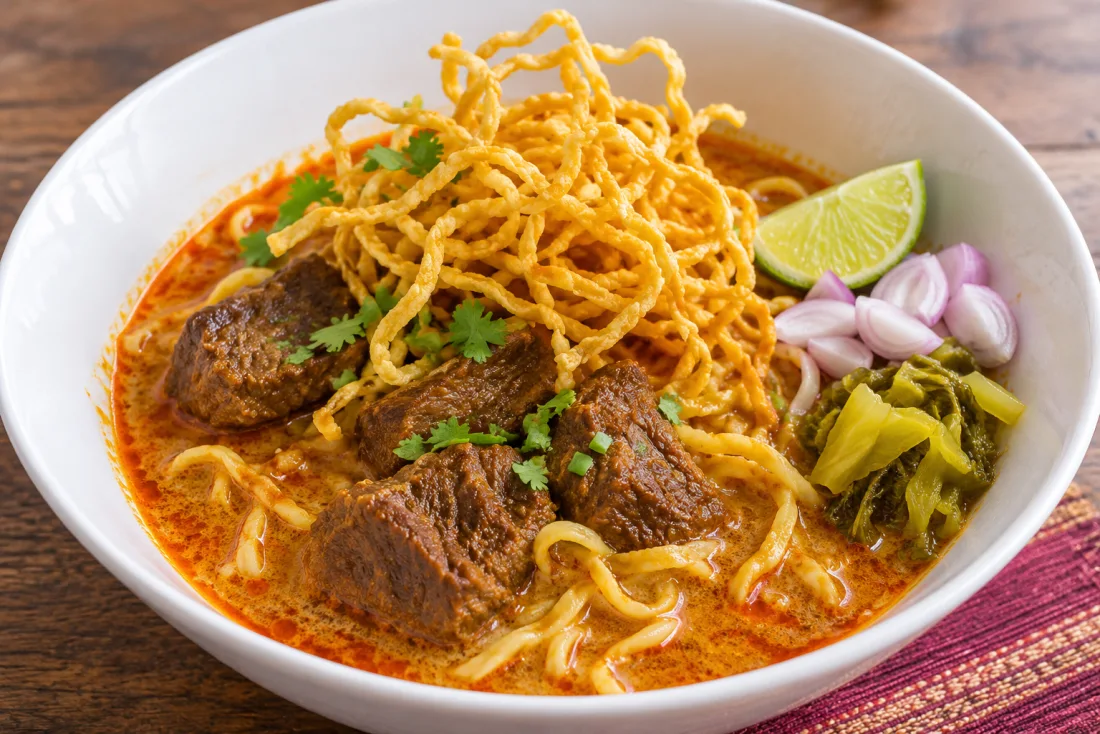

 beef
Beef curry noodles in Chiang Mai and northern Thailand
Khao soi names the northern noodle dish and neua indicates beef. Thai university accounts connect the northern tradition with culinary exchange involving Yunnanese Muslim communities. The details of its early history vary between accounts.
Mahidol also documents a clear-broth tradition. The coconut curry now familiar in Chiang Mai is one major style. Beef and chicken bowls are both common.
Beef bones, meat, coconut milk and two textures of noodle
The KRUA recipe uses beef-bone broth, coconut milk, beef and light soy sauce. Dried chilli, coriander seed, black cardamom, ginger, turmeric and shallot flavour its paste. Another recipe uses beef shank and curry powder.
The flat noodles are boiled for the base and fried in a smaller batch for the topping. Many shops use wheat and egg noodles. Pickles, lime and raw shallot come separately.
Building the broth and stewing the beef
Make the stock, heat it with coconut milk and fry the paste until fragrant in separated coconut fat. Return the paste to the broth and stew the beef until tender. The timing depends on the chosen cut.
Boil the noodles separately. Ladle over the beef and curry, then add the crisp topping at the last moment to preserve its texture.
Warm spices, rich coconut and tangy sides
Coconut and toasted spices lead the aroma. Beef and stock add savouriness, and the cut changes the bite. Chilli oil increases the heat.
Try the broth, then squeeze in lime. Pickled mustard greens and raw shallot add acidity, crunch and bite. Keep some crisp noodles above the broth if you like both textures.
Choosing beef, chicken or another restaurant version
Neua indicates beef and gai indicates chicken. Shops use different cuts, noodle widths and curry blends. They may prepare broth in separate pots or share part of the base.
A stir-fried variant can use similar noodles without the soup. Ask which cooking style is served, and check sourcing and kitchen preparation if halal status matters.
Allergens to ask about: wheat, egg, soy, coconut and seafood
The noodles may have wheat and egg. Coconut milk contains coconut, and soy sauce may contain wheat as well as soy. A kitchen using prepared paste, shrimp paste or fish sauce may introduce seafood allergens.
Ask separately about the broth, noodles, fried topping and sides, and about shared fryer oil, cooking water and stock. Chicken khao soi may use a shared broth.
If you have a food allergy, tell the restaurant before ordering and ask about ingredients, sauces and shared cooking equipment.