
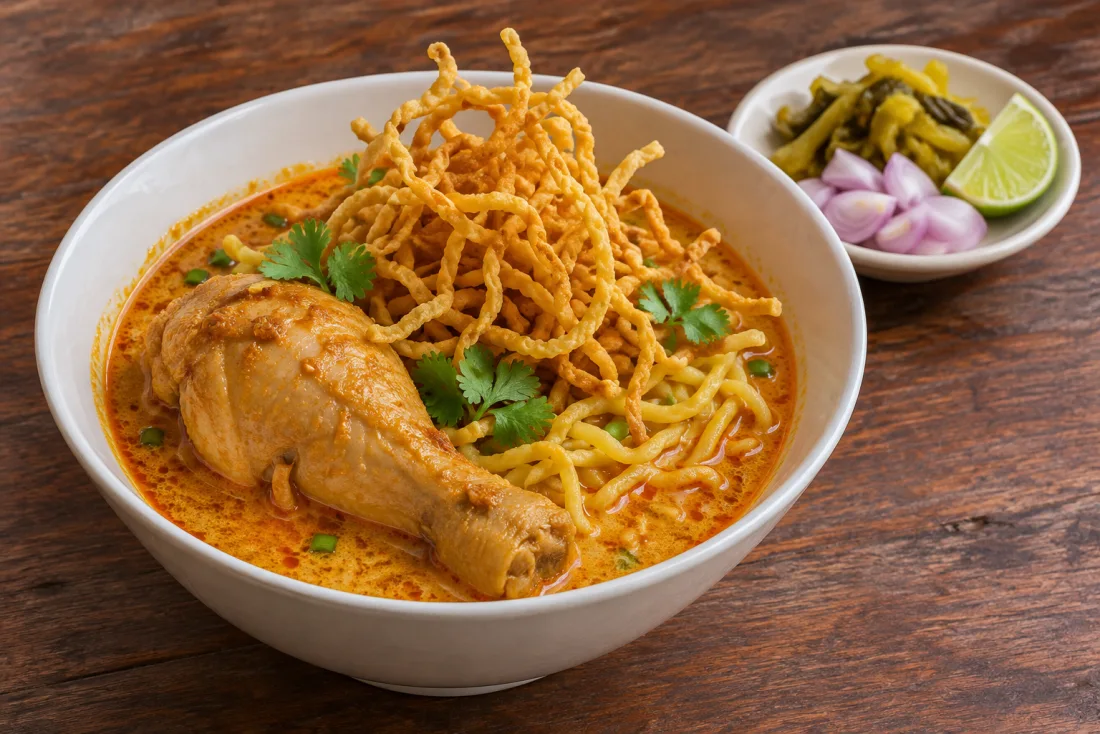

 chicken
Where to find it: Chiang Mai, Chiang Rai and Nan
Khao soi is a signature northern Thai noodle dish. Gai marks the chicken version. The Thailand Foundation introduces it alongside northern sausage and green chilli dip. Tourism Authority of Thailand guides describe crunchy noodles with rich broth in Chiang Mai, chicken with several sides and toppings in Chiang Rai, and a Nan example served with a large drumstick and coconut milk. These examples show how it is eaten: an established one-bowl main course in local noodle shops and northern restaurants that travellers also encounter.
Northern Thailand has long been on trade routes linking Yunnan, Myanmar and Laos. Noodles and spice traditions circulate in this part of the region, a useful context for northern curry noodles. The sources give a clearer picture of that regional background than of the first person or year to combine chicken legs and both kinds of noodles in exactly this form.
What makes up the bowl: two noodles, chicken and curry broth
The Thai SELECT example uses flat egg noodles and chicken drumsticks. The boiled noodles carry the curry broth. Fried noodles stacked at the top give an audible crunch just after serving. The drumstick is the main protein. You can use a spoon to ease chicken off the bone and take it with noodles and broth.
Coconut milk and spices form the basis of the broth. The recipe example uses curry powder, chilli, coriander root, soy sauce and palm sugar. Coconut milk adds body and a smooth mouthfeel, the spices provide aroma, and salty and sweet seasonings bring the noodles and chicken together. Seasonings and proportions vary by kitchen. Broths can range from yellow-gold to orange-red, and the visible layer of red oil alone cannot tell you how hot the broth will taste.
How the preparation gives the noodles their texture
The soft and fried noodles are prepared separately and meet just before serving. The boiled noodles go into the bowl first, followed by hot curry broth and chicken. Fried noodles go on top at the end. Keeping them above the surface for a while preserves their crunch as the soft noodles pick up the broth. Any fried noodles that touch the broth gradually soften and take on the coconut and spice flavours.
To appreciate both textures, try a little of the still-dry topping first, then taste the broth and lift some of the soft noodles. If you prefer a softer topping, press part of it into the soup with a fork and compare it with the noodles that were boiled from the start.
What it tastes like: coconut and spices, with acidity from the sides
The first aromas are usually coconut and curry spice. The broth tastes savoury, with some sweetness and heat. Try a spoonful before adjusting it. Lime supplies a bright acidity, pickled mustard greens add a salty-sour crunch, and raw shallots give a sharp fragrance. If chilli oil comes separately, adding a little at a time gives you room to taste the original soup.
The accompaniments vary. Some shops add the oil before serving or offer fewer sides. If you particularly want to limit the heat or have an ingredient you avoid, ask whether the heat is already in the broth or mainly in the extra oil.
How to read similar noodle dishes on the menu
The quickest clue is the meat named on the menu. Khao Soi Gai uses chicken and Khao Soi Neua uses beef. Some northern shops also serve pork versions. The meat affects how the broth tastes and the texture of each bite. Kitchens vary in broth concentration, what part of the chicken they use, the amount of fried topping and the accompaniments. If the menu just says khao soi, ask what meat options the kitchen offers.
You may also encounter northern noodles called nam ngiao. The Tourism Authority of Thailand guide to Nan lists them separately. To recognise the form described here, look for soft noodles with a fried noodle topping in a spiced coconut broth with chicken, then check the menu name.
Allergens: ask about noodles, seasonings and shared utensils
Egg noodles normally involve egg, and wheat-based noodles involve wheat. The soy sauce in the example recipe also calls attention to soy. Some soy sauces contain wheat. Coconut milk is usual in the broth, so tell the kitchen separately about a coconut allergy. Curry pastes, stock and seasonings vary by kitchen. If you need to avoid fish or crustaceans, ask about additions such as fish sauce or shrimp paste. A recipe example or photo cannot tell you what a particular kitchen uses.
Fried noodles may share oil with other foods. Boiling water, noodle baskets and ladles can also be shared. Before ordering, tell the restaurant your specific allergens and ask what goes in the broth, sauce, soft noodles and fried noodles and how the utensils are handled. Removing a topping at the table leaves whatever it has already touched in the bowl.
If you have a food allergy, tell the restaurant before ordering and ask about ingredients, sauces and shared cooking equipment.