

 minced pork
 prawn
The name and how it is served
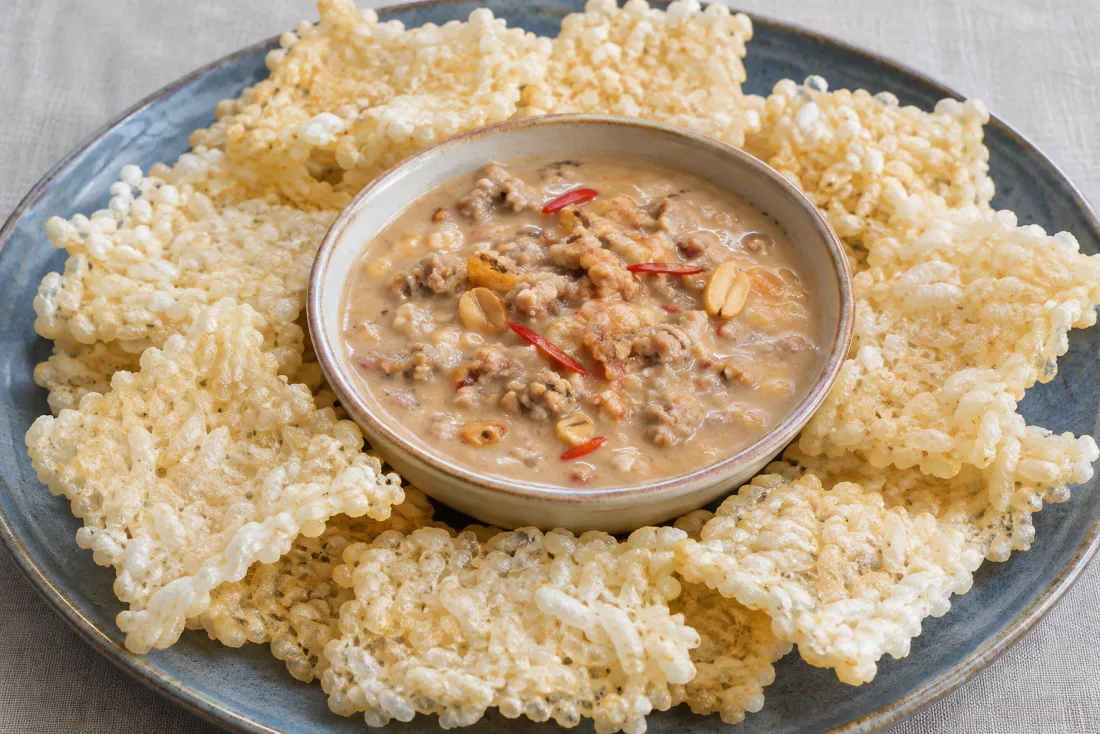
Khao tang is the rice cracker and na tang is the dip. Thai SELECT and Suan Dusit University both document it as a Thai snack. It often suits a shared starter or snack table. The recipes show the customary pairing without identifying a first city or date.
What goes into the cracker and dip
Rice can be pressed into thin wafers, dried and fried. In the university example, coconut milk carries minced pork, chopped shrimp, garlic, coriander root and pepper. Peanuts add aroma and grain. Even when a chilli or coriander leaf is only garnish, the dip itself may contain other ingredients.
Keeping the rice crisp and the dip thick
Frying puffs the crackers. Keeping them separate from the moist dip helps retain their crunch. The minced meat and shrimp cook in the seasoned coconut base, and the finished dip can be thin enough for dipping or thick enough to spoon onto each cracker.
Rice aroma, sweetness and savoury flavours
A bite starts with crisp rice, then gives way to rich coconut and savoury pork with a little shrimp sweetness. Suan Dusit University describes its example as sweet and salty with a little tang and aromas of coconut and peanuts. Overall heat depends on how much chilli the cook uses.
Serving styles and kitchen variations
A shared plate may put the crackers around a bowl so everyone can dip their own. A catered version may be assembled in one-bite portions with a garnish. Keeping rice and dip separate during takeaway preserves the contrast. Recipes can vary in the proportions of coconut, meat, shrimp and peanuts.
Allergens, fryers and shared dishes
The example includes shrimp and peanuts, and pork is mixed into the dip. Check fish sauce, soy, wheat and coconut where relevant. Ask whether peanuts are stirred in before serving and whether crackers share fryers or tongs with breaded foods or shrimp. Tell the kitchen exactly what you need to avoid.
If you have a food allergy, tell the restaurant before ordering and ask about ingredients, sauces and shared cooking equipment.