
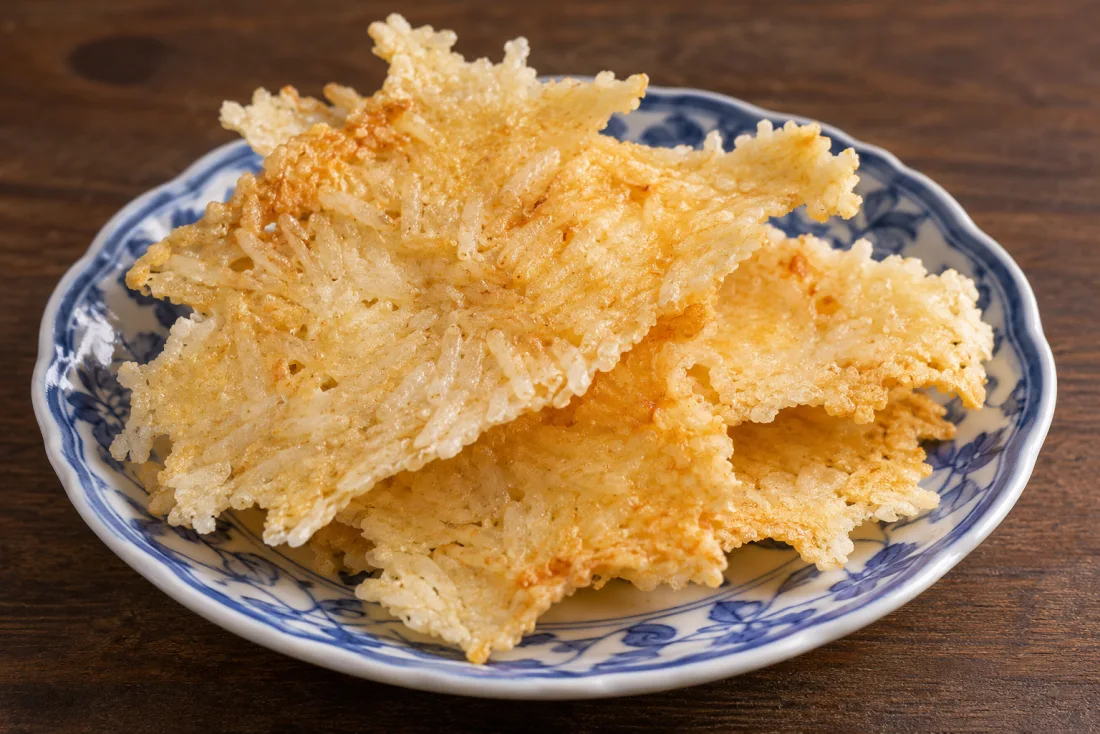

Cooked rice grains form a crisp sheet
Khao tang can be formed by crisping the cooked rice at the bottom of a pan or by shaping cooked rice into thin pieces and drying it before frying. Visible grains and uneven gaps give the cracker its distinctive texture. It can be served on a platter or in a small takeaway portion.
Thai pan-crisping and the Chanthaburi example
Thai culinary reporting records rice crisped at the bottom of pans. A Chanthaburi vendor crisps cooked rice in a pan and brushes it with a fish sauce, sugar, garlic and coriander seasoning. Thai restaurants also serve fried, shaped crackers with a separate dip. These examples show different local preparations.
Rice, seasoning and an optional dip
A plain fried version is based on cooked rice and oil. Brushed versions can use sweet-salty seasoning. A classic na tang dip can have coconut milk, minced pork or shrimp, garlic, pepper, coriander root and peanuts. A Thai northern sticky rice cracker with sugar is a related preparation.
Dry the rice before crisping it
Fried pieces are dried so the rice holds together and crisps quickly. The old pan method dries and crisps the rice over continued heat. Both leave a brittle layer between the grains. Serve the dip separately and spoon it onto the cracker just before eating to keep it crisp.
Toasted rice and contrasting dip
A fresh cracker breaks sharply and has a mild toasted rice flavour. Brushed versions taste sweet and salty with garlic. Plain crackers give more contrast with a smooth, savoury dip. The separate bowl lets diners decide how much sauce goes onto each piece.
Allergens in seasoning, dip and shared equipment
Check brushed crackers for fish sauce, soy or wheat. Na tang dip can contain crustaceans, peanuts and coconut, depending on the recipe. Shared frying oil or tongs can touch wheat, sesame or nuts. Ask about the cracker and dip separately, including the frying and serving equipment.
If you have a food allergy, tell the restaurant before ordering and ask about ingredients, sauces and shared cooking equipment.